
Shenzhen Guanwutong International Freight Forwarding Co., Ltd.
With over 20 years of experience, GWT Logistics covers all major shipping routes between China and Brazil, serving key ports such as Santos, Paranaguá, Navegantes, and Itapoá.
We provide a secure, compliance-focused solution with first-hand contracts from top carriers. Unlike standard forwarders, we prioritize Demurrage Control and Document Accuracy (NCM/HS Code alignment) to ensure your cargo clears Brazilian customs without fines or delays.
Key Features:
Compliance Audit: Pre-shipment verification of Commercial Invoices and Packing Lists to match Siscomex & NCM standards.
FOB Specialist: We act as your China-side operations team, coordinating factory pickups and loading supervision.
Cost Transparency: Clear “Total Landed Cost” estimates for LCL/FCL, with no hidden destination overcharges.
Core Partners: COSCO, MSC, CMA CGM, PIL, ONE, Hapag-Lloyd
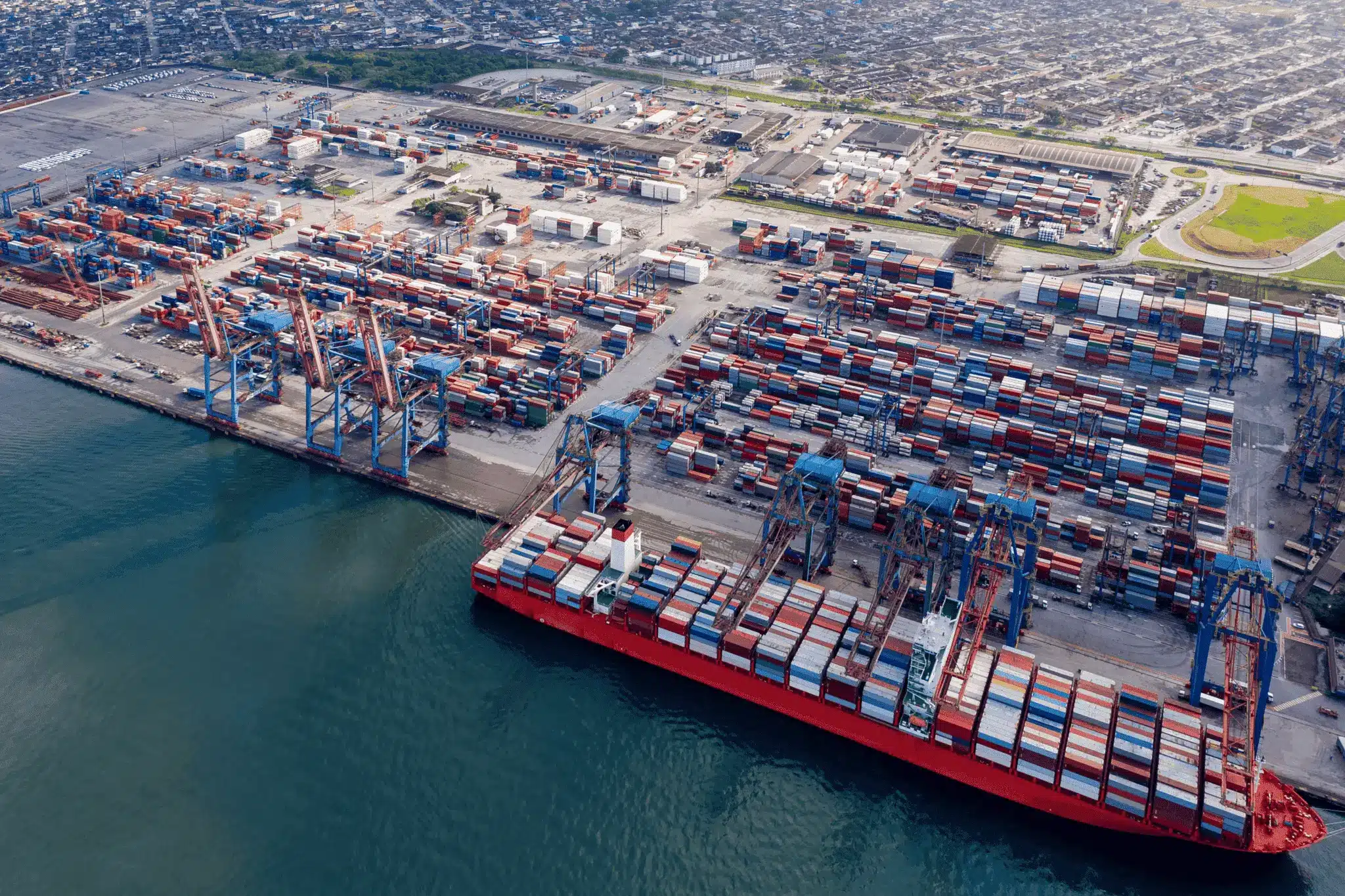
What can we do when shipping from China to Brazil?
Sea Freight FCL from China to Brazil
Strategic Routes: Direct and transit loops from Shanghai, Ningbo, and Shenzhen to Santos, Paranaguá, and Navegantes.
Demurrage Shield: Capable of requesting up to 21 days of Free Time (Detention) at destination to protect you from heavy fines during complex clearance.
Capacity Guarantee: Premium contracts with MSC, COSCO, and CMA CGM to secure space even during Pre-CNY peak seasons.
Sea Freight LCL from China to Brazil
No Hidden Landed Costs: Unlike generic consolidators who offer $0 ocean freight but charge distinct fees at destination, we provide transparent “Total Landed Cost” estimates before booking.
Documentation Precision: We ensure the Master B/L and House B/L strictly follow Siscomex requirements to prevent blocking your Despachante.
Consolidation Hubs: Weekly departures from Shenzhen and Ningbo, optimized for commercial B2B cargo.
Air Freight from China to Brazil
Hub Strategies: Utilizing Guarulhos (GRU) for general connectivity and Viracopos (VCP) for freighter-only cargo (faster clearance for industrial goods).
Battery Expertise: We handle the complex MSDS and UN38.3 documentation via Hong Kong (HKG) for electronics with lithium batteries.
Urgent Solutions: Designed for “Line-Down” auto parts or high-value fashion launches where every hour counts.
Project Cargo & OOG
Industrial Focus: Specialized handling for construction machinery, production lines, and oversized transformers from China.
Equipment Mastery: Expert lashing and securing plans for Flat Rack (FR) and Open Top (OT) containers to ensure safety.
Breakbulk Options: Direct coordination with port captains for non-containerized cargo that requires Bulk Vessel shipping.
Origin Compliance & FOB
Factory Control: We act as your China-side team to verify the actual Cargo Readiness Date (CRD) and monitor production status.
NCM Alignment: We cross-check Chinese HS Codes against your required Brazilian NCM to prevent re-classification penalties.
Physical Check: Pre-shipment inspection to ensure wooden pallets have the correct IPPC stamps to satisfy MAPA regulations.
Customs Documentation Audit
Risk Reduction: We focus strictly on 100% Legal FOB terms, avoiding illegal “Gray Customs” DDP schemes that risk cargo seizure.
The Golden Set: We prepare error-free Commercial Invoices, Packing Lists, and Certificates of Origin for your Despachante.
RADAR Check: We help verify that your shipment’s declared value stays within your company’s available RADAR limits.
Table of Content
As we enter 2026, trade volumes between China and Brazil are hitting record highs, but the complexity hasn’t decreased.
Stricter customs inspections, expanding anti-dumping measures, and new Brazilian tax reforms such as Amendment No. 132 (2023)……
For many importers and freight forwarders, the biggest anxiety isn’t just “will the ship arrive?”
Why are freight rates fluctuating so wildly?
Will my cargo get stuck at customs?
And more, am I paying more than I should because I missed something?
It is no secret that Brazil has one of the most complex customs clearance systems in the world. The regulations are strict, detailed, and often unforgiving.
In this complete 2026 overview of shipping from China to Brazil, you will learn:
- The main shipping methods and when to use each
- Updated freight costs and transit times
- How Brazilian taxes and customs procedures really work
- The common mistakes that cause delays and extra charges
More importantly, we will reveal a critical factor many importers overlook:
Strong logistics control on the China side plays a key role in keeping your entire supply chain stable, compliant, and cost-efficient.
Quick Decision Snapshot (2026)
| Feature | Sea Freight (LCL/FCL) | Transporte Aéreo | Courier (DHL/FedEx) |
|---|---|---|---|
Best For |
Bulk Inventory, Raw Materials, Machinery |
High-Value Electronics, Urgent Parts |
Samples, Docs, Parcels |
Weight |
> 1 CBM or > 500kg |
> 100kg |
< 45kg (Personal/Small) |
Transit Time |
30 – 45 Days |
3 – 7 Days |
3 – 5 Days |
Cost Level |
Lowest |
High |
Very High |
Customs |
Formal Clearance (RADAR needed) |
Formal Clearance (RADAR needed) |
Simplified (Courier Mode) |
GWT Service |
✅ Core Expertise |
✅ Core Expertise |
❌ Not Supported |
Chapter 1:Sea Freight from China to Brazil 2026
Over 95% of cargo between China and Brazil is transported by sea.
It typically takes 30–45 days, extending to 50–60 days in extreme scenarios.
But it is significantly cheaper than air freight, though 2026 sees a wide fluctuation range due to fuel surcharges and geopolitical factors.
The main routes of sea freight from China to Brazil concentrate on China’s East Coast (Shanghai, Ningbo, Shenzhen) direct to Brazil’s East Coast (Santos, Paranaguá).
This is a “time-for-cost” trade-off, ideal for bulk commodities, machinery, and non-urgent consumer goods.
But its downsides are obvious: long transit times and high susceptibility to weather and port congestion. The upsides are massive volume capacity and the lowest unit cost.
1. Which Ports Should I Choose in China and Brazil?
The China-Brazil route primarily crosses the Atlantic. Choosing Port of Discharge (POD) impacts not just freight rates, but whether your goods can clear customs quickly and reach the warehouse efficiently.
Top 5 Loading Ports (China)
- Shanghai: The world’s No.1 port with densest shipping schedules. Almost all carriers call here. Ideal for cargo from the Yangtze River Delta.
- Ningbo: Neighbor to Shanghai. The top choice for heavy cargo (machinery, hardware) with operational flexibility that often exceeds Shanghai.
- Shenzhen (Yantian/Shekou): The core of South China exports. Best for electronics and clothing. With many fast vessels, transit time to Brazil is typically 2-3 days faster than from East China.
- Qingdao: The northern core. Best for heavy industry equipment, tires, and chemicals.
- Hong Kong: A free trade port. Ideal for transshipments due to special reasons, or LCL cargo consolidation from South China.
Top 5 Discharge Ports (Brazil)
- Santos (SP): Latin America’s largest port (40% volume) and the gateway to São Paulo. In 2026, severe landside congestion due to auto/agri exports, but remains indispensable for the SP industrial zone.
- Paranaguá (PR): Brazil’s second-largest port and logistics hub of the South. Best gateway for Curitiba and a reliable backup when Santos is congested, though grain season can squeeze availability.
- Navegantes / Itajaí (SC): The core ports of Santa Catarina state. Specialized for textiles and frozen meat. The mandatory choice if you utilize the “ICMS Tax Benefit.”
- Rio de Janeiro (RJ): Serves Rio state and parts of Minas Gerais. Primarily focuses on the Oil & Gas industry and the local consumer market.
- Suape (PE): The strategic hub for the Northeast (Recife). Direct shipping here cuts inland logistics costs by half compared to trucking from Santos.
2. How Long Does Shipping from China to Brazil Actually Take?
Sea freight is not a courier service. The timeline is long.
China to Brazil Typical Transit Table (2026 Estimated)
| Origin Region (China) | Destination (Brazil POD) | Est. Time | Service Type | Typical Cargo |
|---|---|---|---|---|
South China (Shenzhen, Nansha, HK, Xiamen) |
Santos (SSZ) |
28 – 33 Days |
Fastest Loop(Usually Last Port of Call) |
Electronics, Fashion, E-commerce, High-Value Goods |
East China (Shanghai, Ningbo) |
Santos (SSZ) |
32 – 38 Days |
Standard Loop(Highest Volume) |
Auto Parts, Machinery, Solar Panels, Textiles |
North China (Qingdao, Tianjin, Dalian) |
Santos (SSZ) |
38 – 45 Days |
Long Loop(Feeder + Mother Vessel) |
Tires, Steel, Heavy Equipment, Glass |
East / South China |
Navegantes (NVT) / Itajaí |
35 – 40 Days |
Southern Service |
Furniture, Wood, Textiles for SC State |
East / South China |
Paranaguá (PNG) |
35 – 40 Days |
Southern Service |
Agri-Machinery, Fertilizers, Automotive |
China Base Ports (All Regions) |
Rio Grande (RIG) |
40 – 50 Days |
Deep South Service
(End of the Line) |
Chemicals, Resins, Uruguay Border Cargo |
China Base Ports |
Rio de Janeiro (GIG) |
38 – 45 Days |
Southeast Service |
Oil & Gas Equipment, Steel Pipes, Medical |
China Base Ports |
Manaus (MAO) |
50 – 60 Days |
Transshipment
(via Panama/Carib.) |
Raw Materials, CKD Kits for Amazon Free Trade Zone |
China Base Ports |
Suape (SUA) / Salvador |
45 – 55 Days |
Northeast Service |
Solar Projects, Wind Energy Parts |
Note: Manaus is in the Amazon heartland. During the dry season, large vessels may not be able to navigate, causing further delays.
Key Factors Affecting Timeline
- Direct vs. Transshipment: Direct service is fastest. Transshipment (often in Singapore or Europe) adds 7-14 days.
- Peak Seasons:
- Pre-CNY (Jan/Feb): Volume explodes. High risk of “Rollovers” (cargo pushed to the next vessel), causing 1-week delays.
- Christmas Stocking (Aug-Oct): Brazilian importers stock up; discharge at destination slows down.
- Strikes: Strikes by Brazilian Customs (Receita Federal) or dock workers are unpredictable factors. Monitor union news closely in 2026.
3. How Much Does Shipping a Container to Brazil Cost in 2026?
Ocean freight rates are dynamic. In 2026, due to the interplay between environmental regulations (post-IMO 2023 impact) and new vessel capacity, prices are expected to fluctuate at mid-to-high levels.
2026 Market Estimated Rates (Reference Only)
| Container Type | Price Range (USD) | Remarks |
|---|---|---|
20’GP (Standard) | $2,600 – $3,800 | Best for heavy cargo (machinery, metals). |
40’HQ (High Cube) | $3,500 – $6,500 | Best for voluminous cargo (furniture, textiles). |
LCL (Shared) | $60 – $120 / CBM |
Price varies by density; minimums apply. |
Where does the money go?
When you receive our quotation, here is exactly what you are paying for:
| Category | Item | Meaning & Why You Pay It |
|---|---|---|
Ocean Freight | O/F | Base Shipping Cost. The rent for the space on the vessel from Port A to Port B. |
Surcharges (Carrier Add-ons) | BAF / FAF | Fuel Adjustment Factor. Fluctuates monthly based on global oil prices. |
GRI / PSS | Peak Season Charges. Extra fees carriers add during high-demand periods (e.g., pre-Christmas). | |
Local Charges (Origin Side) | THC | Terminal Handling Charge. Cost for the port crane to lift your container onto the ship. |
DOC | Documentation Fee. Administrative cost to issue the Bill of Lading. | |
Customs | Export Clearance. Fee paid to the broker to declare goods to China Customs. | |
Trucking | Inland Transport. Cost to move the container from your factory to the port. |
⚠️ Hidden Costs Warning
- Detention & Demurrage: Brazilian customs clearance is notoriously slow and bureaucratic. If your container sits at the terminal beyond the free period, fines are heavy ($100-$200 USD/day).
Pro Tip: Worried about slow clearance? If you book through us, we can negotiate 14-21 days of Free Time at the origin. This clause is a lifesaver in Brazil. - Siscomex Fee: A mandatory Brazilian customs system fee (small amount, but required).
- Wood Packaging Inspection: If you use wooden pallets without an IPPC fumigation stamp, Brazilian customs will return the cargo and pallets to China. The cost is astronomical.
4. Booking Guide: FCL/LCL and Avoiding CIF Traps
Choosing Sea Freight isn’t just about booking a ship. It also needs to choose the right mode. It mainly depends on two factors:
The Volume
“My cargo isn’t huge. Should I book a full container or share one?”
- FCL (Full Container Load): If volume > 15 CBM, book a 20GP container. Even if not full, it offers less handling, lower damage risk, and faster clearance than LCL.
- LCL (Less than Container Load): If volume < 15 CBM. You share a container with others.
Note: LCL destination charges in Brazil are chaotic. The ocean freight might look cheap, but the Destination Charges can be exorbitant. Always check the “Total Landed Cost” before shipping.
The Identity
“I know I need sea freight, but how should I manage the China side?”
If you are a Brazilian Freight Forwarder:
- You need execution power in China.
- What we do for you: We aren’t just a booking window. We handle the factory coordination (expediting, packaging checks, labeling) and document control. For EXW terms, we manage everything from the inland factory pickup to the port, so you only face your client in Brazil, not the time zone and language barriers.
If you are a Brazilian Importer / Factory Direct Buyer:
- Key: Try to avoid CIF/C&F terms.
- If you let the Chinese factory do CIF (they pay freight), they will choose the cheapest forwarder. These forwarders often shift costs to the destination, leaving you with hidden high fees upon arrival.
- Best Method: FOB Terms + Nominated Chinese Forwarder. You nominate the forwarder (like us). Rates are transparent, schedules are controlled, and most importantly, you hold the cargo rights. If the factory causes issues, you can control the Bill of Lading immediately.
Chapter 2:Air Freight from China to Brazil (Speed vs. Cost)
While sea freight takes months, air freight takes 3 to 7 days, but it costs 10 to 15 times more than sea freight.
It works best for high-value electronics, urgent machinery parts (“line-down” situations), or seasonal fashion samples.
The main routes usually involve a transfer in the Middle East, Europe, or the USA before landing in São Paulo (GRU/VCP).
It’s great for quick inventory turnover, but for low-value items, the shipping cost will EAT UP your entire profit.
1. Which Airports Should I Use for My Cargo?
Over 95% of cargo between China and Brazil is transported by sea.
It typically takes 30–45 days, extending to 50–60 days in extreme scenarios.
But it is significantly cheaper than air freight, though 2026 sees a wide fluctuation range due to fuel surcharges and geopolitical factors.
The main routes of sea freight from China to Brazil concentrate on China’s East Coast (Shanghai, Ningbo, Shenzhen) direct to Brazil’s East Coast (Santos, Paranaguá).
This is a “time-for-cost” trade-off, ideal for bulk commodities, machinery, and non-urgent consumer goods.
But its downsides are obvious: long transit times and high susceptibility to weather and port congestion. The upsides are massive volume capacity and the lowest unit cost.
2. How Many Days Does Air Freight Take? (Real Timeline)
Air freight is not “teleportation.” You must account for flight schedules and ground handling.
China to Brazil Typical Transit Table (2026)
| Origin (China Hub) | Destination (Brazil Hub) | Est. Time (Airport-to-Airport) | Service Type | Best For |
|---|---|---|---|---|
Shanghai (PVG) |
São Paulo (GRU) |
3 – 5 Days |
Premium (Direct/1 Stop) |
Auto Parts, General Cargo, Urgent Docs |
Hong Kong (HKG) |
Viracopos (VCP) |
4 – 6 Days |
Freighter (Mainly Cathay/Atlas) |
Batteries, Electronics, High-Value Tech |
Zhengzhou (CGO) |
São Paulo (GRU) |
5 – 7 Days |
E-commerce Charter |
Cross-border E-commerce, Fashion (Shein/Temu cargo) |
Guangzhou (CAN) |
Curitiba (CWB) |
6 – 8 Days |
Standard (via USA/EU) |
Tech Components for Southern Brazil Ind. |
Beijing (PEK) |
Rio de Janeiro (GIG) |
5 – 7 Days |
Standard |
Oil & Gas Equipment, Pharma, Heavy Machinery |
Shenzhen (SZX) |
Manaus (MAO) |
7 – 9 Days |
Transshipment (via MIA/PTY) |
Raw Materials for Amazon Free Trade Zone |
Factors Affecting Speed (Why is it late?)
Peak Seasons: This is the main reason for delays. When demand exceeds capacity, airlines overbook, and cargo gets “rolled” (bumped) to the next flight.
- Sept – Nov (Tech & Black Friday): New iPhone/electronics launches consume all capacity. Rates double, space disappears.
- Pre-Christmas: Urgent restocks.
- Pre-CNY: The rush before Chinese factories close.
Transshipment Delays: Most China-Brazil flights are not direct; they swap planes in hubs like Miami (MIA), Doha (DOH), or Frankfurt (FRA). If the first leg is late, the cargo misses the connecting flight. It must then wait 24-48 hours for the next available slot.
Airline “Offloading”: Passenger bags and Express Mail always have priority over General Cargo. Airplanes have strict weight limits (Payload). If a flight is heavy due to extra fuel or passenger luggage, cargo gets “bumped” (offloaded).
Battery/Magnetic Inspection(China Side): Electronics need safety reports (MSDS/UN38.3). If paperwork is missing, the cargo is pulled for testing (2-3 days delay). Branded goods (e.g., Xiaomi, Nike) without an Export Authorization Letter will be detained by Chinese Customs.
Terminal Congestion (Brazil Ground Handling): Even if the plane lands on time, the cargo is not “available” immediately. During peak times, it can take 24–48 hours just to break down pallets and register the cargo in the Mantra system so you can start clearance.
3. How is Air Freight Cost Calculated? (Weight vs. Volume)
Air freight uses a “Chargeable Weight” system. You pay for whichever is higher:
Gross Weight: The actual scale weight.
Volumetric Weight: Length x Width x Height (cm) / 6000.
Example: A box of cotton is light but huge. You will pay for the volume, not the weight.
Current Air Freight Rates (2026 Reference)
Prices are volatile (weekly validity).
| Weight Tier | Estimated Rate (USD/KG) | Note |
|---|---|---|
+100 KG | $8.50 – $11.00 | Economy Service |
+500 KG | $7.50 – $9.50 | Better Rate |
+1000 KG | $6.80 – $8.80 | Heavy Cargo Discount |
What are you paying for?
- A/F (Air Freight): The cost of the flight.
- FSC (Fuel Surcharge): The biggest variable (tied to oil prices).
- SSC (Security Surcharge): X-ray screening at the airport.
- Pick-up & Terminal: Trucking to airport + Airport warehouse handling.
Hidden Costs
- Magnetic Inspection Fee: If shipping from China, any machinery with a motor or speakers requires a magnetic test (approx $10-$20/box) to ensure it doesn’t interfere with plane navigation.
- Airport Storage (Brazil): If you don’t clear customs within the free period (usually 24-48 hours), airport storage fees in Brazil are punitive (up to 2% of CIF value per day). Speed in documentation is money.
4. Express (DHL/FedEx) or Air Cargo: Which One Saves More Money?
Many importers are confused between “Courier” (Express) and “Air Cargo”. Choosing the wrong one will cost you thousands.
| Weight Bracket | Recommended Method | Why? (Cost & Speed) | GWT Service |
|---|---|---|---|
< 45 KG |
Courier
(DHL / FedEx / UPS) |
Faster & Cheaper.
For small volumes, their integrated door-to-door network is unbeatable. | ❌ Unfortunately, we do NOT handle it. For the best value, we suggest booking directly with a courier. Our freight services are optimized for commercial cargo above 45kg. |
45 KG – 100 KG (The “Middle Ground”) |
It Depends |
Urgent (3 Days)
Use Courier.
Budget (6-7 Days)
Use Air Freight. Check our calculator to compare. | ✅ Consult Us. We can run a quick comparison for you to see which saves you more money. |
> 100 KG (Commercial Cargo) | GWT Air Freight | Save 30-50%. Using a courier here is burning money. We use commercial airlines + formal clearance to cut costs significantly. (e.g., FedEx: ~$4,000 vs. GWT: ~$2,200) | ✅ Our Specialty. This is where we shine. Designed for B2B shipments (Pallets, Crates) to maximize your profit margin. |
Chapter 3: Sea-Air Multimodal: Is It the Best "Plan B" for Delays?
Multimodal Transport (specifically Sea-Air) is the “hybrid” solution. It bridges the massive gap between the slow pace of Ocean Freight (35-50 days) and the high cost of Air Freight.
It works on a simple logic: Faster than Sea, Cheaper than Air.
You typically use this when production delays make you miss the ocean vessel deadline, but paying for pure air freight would wipe out your entire profit margin. It is the strategic “Plan B” for logistics managers.
1. How It Works
This model combines the economy of ocean transport for the first leg with the speed of air transport for the second leg.
The Typical Route (Via USA or Europe):
Leg 1 (Sea): Goods are shipped from China (Shanghai/Shenzhen) to a transit hub (usually Los Angeles/Miami or Dubai/Europe).
Transshipment: Goods are quickly unloaded, customs bonded (without paying local taxes), and transferred to the airport.
Leg 2 (Air): Goods fly from the hub (MIA/DXB) directly to São Paulo (GRU/VCP).
Efficiency vs. Cost:
Time: Approx. 20 – 25 Days. (Sea is ~40 days; Air is ~5 days).
Cost: Approx. 40% – 50% cheaper than pure Air Freight.
2. When to Use It? (Case Study)
This service is not for everyday shipments. It is designed for specific “Crisis” or “High-Season”.
Best For:
- The Christmas Rush: When factory production finishes in late October. Sea freight will arrive too late for Black Friday, but air freight is too expensive.
- High-Value Electronics: Where inventory turnover is crucial, but the budget is tight.
- Inventory Replenishment: When stock is running low in Brazil and you need a partial refill faster than the sea vessel can arrive.
Real Case:
A Consumer Electronics Brand in São Paulo. It was mid-October. The factory in Shenzhen delayed production by 10 days.
Option A (Sea Freight): ETA 45 days. Arrival in Mid-December. But will miss Black Friday sales. Disaster.
Option B (Air Freight): ETA 5 days. Cost $45,000 USD. The Profit margin becomes negative.
The Multimodal Solution (GWT Sea-Air): We shipped the cargo via Fast Boat to Los Angeles (12 days), trucked it to LAX, and flew it to Guarulhos (GRU).
- Total Transit Time: 22 Days. (Arrived early November).
- Total Cost: $24,000 USD.
Outcome: The client saved $21,000 compared to air freight and still got the product on the shelves 3 weeks before Black Friday.
Chapter 4:How to Avoid Customs Fines & Delays in Brazil?
As a China-based freight forwarder, we focus on origin-side logistics.
Although customs clearance in Brazil is managed by licensed Despachantes, studies and industry experience show that nearly 80% of clearance delays and penalties originate from errors made at the shipping stage in China.
Importing to Brazil is a minefield. A wrong Incoterm or a simple typo can trigger massive fines.
In this chapter, we explain why choosing FOB is the best way to control your costs and avoid the “Red Channel” and show you how to fix compliance issues at the source in China, before they become expensive problems in Santos.
1. FOB vs. CIF: Why Do Experts Recommend FOB for Brazil?
Incoterms are not just about who pays for shipping; they define the legal transfer of risk and the division of operational responsibilities.
For the China-Brazil route, we strongly advise analyzing the compliance risks before signing a contract.
In our experience, over 90% of seasoned Brazilian importers opt for FOB (Free On Board). They make this choice because it offers the optimal balance between strict risk management and keeping total landed costs under control.
Not sure which one fits your budget? See the full cost breakdown in our guide: FOB vs. CIF from China to Brazil.
Common Terms
There are 11 Incoterms, but for China-to-Brazil trade, you only need to understand these 4 below. They are ranked from “Least Seller Responsibility” to “Most Seller Responsibility.”
EXW (Ex Works)
Meaning: “I pick it up from your factory.”
How it works: You handle everything: trucking in China, Export Customs, and shipping.
Best for Consolidation.
Perfect if you are combining goods from multiple factories into one container. For single shipments, the paperwork burden is high.
CIF (Cost, Insurance & Freight)
Meaning: “You ship it to my port.”
How it works: Seller pays freight/insurance. You only take over at the Brazilian port.
Risky (Hidden Costs) and Good for Beginners.
Convenient if you don’t want to manage logistics, but be prepared for potentially higher total landed costs.
FOB (Free On Board)
Meaning: “You put it on the boat, I handle the rest.”
How it works: Seller handles Export Customs and loading. You control the freight and carrier.
The Balanced Choice.
You control the carrier and avoid supplier markups on freight (lowering your tax base), but you must manage the logistics payment directly.
Servicio DDP (Entregado Derechos Pagados)
Meaning: “Door-to-Door, Tax Included.”
How it works: Seller pays all taxes and delivers to your door.
Avoid it in Brazil.
Unlike in the US/EU, true DDP is rare here. Usually only viable for small courier samples, not commercial ocean freight. “Easy DDP” offers are often illegal “Gray Customs” schemes with high seizure risk.
Summary: Who Pays for What?
| Term | CN Trucking | CN Export Customs | Ocean Freight | Insurance | BR Import Clearance | BR Taxes |
|---|---|---|---|---|---|---|
EXW | You | You | You | You | You | You |
FOB | Seller | Seller | You | You | You | You |
CFR | Seller | Seller | Seller | You | You | You |
CIF | Seller | Seller | Seller | Seller | You | You |
DDP | Seller | Seller | Seller | Seller | Seller | Seller |
2. Why Do Minor Documentation Errors Lead to Heavy Fines?
We know that Brazil has the most complex tax system in the world (II, IPI, PIS/COFINS, ICMS).
You likely have a trusted Despachante Aduaneiro (Customs Broker) to handle the calculations.
So, why discuss taxes here?
Because the documents used to calculate those taxes originate in China. If the input data from China is flawed, your penalties in Brazil are guaranteed.
Chinese HS Code vs. Brazilian NCM
One of the most common reasons for fines (Multa) in Santos is the mismatch in classification.
The Problem: Chinese factories export using Chinese HS Codes. Sometimes, these do not perfectly match the Brazilian NCM (Nomenclatura Comum do Mercosul) required for your specific product.
Our Solution: We act as the bridge. Before the cargo leaves China, we send the draft documents to you and your Despachante. We ensure the Description and NCM on the Commercial Invoice match exactly what your broker needs to clear customs smoothly.
Why “FOB” Saves You Tax?
In Brazil, taxes cascade. You pay tax on tax. Import Duties are calculated on the Customs Value, which includes the Cost of Goods + Freight + Insurance.
- Every extra dollar you pay in hidden freight markups (common in CIF shipments) is also taxed.
The Result: By controlling your freight via FOB with GWT, you ensure you are paying duties on the actual freight cost, not on a supplier’s inflated margin.
In Brazil, a simple typo or missing IPPC stamp can trap your cargo in the “Red Channel” for weeks.
While many forwarders just pass along factory paperwork, our team meticulously audits every detail from NCM codes to serial numbers to ensure 100% accuracy, so your Despachante can clear customs without delays.
Worried about your paperwork? Send us a draft today for a free compliance check.
3. What Documents Are Mandatory for Brazilian Customs?
Before you book the container, verify these three critical areas. A mistake here stops your cargo at the border.
1. RADAR (Import License): No RADAR, No Import. Ensure your company’s RADAR limit is sufficient for the shipment value.
- Note: We handle the shipping, but your local broker (Despachante) must manage your RADAR status.
2. NCM Code (HS Code): The NCM code determines your tax rate and regulations. China’s HS Code and Brazil’s NCM are not always identical. Using the wrong code leads to fines (Multa) and re-classification.
- Always validate the NCM with your Despachante before we issue the final Bill of Lading.
3. Restricted Items (Regulatory Agencies)
Some products need approval before loading. If you ship these without a license, they will be seized.
- ANATEL: Required for Telecom/Wireless devices (Phones, Drones, Bluetooth).
- ANVISA: Required for Health/Cosmetics (Medical devices, Supplements).
- INMETRO: Required for Safety items (Toys, Auto parts, LED bulbs).
- MAPA: Required for Agriculture/Wood (Wooden pallets must have IPPC stamp).
✅ The “Must-Have” Document Set
Regardless of the shipping method, these documents must be perfect:
- Commercial Invoice (Signed & Stamped)
- Packing List (Matches physical cargo exactly)
- Bill of Lading (B/L)
- Certificate of Origin (If applying for tax reduction)
Chapter 5: How Can a China-Side Forwarder Actually Help You on This Trade Lane?
You are in Brazil. Your supplier is 17,000 km away in China. Once you sign the contract and pay the deposit, do you ever feel like you are “flying blind”?
- Is the cargo really ready, or is the factory just saying that to get the balance payment?
- Is the packaging strong enough for a 40-day ocean voyage?
- Did they put the correct NCM code on the documents?
If you leave these details to the factory (CIF) or a generic forwarder and let it go, you often find out the truth too late, when the cargo arrives damaged or blocked in Santos.
At GWT, we don’t just book space on a ship.
We act as your representative in China.
Here is how we turn “Uncontrolled” shipments into “Peace of Mind”:
1. Truth Verification (Not Just Forwarding emails)
Factories often delay production but tell you “it’s shipping next week.”
Our Solution: We don’t just wait. We verify the actual Cargo Readiness Date (CRD) before booking.
If the factory says “Ready,” we confirm it. If they are delayed, we tell you the truth immediately so you can adjust your sales plan.
2. Physical Safety & Supervision
Weak packaging leads to crushed boxes. Careless loading leads to damaged goods.
Our Solution: We can offer Loading Supervision.
- We can arrange a team to be at the factory during loading.
- We take photos of the empty container, the stacking quality, and the final seal.
- You see the photos before the ship leaves. You know exactly what is coming.
3. “Despachante-Ready” Documentation
Factories often issue standard generic documents. But Brazil is strict. If the Description doesn’t match the NCM, or if the Pallet Stamp is missing, you get fined.
Our Solution:
- We communicate with your Despachante (Customs Broker) to understand their specific format requirements.
- We audit the Bill of Lading (MBL) to ensure the Freight Terms (Prepaid/Collect) and Descriptions match Brazilian Customs logic perfectly.
Result: Zero amendments, zero fines.
In logistics, a “cheap” rate often becomes the most expensive option when things go wrong.
Reliability means transparency.
- A reliable partner tells you the real market price, not a “bait-and-switch” low rate.
- A reliable partner checks the details (packaging, documents, schedules) so you don’t have to worry.
- A reliable partner is there for the long term, no betrayal, no “one-time” deals.
GWT is that kind of partner. We are your reliable eyes in Shenzhen, China.
Ready to upgrade your logistics?
Even if you already have a trusted broker in Brazil, we fit right in.
We don’t replace them; we become your China-side extension to ensure everything is under control at the source.
Why not give us a try? Contact GWT today.
FAQ
Based on GWT’s 2025-2026 shipment data, for most routes (Shanghai/Ningbo/Shenzhen → Santos/Paranaguá), typical port‑to‑port transit time is around 30–40 days, with extreme cases reaching 45–50 days for North China or Manaus via transshipment.
You also need to add 5–10 days for origin handling, customs procedures, and final delivery in Brazil, especially during pre‑CNY and Christmas seasons.
In 2026, a 20GP to Brazil generally ranges from about 2,600–3,800 USD, while a 40HQ ranges from roughly 3,500–6,500 USD depending on season, carrier, and route.
For LCL shipments, budget roughly 60–120 USD per CBM plus destination charges, and always look at the full landed cost rather than just the ocean freight rate.
At GWT, we specifically focus on securing fixed rates for commercial B2B cargo to avoid the weekly spot market fluctuations.
For bulk, non‑urgent cargo (raw materials, machinery, inventory replenishment), sea freight remains the default choice because cost per unit is much lower.
Air freight makes sense when the goods are high‑value or time‑sensitive (line‑down parts, fashion launches, urgent samples) and the cost of stock‑out or delay is higher than paying 10–15 times the sea freight rate.
Yes. For formal commercial imports, a Brazilian company needs an active RADAR (import license) and sufficient limit to cover the shipment’s customs value.
We do not handle RADAR registration or Brazilian customs clearance; this is managed by your Despachante or Trading company, while we ensure all China‑side documents match their requirements.
We strongly recommend FOB. In fact, over 90% of GWT’s long-term Brazilian clients choose FOB over CIF.
Because it puts you in control of the Chinese forwarder, freight cost, and schedule, which also helps avoid inflated freight charges that increase your tax base.
CIF looks convenient, but the supplier chooses the carrier and can hide margins in the freight, making you pay more import tax.
That’s why many seasoned Brazilian importers avoid CIF for regular shipments.
By choosing FOB with a partner like GWT, you ensure transparency and avoid paying import duties on hidden supplier markups.
No. We focus on FOB and China‑side origin services only.
You or your Brazilian partner remain responsible for customs clearance, taxes, and RADAR, while we make sure that packaging, loading, and documents from China are 100% aligned with what your Despachante needs.
Our services are optimized for commercial B2B cargo, typically above 1 CBM or 45 kg per shipment.
For very small parcels or personal shipments under 45 kg, we recommend using international couriers like DHL, FedEx, or UPS directly, as their door‑to‑door networks are faster and more economical for that segment.
Ready to Streamline Your Logistics from China to Brazil?
Don’t let shipping complexities slow down your business.
Whether you need urgent Air Freight for high-value electronics or cost-effective Sea Freight for bulk furniture, GWT is your trusted partner.