
Envíos de Fuzhou a Tokio: La guía del experto que necesitas leer (Actualizado 2025)
By Guanwutong / November 25, 2025
If you are sourcing footwear from Putian, ceramics from Minqing, or mechanical parts from Fuzhou, you might be hesitating.
We hear the same concerns from Japanese buyers every day: “Is Fuzhou Port reliable?”, “Will my goods get stuck in a Shanghai transshipment hub?”, or “Who will handle the complex ‘Reverse Calculation’ (Gyaku-Keisan) tax issues in Japan if things go wrong?”
Shipping from Fuzhou is different from shipping from Shanghai or Shenzhen. It requires local expertise to navigate, but it shouldn’t be a gamble.
This is where Guanwutong (GWT) bridges the gap.
We occupy a unique position in the market. We combine the rigorous SOP standards and advanced systems of our Shenzhen Headquarters with tangible physical assets, specifically our Bonded Warehouses, in Fuzhou. This hybrid approach offers you the efficiency and standardized management of a Tier-1 forwarder, coupled with the cost-savings and agility of a local agent.
Furthermore, we offer specialized expertise in the Japanese market. We have established long-term, stable collaborations with local Japanese partners and possess extensive experience handling shipments to and from Japan. With GWT, you never need to worry about market familiarity or language barriers. We handle the complexities for you.
But this is not just our one-sided claim. Let the cases tell the truth. Explore our case studies on Japan logistics:
- 7×20GP Resin Shipment from Shenzhen to Tokyo in 10 Days
- LCL: Exportación de moldes de inyección desde Shekou a Tokio
Don’t scroll away! Please allow us this brief commercial break.
Now, let’s get straight to the main topic!
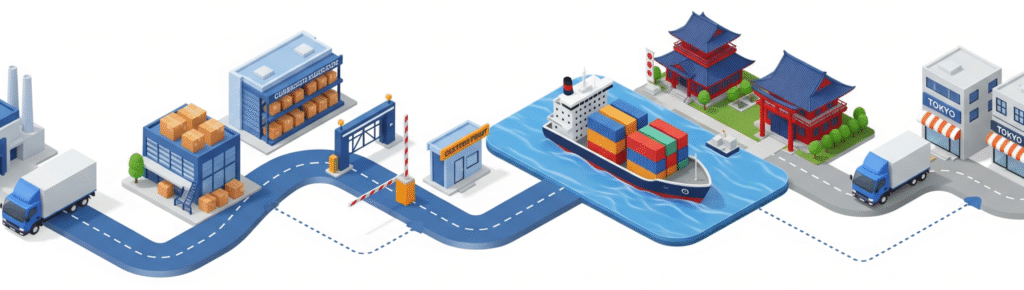
1. The Logistics Roadmap (Beyond the Tracking Number)
To ship successfully, you first need to understand how the cargo actually gets there. Perhaps on the tracking information you only see when the goods were dispatched, where they are now, and how long until delivery, but in reality, the processes and formalities behind the scenes are not that simple.
The GWT Fuzhou-to-Tokyo Flow:
LOGISTICS ROADMAP: FUZHOU TO TOKYO
Guanwutong (GWT) Optimized Supply Chain Flow
Factory Pick-up
Suppliers: Putian / Minqing
Fuzhou Warehouse
Consolidation & Check
Export Customs
Declaration
Transporte marítimo
Fuzhou to Tokyo
Japan Customs
Tax & Clearance
Final Delivery
Last Mile to Door
Why this roadmap matters: Every step represents a critical control point.
When shipping from Fuzhou to Tokyo, delays rarely come from the ocean itself. They come from the friction points before and after the vessel. Here is how we optimize the standard flow:
1. Factory Pick-up
Getting goods out of the factory is the first real hurdle. Factories are experts at production, but they don’t always watch the shipping clock. If they miss the window, you end up paying for overnight trucks or missing the boat entirely. We solve this by coordinating pickups in Putian or Minqing to match the vessel cut-off exactly, so your cargo never sits idle.
2. Fuzhou Warehouse
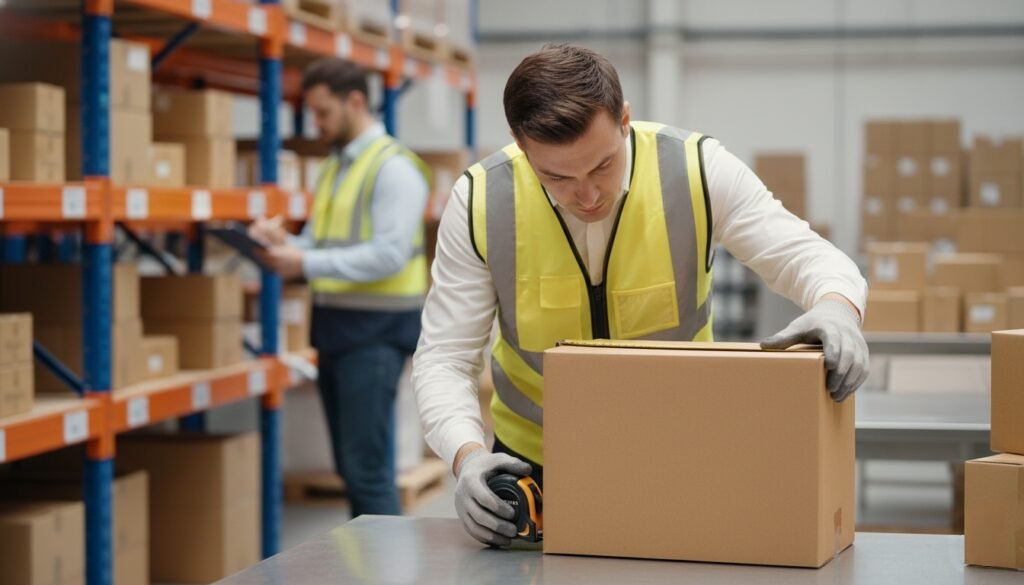
Think of this as your safety net before export. Factories often pack goods loosely or use weak boxes that get crushed (and rejected) in Japan. If we ship that, you pay for “air” or damages. Instead, we inspect packaging and verify volume here—fixing sloppy packing before it becomes a headache in Tokyo.
3. Export Customs
Fuzhou Customs is notoriously strict. A tiny typo here can trigger a random inspection , holding your cargo hostage for 2–4 days. We don’t just submit paperwork; we pre-validate your HS codes and logic first. This extra step clears the path for a smooth release while others get stuck in line.
4. Ocean Freight
There isn’t just one way to get to Tokyo. Relying on a “default” route often means paying for speed you don’t need, or getting stuck on a slow boat when you’re in a rush. We help you choose between the Mawei direct line and the Jiangyin transshipment option based on your deadline, not the carrier’s convenience.
5. Japan Customs
Here is where profit margins often disappear. Japan’s “Reverse Calculation” tax system is aggressive and can catch importers off guard. To prevent surprise penalties, we review your commercial invoice and declared values before the ship even docks, keeping you compliant and safe from tax shocks.
6. Final Delivery
The job isn’t done until the truck unloads. But Tokyo’s narrow streets and strict warehouse rules (especially Amazon FBA) mean a standard truck might get turned away at the door. We check the site conditions first. like road width and unloading gear, to ensure the vehicle we send can actually make the delivery.
Keep reading to discover exactly how we optimize each stage. Below, we will guide you through choosing the right transport mode, using our warehouse to save costs, and avoiding the common pitfalls that delay other importers.
2. Strategic Routing: How to Choose the Right Option?
Before we move your goods, we must define the best strategy based on what you are shipping. Fuzhou exports specific goods (like shoes and ceramics), and choosing the wrong port or vessel can cost you time and money.
Moving goods from Fuzhou to Japan isn’t just about booking a slot; it’s about matching the route to your cargo’s urgency and budget. We don’t just list options; we help you decide.

Which Port? (Mawei vs. Jiangyin)
Fuzhou has two main port areas, and they serve different purposes.
Don’t guess which port suit you well. The choice depends entirely on your factory location and cargo type.
Choose Mawei Port IF:
- Your supplier is in Fuzhou City, Minhou, or Ningde.
- You are shipping LCL (Less than Container Load).
Why? It is closer to the city centers. Although the water is shallower, it is the most cost-effective hub for lighter, consolidated cargo.
Choose Jiangyin Port IF:
- Your supplier is in Fuqing or Putian.
- You are shipping Heavy FCL (Full Container) (e.g., stone, heavy machinery).
Why? Driving a heavy container from Fuqing to Mawei is a waste of money. Jiangyin is a deep-water port specifically designed for heavy industries.
Choosing the wrong port can add $200+ to your trucking fees unnecessarily.
For a detailed breakdown, read our specific comparison: Puerto de Mawei vs. Jiangyin: ¿Cuál te ahorra dinero de verdad?
The Route Verdict (Direct vs. Transshipment)
Not all “Sea Freight” is created equal. From Fuzhou to Japan, you generally have two choices.
Route A (The Express) – Highly Recommended
Path: Fuzhou Direct ➔ Tokyo / Osaka / Nagoya.
Carrier: We utilize premium direct services like SITC or COSCO.
Pros: Fastest transit time, zero transshipment risk. ideal for Amazon FBA and retail goods.
Route B (The Economy)
Path: Fuzhou ➔ Shanghai (Feeder Vessel) ➔ Japan.
Pros/Cons: Slightly cheaper freight rate, but carries a high risk of delay (3-5 days) due to congestion at the transshipment port.
If you are interested, see the real-world performance of these vessels in our review:
Transit Time & Cost Analysis
Don’t rely on generic estimates. Here is the reality based on 2024-2025 data:
| Mode | Route Type | Est. Time (Port-to-Port) | Best For |
| Sea Freight (GWT Direct) | SITC/COSCO Direct | 3-4 Days | Standard Cargo, Amazon FBA, Urgent Stock. |
| Sea Freight (Transship) | via Shanghai/Ningbo | 7-10 Days | Low Budget, Heavy Bulk, Non-Urgent. |
| Transporte aéreo | Direct (FOC ➔ NRT) | 1-3 Days | Samples, High-Value Electronics, Emergency Restock. |
The Cost Reality: Beyond the Ocean Freight, you must consider Fuzhou local charges (THC, Doc fees, Trucking). Many forwarders hide these costs to offer a low initial quote. At GWT, we provide transparent, all-in quotes.
Stuck between options? Let us help.
Reach out for a quick, free chat.
We don’t just quote prices; we’ll help you pick the strategy that actually works best for your specific goods.
3. Pre-Carriage: Utilizing the Fuzhou Warehouse
By now, you likely have a clear judgment on which transport mode fits your budget and timeline.
But choosing the route is only the first step.
The next question is: How do we handle your goods on the ground?
Depending on your chosen mode (LCL or FCL) and the number of suppliers you have, the warehouse strategy changes completely. Let’s look at the right workflow for you.

Step 1: The Workflow – Do you need our warehouse?
Before we talk about what we do, let’s look at how your cargo moves. This depends on your shipment volume and supplier count:
Scenario A: LCL (Less than Container Load)
- Status: Mandatory Warehouse Stop.
- Your cargo is too small to fill a container. It must be sent to our GWT Warehouse to be combined with other goods.
Scenario B: Standard FCL (Full Container Load)
- Status: Direct from Factory (Usually).
- If you have one supplier filling one whole container, we usually send the container truck directly to their factory. No warehouse needed.
Scenario C: Buyer’s Consolidation (The “Smart FCL”)
- Status: Strategic Warehouse Stop.
- You have 3 different suppliers (e.g., Putian, Minhou, Ningde), but each only has 5-10 CBM. Instead of shipping 3 separate LCLs (expensive!), we bring all goods to the GWT Warehouse, combine them into one single FCL container.
Step 2: The GWT Warehouse Operation
For Scenario A (LCL) and C (Buyer’s Consolidation), your goods can enter our Fuzhou Bonded Warehouse. This is not just a storage room; it is your Quality Control Center.
Phase 1: Inbound (Collection)
The Network: We coordinate with your suppliers in Putian (Shoes), Minqing (Ceramics), or Fuzhou City (Parts) to schedule deliveries.
The Timing: We ensure all goods arrive before the vessel cut-off time.
Phase 2: In-Warehouse Processing
Factories often use weak packaging for domestic transport. We fix this before export.
Verification: We measure the Actual Weight & Volume.
Watch Out: Factories often exaggerate volume to charge you more. We provide the real data so you don’t overpay.
Inspection: We check for crushed corners, wet boxes, or missing shipping marks.
Reinforcement: If a box is weak, we palletize it or add corner guards.
Phase 3: The Problem Solving
What happens if things go wrong? We fix them before departure.
| Common Issue | The Factory’s Way (Risk) | The GWT Solution |
| Missing / Wrong Quantity | You find out in Japan. Factories often ship short. You only realize it when opening boxes at the destination. (Too late!) | We count it here. We verify quantity upon entry. If 10 cartons are missing, we catch it before the ship leaves China. |
| Dangerous Goods (Compliance) | Rejected at Port. Goods like batteries or liquids get stuck at customs because the factory forgot the MSDS report. | Document Pre-Check. We review all critical docs (MSDS, UN38.3) before trucking to the port to ensure smooth export. |
| Weak Packaging | High Breakage Risk. Factories use cheap domestic cartons that get crushed during ocean freight. | Reinforcement. We inspect packaging. If it’s weak, we add corner guards, pallets, or shrink wrap to protect your goods. |
Step 3: The “3-in-1” Advantage: Stop Paying Triple Fees
Why bother with Buyer’s Consolidation (Scenario C)?
- One Customs Entry: Instead of clearing customs 3 times for 3 suppliers, you do it once.
- One Destination Fee: You avoid paying multiple “Minimum Charges” at the destination port.
- Result: This strategy typically saves our clients 20-30% on total logistics costs compared to shipping separately.
Stuck between options? Let us help.
Reach out for a quick, free chat.
We don’t just quote prices; we’ll help you pick the strategy that actually works best for your specific goods.
4. Risk Management: The “Invisible Shield” Protocol
Shipping from Fuzhou to Japan is short in distance but high in precision. Most delays do not come from ocean transit. They come from paperwork accuracy, port timing, and last-mile coordination.
Based on 15+ years of hands-on experience, we’ve identified the four risk areas that matter most on this route, and here’s how we handle them in practice.
Risk Area 1: Japan Customs & Documentation Accuracy
Why this matters: Japan Customs is one of the strictest in Asia, especially for Fujian exports like footwear, apparel, and ceramics. Even small document errors can trigger 2–5 days of inspection.
Common Risks:
- Vague product descriptions (e.g., “machine parts,” “accessories”).
- AFR filing mistakes (Japan requires data 24 hours before departure).
- Mismatch between invoice, packing list, and HS code.
How we prevent issues:
- We review your invoice before submission.
- We help refine product names to meet Japan Customs expectations.
- We cross-check AFR data line by line before filing.
Result: Lower inspection probability and smoother customs clearance.
Risk Area 2: Port Timing & Cut-Off Management in Fuzhou
Why this matters: Fuzhou ports (Mawei & Jiangyin) operate on tight CY cut-off schedules, with fewer “late-gate” options compared to Shanghai.
Common Risks:
- Inland factories underestimate trucking time.
- Traffic delays in Putian/Nanping areas.
- Trucks reaching the port after cut-off.
How we prevent issues:
- Build a 2–3 hour buffer for inland cargo pickup.
- Coordinate pickup times based on real local traffic patterns.
- Pre-confirm ETD, CY cut-off, and gate-in appointments.
Result: Reduced risk of missing the intended vessel.
Risk Area 3: Cargo Compliance – Batteries, Packaging & Labels
Why this matters: Japan enforces zero-tolerance rules on dangerous goods and wooden packaging.
Common Risks:
- Lithium batteries without up-to-date MSDS or UN38.3 reports.
- Wooden pallets lacking IPPC stamps.
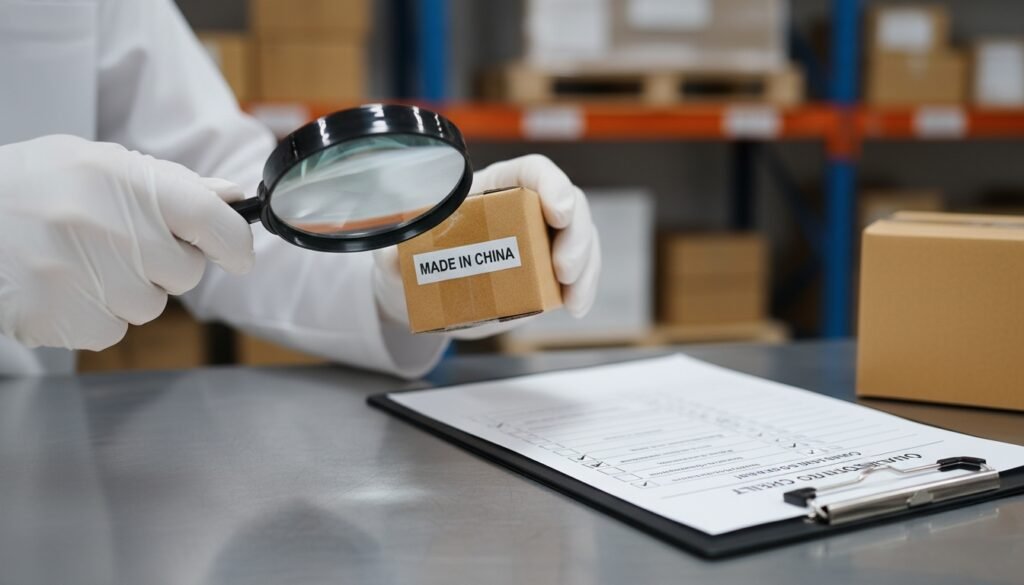
- Wrong or missing “Made in China” labels.
How we prevent issues:
- Verify battery documentation before arranging pickup.
- Conduct packaging & label checks in our Fuzhou warehouse.
- Ensure IPPC-stamped pallets before loading.
Result: Avoiding rejections, return shipments, or disposal fees in Japan.
Risk Area 4: Last-Mile Delivery in Japan
Why this matters: Japan’s domestic trucking is efficient but expensive—especially when mistakes happen.
Common Risks:
- Receiver has no forklift but the truck has no liftgate.
- Warehouses not ready, causing expensive waiting-time charges.
- Incorrect address or delivery window.
How we prevent issues:
- Ask upfront: “Do you need a tailgate truck or do you have a loading dock?”
- Confirm delivery slot with the receiver in advance.
- Provide real-time updates on truck arrival.
Result: Fewer failed deliveries and no surprise local charges.
Meet problems? Welcome to reach out us for a quick, free chat.
We don’t just quote prices; we’ll help you pick the strategy that actually works best for your specific goods.
5. Japan Arrival: Customs & Last Mile
Crossing the ocean is actually the easy part. The real complexity starts when the vessel docks in Japan.
At this stage, the rules change depending on who you are (General B2B Importer vs. E-commerce Seller). Here is how the system works and the specific hurdles you might face.
Hurdle 1: Customs Clearance (Two Different Rules)
Japan Customs applies different valuation methods based on your business model. You need to know which one applies to you.
Scenario A: For General B2B Trade (Standard)
If you are a Japanese company buying goods from China to resell or use.
- The Rule: Tax is usually calculated based on the Transaction Value (CIF Price) on your commercial invoice.
- The Trap: Even though it seems simple, Japan is extremely strict on HS Codes. If you declare “Plastic Box” but the customs officer thinks it should be “Storage Organizer,” the tax rate could jump from 0% to 3.9% or higher.
- The Solution: We pre-classify your HS Codes before shipping to ensure the duty rate is accurate and defensible.
Scenario B: For E-commerce / Amazon FBA (Special)
If you are shipping to Amazon warehouses without a Japanese buyer.
- The Rule: Since there is no “buyer” yet, Customs often rejects your factory procurement price. Instead, they apply the “Reverse Calculation Method” (Gyaku-Keisan). They estimate the tax base by working backward from your selling price in Japan.
- The Trap: If you simply declare the factory cost, Customs may view it as undervaluation. This can lead to a sudden, heavy tax bill or a retrospective audit.
- The Solution: You need a logical declaration formula. We help you calculate a reasonable declared value that satisfies Customs while protecting your margins.
Hurdle 2: The “Last Mile” Trucking Reality
Delivery in Japan is highly efficient but very rigid. It is not as flexible as in China or Southeast Asia.
The Situation: Japanese delivery trucks come in various specs. Standard trucks often do not have a Liftgate (Tailgate).
The Problem:
No Forklift? No Delivery: If your receiving warehouse doesn’t have a loading dock or forklift, and the truck has no liftgate, the driver cannot and will not unload the goods by hand.
Strict Time Slots: Japanese drivers operate on tight schedules. If the receiver isn’t ready when the truck arrives, Waiting Fees start accumulating immediately and are very expensive.
The Solution:
Confirm “Tailgate Service” needs in advance.
Book a precise delivery window with the receiver.
How We Can Help
Whether you are a traditional trader or an Amazon seller, our goal is the same: No surprise costs.
These complexities, tax calculations and truck coordination, are exactly what we handle every day:
For Customs (Tax Control):
- If you are B2B: We ensure your HS Codes are precise to avoid overpaying duties.
- If you are E-commerce: We help you navigate the “Reverse Calculation” so your tax bill is predictable.
For Delivery (Last Mile):
- We confirm the receiving conditions (Loading Dock? Forklift?) upfront to book the right truck, ensuring no failed deliveries.
If you are unsure about which rule applies to your cargo, or need a specific truck type, feel free to contact us. We can review your paperwork and give you a clear answer.
6. Industry-Specific Solutions: Beyond “General Cargo”
By now, you should have a clear understanding of the standard shipping process from Fuzhou to Japan. But what if your cargo isn’t “standard”?
If you are shipping specialized goods, like batteries from Ningde, shoes from Putian, or ceramics from Minqing, the general rules we discussed above might not be enough. These industries have specific pain points that require a tailored logistics approach.
Below is a breakdown of the four most common “Special Cargo” categories on this route. Here is why they are risky, and how GWT handles them differently to ensure safety.

Category 1: Electronics & Batteries
(Common Items: Mobile accessories, Power banks, Small appliances)
The Unique Risk:
- Compliance: Japan has strict PSE and PMDA regulations. If the MSDS or UN38.3 reports for batteries are missing or outdated, the carrier will refuse the booking instantly.
- Moisture: Ocean transit is humid. Sensitive ports or circuits can corrode.
The GWT Solution:
- Pre-Booking Audit: Unlike general agents who just forward docs, we pre-audit your MSDS/UN38.3 three days before pickup to guarantee carrier acceptance.
- Waterproofing: For high-value electronics, we apply shrink-wrapping and palletizing in our Fuzhou warehouse to create a moisture barrier.
Category 2: Fashion & Footwear
(Common Items: Putian Sneakers, Textiles, Garments)
The Unique Risk:
- The “Mold” Nightmare: The Fuzhou-Japan route is humid. Textiles trapped in a container can develop mold (mildew), ruining the entire batch.
- Wasted Space: Shoeboxes contain a lot of air. Poor stacking means paying for air.
The GWT Solution:
- Anti-Mold Protocol: We hang industrial-grade Desiccants (Dry Poles) inside the container upon request to absorb excess humidity.
- Maximized Loading: Our team uses “Interlocking Stacking” techniques (not just columns). This typically allows us to fit 10-15% more inventory into a container than standard loading, lowering your per-unit cost.
Category 3: Heavy & Fragile Goods
(Common Items: Minqing Ceramics, Machinery Parts, Hardware)
The Unique Risk:
Road Fines in Japan: This is the first issue. Japan’s road weight limits are stricter than China’s. An unevenly loaded container might be legal in Fuzhou but illegal to truck in Tokyo.
Breakage: Heavy items can shift during rough seas.
The GWT Solution:
Smart Weight Distribution: We calculate the payload strictly against Japan’s Road Traffic Law. We ensure weight is evenly distributed so your container doesn’t get grounded at the Tokyo port.
Safety Reinforcement: For fragile ceramics, we provide wooden crate reinforcement and corner protectors.
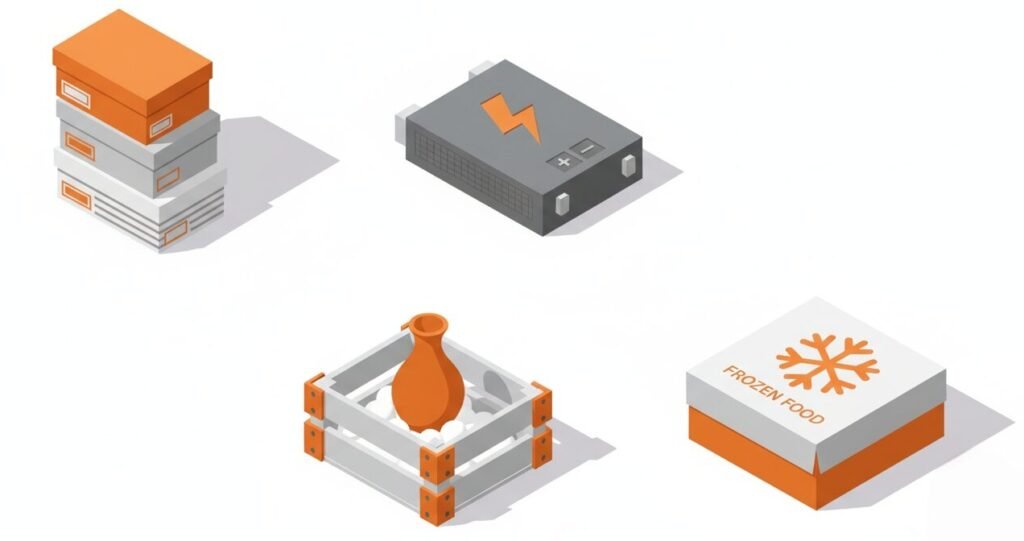
Category 4: Medical, Food & Cosmetics
(Common Items: Supplements, Processed Food, Skincare)
The Unique Risk:
- Spoilage: A temperature spike of just 5°C can melt creams or spoil frozen food.
- Customs Destruction: Japan forbids many additives common in China.
The GWT Solution:
- Cold Chain Management: We utilize high-spec Reefer Containers with continuous temperature logging.
- Ingredient Cross-Check: We help you check your ingredient list against Japanese import regulations beforehand to prevent destruction orders.
Ready to Ship?
Whether your goods fit into these categories or are something completely unique, we have a plan for it.
7. So, Why Guanwutong (GWT)?
Let’s be honest. There are thousands of freight forwarders out there. Some are giant corporations where you are just a “tracking number.” Others are “one-man bands” working from home with no backup plan.
GWT sits in that perfect middle ground. We’ve been doing this for 6 years. We aren’t a massive bureaucracy, but we aren’t small either. We have a solid, tight-knit team of 30+ professionals handling about 1,000 shipments every month. This size allows us to be stable enough to handle big volumes, but agile enough to care about your specific box.

We Go Direct (So You Save Money)
Many forwarders you find online are actually “booking through another forwarder.” That adds layers of cost. We don’t do that. We have direct accounts with over 20 major carriers (like SITC, COSCO, EMC, OOCL).
- What this means for you: When we quote a price, it’s a “first-hand” price. No middleman markup.
- Need speed? We can even book HDS (Hot Delivery Service) for you. It means your container gets loaded last and unloaded first in Japan—a huge time-saver for urgent stock.
We Fit the Plan to Your Cargo (Not the other way around)
You don’t always need a full container. We look at your volume and honestly tell you what’s most cost-effective:
- Got a lot of goods? (FCL) If you have enough to fill a container (28–68 CBM), we book a 20GP or 40HQ just for you. It’s safer because it’s only your goods inside. Since we focus on wholesale, our FCL rates are very competitive.
- Not enough for a full container? (LCL) If you have less than 15 CBM, don’t waste money on a half-empty container. We’ll combine your goods with our other clients’. We make it cheap, and reliable.
- In a rush? (Air & Courier) Sometimes you need goods in Tokyo yesterday.
< 200kg: We suggest DHL/UPS/FedEx. It’s often cheaper than air freight for small boxes.
> 200kg or Urgent: We book direct Air Freight. We even handle tricky things like oversized machines or batteries.
More Than Just Shipping
Think of our warehouse as your own consolidation center in China. You can have 5 different suppliers send samples to us. We collect them, store them (for free), and ship them out as one bundle. You just wait at your warehouse in Japan for the delivery.
We don’t promise to be the “Cheapest in the Galaxy”. Cheap often means risky. But we promise fair prices, transparent options, and a real human team watching over your goods.
Reference Transit Times (China to Japan)
Just to give you an idea of how fast the ocean route is:
| From | To | Est. Time |
| Shanghai / Ningbo | Tokyo | 3-4 Days |
| Xiamen / Fuzhou | Tokyo | 4 Days |
| Qingdao | Tokyo | 3-4 Days |
| Shenzhen | Tokyo | 5 Days |
Let’s see if we are a good fit.
Send us your cargo details. We’ll reply with a tailored plan and a transparent quote within 2 hours.
Conclusion
Shipping from Fuzhou to Tokyo is more than just moving a container from Point A to Point B. As we have explored in this guide, it is a complex chain of decisions, from choosing between Mawei and Jiangyin ports, to navigating the “Reverse Calculation” tax rules in Japan, to ensuring your sensitive electronics or ceramics survive the journey intact.
In this trade, the “cheapest” freight rate often becomes the most expensive mistake. A saving of $50 on ocean freight means nothing if your goods are detained by Japan Customs for 5 days due to a vague HS code, or if your fragile cargo arrives shattered because of poor stacking.
That is why GWT focuses on certainty. With our own Fuzhou warehouse, direct carrier resources, and deep Japan expertise, we ensure your supply chain is safe, compliant, and efficient. We handle the risks so you can focus on your business.
Don’t let logistics be a bottleneck. Whether you are shipping a sample or a full container, let’s start with a conversation. We are ready to be your bridge across the East China Sea.
FAQ
Yes, we have long-term Tier-1 agency partners in Tokyo, Osaka, Nagoya, and Fukuoka who handle all local customs and delivery matters. Note: While our Shenzhen and Fuzhou operation teams communicate primarily in English and Chinese, our Japanese partners on the ground are native speakers. We bridge the communication gap so you don’t have to worry about language barriers.
We are a Direct Booking Agent. We hold direct accounts with major carriers like SITC, COSCO, and TSL. This means we book directly with the shipping line, giving you faster confirmation and lower rates without middleman markups.
If a random inspection occurs, our Japanese partner will notify us immediately. We will coordinate the exam process and provide you with the official customs receipt for any exam fees (at cost).
Pro tip: Our pre-shipment document check significantly reduces this risk.
Absolutely. It is part of our SOP. We never submit the final Bill of Lading instructions without your approval. You will receive a draft to check shippper/consignee details and goods descriptions to ensure 100% accuracy.
Yes. You won’t need to chase us. We proactively notify you at four key milestones:
1. Cargo Picked Up, 2. Vessel Departed (ATD), 3. Vessel Arrived (ATA), and 4. Customs Released.
Yes. This is our value-added service. Before shipping, you can send us your product photos and descriptions. Our team will recommend the most appropriate HS Code for Japan Customs to optimize your duty rates and ensure compliance.
Yes. For e-commerce sellers or clients who want a hassle-free experience, we offer DDP (Delivered Duty Paid) services. We can provide an all-inclusive quote that covers freight, duty, and tax before you ship.
Certainly. We are a registered NVOCC (Non-Vessel Operating Common Carrier). We can sign a formal Service Level Agreement (SLA) or a standard Logistics Contract to protect your rights and ensure service standards.
Ready to optimize your supply chain?

Thank you for reading!
Have questions, corrections, or better ideas? We’d love to hear from you!
We value every piece of feedback and promise to reply within 24 hours. Let's make this guide better together!
Note: Spam comments will not be published.