
Fuzhou Mawei vs. Jiangyin Port: Which One Actually Saves You Money?
By Guanwutong / November 26, 2025
Picture this: You’ve just placed an order for 2,000 pairs of sneakers from a factory in Putian. Your supplier quotes you “FOB Fuzhou.” It sounds simple enough.
But when you ask your forwarder to book the vessel, they ask a specific question that might stump you: “Do you want to depart from Mawei Port (马尾) or Jiangyin Port (江阴)?”
You might be thinking: “Does it really matter? Aren’t they both just ‘Fuzhou Port’?”
Technically, yes. But financially? No. Although they share the same city name, choosing the “wrong” port for your specific factory location can unnecessarily add $150–$300 to your trucking bill and even delay your shipment.
In this guide, we aren’t selling you a service. We are going to open the map, analyze the costs, and help you find the logical answer. By the end of this article, you will know exactly which port belongs on your Bill of Lading.

1. The Geography: Why “Distance” is the Root of the Cost
To make a smart decision, we first need to understand the battlefield. Why is there a price difference?
The core reason is Distance. Fuzhou isn’t a single dot on the map; it’s a large region. Mawei Port and Jiangyin Port are located nearly 80 kilometers (50 miles) apart—that’s a 1.5 to 2-hour drive.
Mawei Port: Located in the north, inside the Min River. It is the “City Port,” very close to downtown Fuzhou.
Jiangyin Port: Located far south in the Fuqing area, facing the open ocean. It is the “Deep Water Port.”
This 80km gap is what determines your trucking fee. A truck driver charges based on mileage. If your factory is in the south, but you force the driver to drive north to Mawei, you are paying for wasted fuel and time.
So, let’s read on and look at your specific situation. Where is your cargo coming from?
2. Factor 1: Factory Location (The Trucking Cost Decider)
“Geography is destiny.” This is especially true for your wallet. Most buyers assume ocean freight is the main cost, but for Fuzhou shipments, the Inland Trucking Fee is often the swing factor.
Let’s analyze the three main manufacturing zones in Fujian to see which port wins for you.
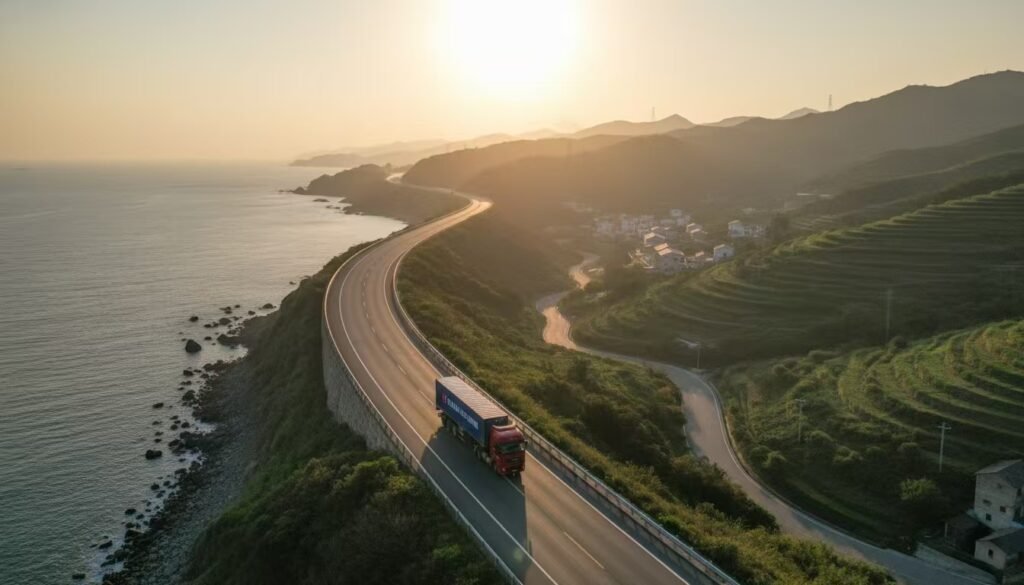
Zone A: Fuzhou City / Minhou / Ningde
(Common Goods: Auto parts, Bamboo, Tea, Handicrafts)
The Situation: These factories are located in the North or Central area.
The Logic: Mawei Port is right on their doorstep (30–60 mins drive).
The Verdict: Choose Mawei.
Why? If you choose Jiangyin, the truck has to drive an extra 80km south. That’s pure waste.
Zone B: Putian (The Shoe Capital) / Fuqing
(Common Goods: Sneakers, Food products, Glass)
The Situation: Putian is located in the South, closer to Quanzhou.
The Logic: Putian is geographically much closer to Jiangyin.
The Verdict: Choose Jiangyin.
Why? This is the most common mistake we see. Buyers pick Mawei out of habit. But to get from Putian to Mawei, the truck has to drive “backwards” past Jiangyin, fight through city traffic, and travel an extra 1.5 hours. This mistake usually costs an extra RMB 500–1,000 ($70–$140) per container.
Stuck between options? Let us help.
Reach out for a quick, free chat.
We don’t just quote prices; we’ll help you pick the strategy that actually works best for your specific goods.
3. Factor 2: Cargo Weight (The “Veto” Power)
Now you might be thinking: “Okay, my factory is in the North, so I should always pick Mawei, right?”
Not necessarily. Distance isn’t the only rule. Sometimes, the Physical Nature of your goods forces you to change ports.
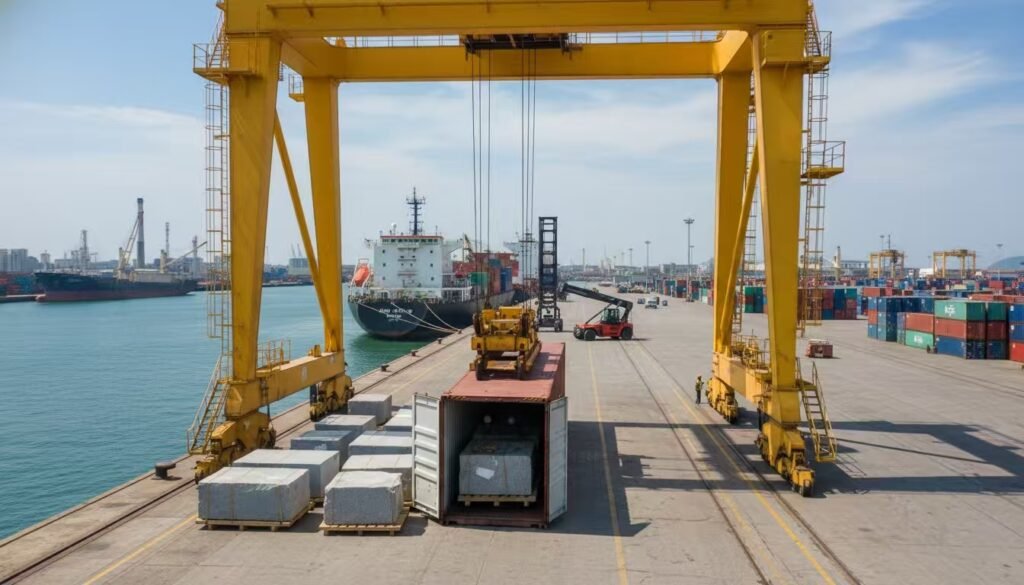
The “Heavy Cargo” Exception (Ceramics & Stone)
If you are sourcing Ceramics from Minqing or Stone/Granite, you have a weight problem.
The Issue: Mawei is a river port. It has shallower water (draft limits) and strict road weight enforcement in the city area.
The Solution: Even if Mawei is closer, we often recommend Jiangyin for heavy containers (over 18-20 tons). Jiangyin is built for heavy industry. It avoids the risk of your container being “grounded” (left behind) because the ship is too heavy for the river depth.
The “LCL” Rule
If you are shipping Less than Container Load (LCL):
The Verdict: Stick with Mawei.
Why? Almost all consolidation warehouses (CFS), including GWT’s own warehouse, are clustered around Mawei. Sending small cargo to Jiangyin often complicates the logistics flow.
4. Factor 3: Route Stability (River vs. Ocean)
We’ve looked at Money (Trucking) and Physics (Weight). Finally, let’s look at Time. Does the port choice affect your delivery speed to Japan?
Mawei (The River Port):
Pros: High frequency. It has many “feeder vessels” and direct intra-Asia loops (SITC, TSL) that depart almost daily.
Cons: Weather Sensitivity. In typhoon season (July-Oct) or heavy fog, the river channel can close, delaying barges by 1-2 days.
Jiangyin (The Sea Port):
Pros: Stability. Being a deep-water port, it is less affected by tides and weather. It accommodates larger mother vessels.
Cons: Schedule alignment. It has fewer sailings per week compared to the bustling Mawei hub.

Selected your port? Next, discover how to choose the fastest vessel:
Conclusion
Shipping from Fuzhou to Tokyo is more than just moving a container from Point A to Point B. As we have explored in this guide, it is a complex chain of decisions, from choosing between Mawei and Jiangyin ports, to navigating the “Reverse Calculation” tax rules in Japan, to ensuring your sensitive electronics or ceramics survive the journey intact.
In this trade, the “cheapest” freight rate often becomes the most expensive mistake. A saving of $50 on ocean freight means nothing if your goods are detained by Japan Customs for 5 days due to a vague HS code, or if your fragile cargo arrives shattered because of poor stacking.
That is why GWT focuses on certainty. With our own Fuzhou warehouse, direct carrier resources, and deep Japan expertise, we ensure your supply chain is safe, compliant, and efficient. We handle the risks so you can focus on your business.
Don’t let logistics be a bottleneck. Whether you are shipping a sample or a full container, let’s start with a conversation. We are ready to be your bridge across the East China Sea.
FAQ
This is likely due to habit or flight availability. Mawei has more frequent sailings (feeder vessels) than Jiangyin. Some forwarders choose Mawei because it’s “easier” to find a boat, even if it costs you more in trucking. At GWT, we check Jiangyin schedules first to save your trucking cost.
Generally, both fall under CNFOC (Fuzhou) in many systems, but on the Bill of Lading, the terminal will be specified. It is crucial to instruct your supplier to specify “Fuzhou Jiangyin” or “Fuzhou Mawei” on the booking to ensure the truck driver goes to the right place.
The customs standards are the same (China Customs), but the speed can differ. Mawei is a busier, older port, so queues can sometimes be longer. Jiangyin is more efficient for heavy industrial goods. However, accurate paperwork (HS Codes) matters more than the port choice.
It is possible but not recommended. 90% of export consolidation warehouses are located near Mawei/Fuzhou City. If you send LCL cargo to Jiangyin, it often has to be trucked back to Mawei for consolidation anyway, adding unnecessary cost and handling risks. Stick to Mawei for LCL.
Jiangyin. Mawei is a river port with strict draft limits, and the roads leading to it pass through urban areas with strict weight enforcement. Jiangyin is a deep-water seaport designed for stone and heavy industry, making it much safer for heavy loads.
SITC (and other carriers like TSL/COSCO) has services at both, but the frequency differs. Mawei typically has multiple feeder sailings per week connecting to Japan. Jiangyin has fewer direct calls. If “Daily Departure” is your priority, Mawei wins. If “Low Cost” is priority, Jiangyin wins (for southern factories).
Still Unsure? Let Us Do the Math.
This is where GWT helps. Send us your Factory Address and Cargo Weight. We will run a quick calculation (Trucking Cost + Ocean Freight) for both ports and tell you exactly which option puts more profit in your pocket.

Thank you for reading!
Have questions, corrections, or better ideas? We’d love to hear from you!
We value every piece of feedback and promise to reply within 24 hours. Let's make this guide better together!
Note: Spam comments will not be published.