
20 Feet Container vs 40 Feet Container: The Ultimate Guide for International Shipping
著者: Guanwutong / July 16, 2025

20ft container and 40ft container shipping comparison, including the 40ft container. Get to know dimensions, capacity, the cost, and what container size would be most suitable to your cargo. Included expert information regarding logistics.
Your international logistics strategy and international operation costs and efficiency may depend greatly on the decision of a 20-foot shipping container and 40ft containers are crucial for international operation costs high cube containers.
Differences in the basic dimensions of these two common containers are vital factors in carrying on business in international trade, whether you are transporting raw materials or finished goods or have got tied up with complicated supply chains high cube container.

Shenzhen Guanwutong International Freight Forwarding Co., Ltd. (GWT Worldwide) is a professional logistics service provider focusing on global logistics freight forwarding, supply chain and cross-border e-commerce logistics container types.
As the expert in the 航空貨物, sea freight, China-Europe railway transport, international express solutions, customs clearance, warehousing, and Amazon FBA shipping, GWT Worldwide offers high-quality logistics services ensuring reliability and affordability due to a network of trusted partners and the use of the latest technologies standard containers.
What Are Standard Shipping Containers?
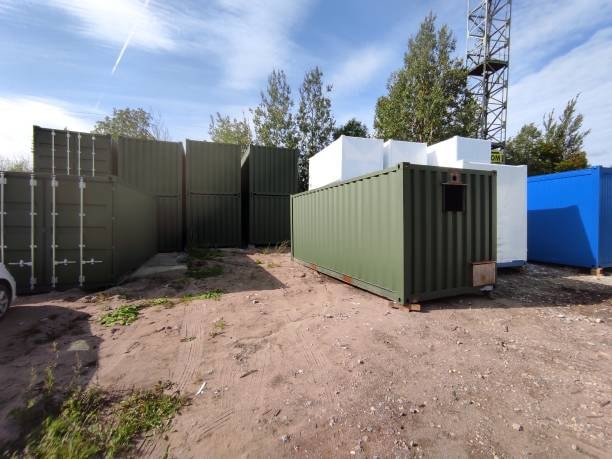
The shipping containers are rectangular metal boxes that are standardized in size and suitable in intermodal freight transportation, in other words, they can be loaded on ship, truck and the train and transferred without being unloaded oversized cargo. These standards were set by the International Organization for Standardization (ISO) and are used to reduce the inconvenience in the international trading and makes them global compatible 40ft shipping container.
The 20-Foot Container Overview
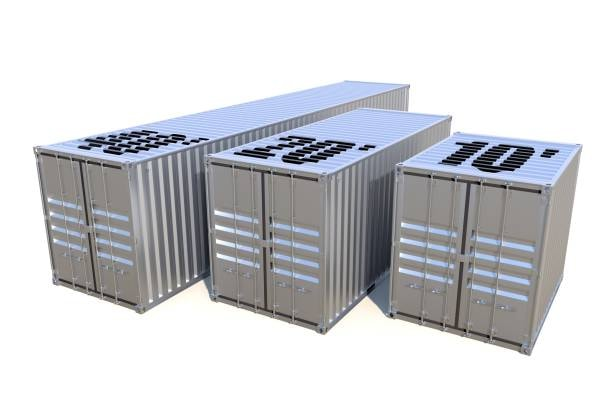
The 20 foot container, which is sometimes denoted TEU (Twenty-foot Equivalent Unit) is the standard measure of container shipping capacity all over the world. Such dimension of container has been the standard in the industry since the onset of containerization in 1950s taller cargo.
External Dimensions of 20-Foot Containers
An industry standard 20 foot container has a container length of 20 feet, container width of 8 feet and container height of 8 feet 6 inches. This external size is equivalent to some 6.06 meters long, 2.44 meters wide, and 2.59 meters high that offers to deliver a compact but sustainable shipping solution in terms of different kinds of cargo transportation exterior dimensions.

Internal Dimensions of 20-Foot Containers
It is a 20-foot container where the inside area is usually 19 feet 4 inches long, 7 feet 8 inches wide, and 7 feet 10 inches high. The thickness of the walls of the container and structural parts are taken into consideration in this internal space that would allow using about 5.90 meters of the available length, 2.35 meters of the available width, and 2.39 meters of available height how many pallets.

Volume Capacity of 20-Foot Containers
The internal depth of a 20-foot container is estimated to be 1,172 cubic feet /33.2 cubic meters internal width. The volume capacity allows carrying heavy dense cargo or small shipments that do not need the entire space in large containers hence suitable in terms of volume double the capacity.
Weight Specifications for 20-Foot Containers
The gross weight of a 20-foot container is 67200 pound (30480 kg) maximum, and the tare weight (weight of an empty container) is about 4850 pound (2200 kg) internal length. That only leaves an approximate 62, 350 lbs (28, 280 kg) available as a payload weight to your cargo.

The 40-Foot Container Overview
The 40-foot container which is twice the length of the 20-foot container retains the width and height of the 20-foot container. This size of containers has grown more popular over voluminous lightweight cargo as well as consolidated consignment only difference.

External Dimensions of 40-Foot Containers
A typical 40 feet container has 40 feet length, 8 feet width and 8 feet 6 inch high. On metric measures, this is equivalent to 12.19 meters in length, 2.44 meters in width and 2.59 meters in height, which gives a far greater area of space to arrange cargo in a linear format.
Internal Dimensions of 40-Foot Containers
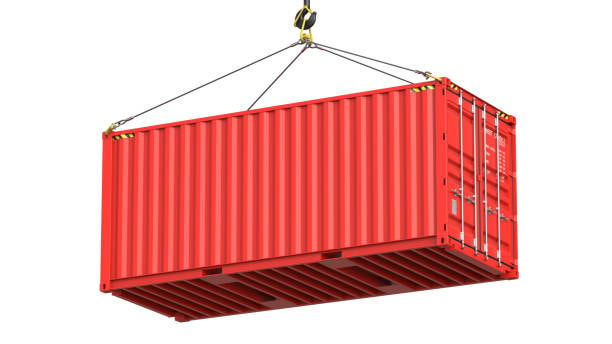
A 40-foot container usually has an internal cargo span length that ranges between 39 feet 6 inches, 7 feet 8 inches and 7 feet 18 inches high. This gives about 12.03 meters of length that can be used, 2.35 meters of width which can be used and 2.39 meters of height that can be used to place cargo.

Volume Capacity of 40-Foot Containers
The internal contents of a 40-foot container provide a space of about 2390 cubic feet or 67.7 cubic meters. This almost doubles the volume capacity to a 20 footed container, and it is best used with lightweight and bulky goods or multi-shipment goods.

Weight Specifications for 40-Foot Containers
The maximum gross weight of a 40-foot container is the same as that of a 20-foot-long container, i.e. 67,200 pounds (30,480 kg). The tare weight is however around 8,380 pounds (3,800 kg) and this leaves a total payload capacity of around 58,820 pounds (26,680 kg).
Cost Comparison Between Container Sizes
The price of 20-foot containers and 40-foot containers differ considerably according to trade routes, seasonally and depending on the state of the market. The price of 40-foot containers is usually 1.5 to 1.8 times the cost of a 20-foot container, and not twice as expensive, at all.
Space Efficiency Analysis
In the comparison of space efficiency, the 40-foot containers are more valuable used in volume-based cargo. The price charged on 40-foot containers is per cubic meter, which is usually 15 25 percent lower than this attracts businesses that ship light and bulky products or various product lines.
積載と取り扱いに関する注意事項
The loading is very different with containers of different sizes. 20-foot containers can be loaded in restricted areas and with less specialized apparatus whereas 40-foot containers require sufficient space within the terminals and loading could be carried out with appropriate lifting materials.
Transportation Compatibility
Both the sizes of containers fit in standard shipping vessels but transport can differ according to the region. The 40-foot containers cannot be used on certain inland transportation routes because of the restrictions placed on them by road and 20-foot containers are more flexible in transporting to such destinations.
Port and Terminal Considerations
Both types of containers can be accommodated effectively in most of the major international ports. Other small ports or terminals in the interior might also be restricted with 40-foot containers, which will influence your options depending on the needs of final destination.
Cargo Type Suitability
This is because a decision on the container size is usually based on the nature of the cargo. Heavy loads such as metals or any machinery would fit well into 20-foot containers and 40-foot containers when transporting products that are lightweight such as textiles, electronics, or furniture because additional volume is available.
Consolidation Opportunities
The 40 foot containers perform very well in cases where they are consolidated such as in cases where many shippers are merged together. 40-foot containers are commonly used by LCL (Less than Container Load) consolidators to help create economies of scale to help charge a lower fee per unit of goods shipped with small shippers.
Environmental Impact Considerations
Environmentally, 40-foot containers tend to be more efficient in terms of their capacity per cargo, that is transported. These factors include fewer cargo movements by containers, less crane work and truck journeys per cubic meter of cargo leading to low carbon emissions.
Availability and Booking Considerations
The supply of containers varies due to trade imbalance and seasonal demand. It is possible that you face shortages of 20-foot containers during high seasons, and more 40-foot containers can be available in this event, which influences your shipping plans and expenses.
Insurance and Risk Factors
Depending on the size of a container, insurance might also change. Although the premium difference normally is small, the difference between having all the cargo value in a single 40-foot container or spreading that value between two 20-foot containers can affect the risk management decisions.
Documentation and Customs Procedures
The main similarity at customs levels is that they will be around the same, and consolidation at 40-foot may need extra documentation on multiple consignees or complicated cargo manifest, which can delay the time of clearance.
Future Trends in Container Shipping
The industry of shipping is advancing to bigger sizes of containers in order to improve efficiency. Nevertheless, even 20-foot and 40-foot containers are still relevant with 20-foot containers still being relevant to heavy freight and other specialties.
Regional Preferences and Trade Routes
These preferences of container sizes differ according to the trade route and regional attributes. The need to export containers to Asian manufacturing locations favors the use of 40-foot containers, whereas some trade patterns hold significant demand of 20-foot containers because either the cargo or infrastructure places restrictions.
Making the Right Choice for Your Business
To become a brokerage, you need to identify the right size of the container based on your cargo properties, frequency of shipping, specifications of the destination, and cost evaluation. You should decide based on such aspects of appearance such as cargo density, exemption frequency of shipments, and flexibility of the supply chain.
Working with Logistics Partners
Experienced container selection can be done by good freight forwarders such as GWT Worldwide that helps us in deciding ex. according to experience of various trade routes, type of cargo and market conditions of various Container Phones. Their skills will give you the best shipping policy in terms of cost and reliability.
結論
The decisions of using 20-foot and 40 foot containers have a wide influence on the cost of shipping the products, our efficiency in the operations as well as the effectiveness of the supply chain. Although the 20-foot containers are more suitable when dealing with heavy dense cargo and are more tractable in their handling and transportation, the 40-foot containers have a lower cost per volume due to its suitability in transporting light-weight bulky goods and goods that have been condensed. The choice is supposed to be made depending on your particular cargo nature, destination needs and general approach to logistics.
FAQ(よくある質問)
Here are answers to the most frequently asked questions regarding the differences between 20-foot and 40-foot shipping containers to help you optimize your international logistics strategy.
20ft Container Internal Dimensions: Approximately 19′ 4″ long x 7′ 8″ wide x 7′ 10″ high (5.90m x 2.35m x 2.39m).
40ft Container Internal Dimensions: Approximately 39′ 6″ long x 7′ 8″ wide x 7′ 10″ high (12.03m x 2.35m x 2.39m).
※ While the length doubles, the width and height remain standard, unless you opt for a High Cube container for extra vertical space.
A standard 20ft container has a volume capacity of approximately 33.2 cubic meters (CBM), while a 40ft container offers about 67.7 CBM. This means a 40ft container provides roughly double the volume capacity of a 20ft unit, making it highly space-efficient for voluminous cargo.
It depends on the pallet type:
Standard Pallets (1.2m x 1.0m): A 20ft container typically holds 10 pallets, while a 40ft container holds 20-21 pallets.
Euro Pallets (1.2m x 0.8m): A 20ft container holds about 11 pallets, whereas a 40ft container can accommodate 23-24 pallets.
Tip: Consult with GWT Shipping to optimize your pallet loading plan for maximum space utilization.
No. This is a common misconception. The maximum gross weight for both containers is usually capped at 67,200 lbs (30,480 kg). Because a 40ft container is physically larger and heavier (higher tare weight), its payload capacity (approx. 26,680 kg) is actually slightly lower than that of a 20ft container (approx. 28,280 kg).
The 20ft container is the superior choice for heavy, dense cargo such as metals, steel coils, minerals, and heavy machinery. Since it reaches the maximum weight limit before filling the available volume, it prevents paying for empty space you cannot use due to weight restrictions.
You should select a 40ft container when shipping bulky, lightweight goods such as furniture, textiles, electronics, toys, or plastic goods. If your cargo volume exceeds 30 CBM but weighs less than 26 tons, a 40ft container is more cost-effective per cubic meter.
Generally, no. The ocean freight cost for a 40ft container is typically 1.5 to 1.8 times the price of a 20ft container, not double. This makes the 40ft container much more cost-efficient for volume-based cargo, offering a lower price per cubic meter compared to shipping two 20ft containers.
To determine the best value, compare the price per CBM. If your shipment is between 15-30 CBM, a 20ft container is likely best. If your shipment exceeds 30-35 CBM, upgrading to a 40ft container is usually cheaper than booking two 20ft units. GWT Shipping can provide a detailed cost comparison based on current freight rates.
TEU stands for Twenty-foot Equivalent Unit. It is the standard unit of cargo capacity. A 20ft container equals 1 TEU, while a 40ft container equals 2 TEUs. This metric is used by ports and vessels to measure cargo volume.
Yes. While 20ft containers are highly flexible for inland trucking and delivery to tight locations, 40ft containers require larger trucks and more turning space. Some smaller warehouses or residential areas may not accommodate 40ft trailers. Always verify the destination’s accessibility before booking.
The process is generally similar. However, if you use a 40ft container for consolidation (LCL) with goods from multiple suppliers or for multiple consignees, the documentation (manifests) can be more complex. A professional freight forwarder like GWT Shipping ensures seamless customs clearance regardless of container size.
Ready to Ship? Let Us Optimize Your Load.
Whether your cargo fits best in a 20ft or 40ft container, GWT Shipping handles the entire logistics process for you. We are not just selling space; we are your freight forwarding partner.

Thank you for reading!
Have questions, corrections, or better ideas? We’d love to hear from you!
We value every piece of feedback and promise to reply within 24 hours. Let's make this guide better together!
Note: Spam comments will not be published.