著者: GWT Team / Updated: Feb 6, 2026 / 5 min read
Sea freight handles over 90% of the trade volume between China and Brazil.
It is the most economical way to move goods, yet it is plagued by one persistent question: “How long will it actually take?”
While most guides quote “30–45 days,” the reality is far more complex. Port congestion, customs delays, and carrier rollovers turn predictable schedules into logistical nightmares.
A “smooth” shipment might take 43 days door-to-door, but one customs inspection or vessel rollover stretches it to 69+ days. Your Black Friday inventory arrives in December.
The result? You run out of stock, your Brazilian clients cancel orders, and you are left paying expensive demurrage fines while your cargo sits in a port terminal.
This guide breaks down the complete timeline, not just ocean transit, but factory pickup through final warehouse delivery.
You’ll get port-to-port matrices, full workflow breakdowns, carrier comparisons, delay prevention strategies, and exact booking windows.
Walk away equipped to forecast arrival dates accurately and choose routes that match your deadlines.
1. Port-to-Port Transit Time Matrix (Direct Service)
This table provides the specific transit times (in days) for Direct Services based on the 2024/2025 schedules from major carriers (MSC, COSCO, CMA CGM).
Find your Origin (Left Column) and intersect it with your Destination (Top Row).
| POL \ POD | Pecém (Northeast) | Santos (Main Hub) | Rio de Janeiro | Paranaguá | Itajaí / NVT | Rio Grande (South) |
| Tianjin (North) | – | 42 – 48 | 45 – 50 | 48 – 55 | 50 – 58 | 55+ (Via Hub) |
| 青島 | 35 – 37 | 38 – 42 | 40 – 45 | 42 – 48 | 45 – 50 | 50+ |
| 上海 | 38 – 45 (Via Hub) | 30 – 36 | 35 – 40 | 35 – 40 | 35 – 42 | 45 – 49 |
| 寧波 | 36 – 42 (Via Hub) | 32 – 37 | 36 – 42 | 36 – 42 | 37 – 44 | 47 – 51 |
| Guangzhou (Nansha) | – | 30 – 35 | 32 – 38 | 35 – 40 | 35 – 40 | 45+ |
| Shenzhen (Yantian/Shekou) | 30 – 33 | 28 – 33 | 32 – 38 | 33 – 40 | 33 – 40 | 42 – 48 |
| 香港 | – | 27 – 32 | 32 – 37 | 32 – 38 | 32 – 38 | 45+ |
※ “-” indicates no regular direct service; transshipment is required. Times are estimated in days.
For most shippers from East/South China to Santos/Paranaguá, real sea time is around 30–40 days. Hubs and transshipment mainly matter for Manaus/North and some Northeast ports.
2. Transshipment Hubs: When Direct isn’t an Option
If your destination has no direct service (like Manaus) or if direct vessels are fully booked, your cargo will be routed through one of these three major hubs.
A. Southeast Asia Hub (via Singapore / Port Klang)
- Best For: Cargo from smaller Chinese ports (e.g., Fuzhou, Shantou, Dalian) or when mainline vessels are full in Shanghai.
- Process: Feeder vessel from China → Singapore → Mother Vessel to Brazil.
- Time: Adds +5 to 10 Days (waiting for the connection).
- Typical Route: Dalian → (Feeder) → Singapore → Santos.
B. Caribbean Hub (via Kingston / Panama / Cartagena)
- Best For: The Amazon Region (Manaus) or Northeast Brazil secondary ports (Vila do Conde).
- Process: Mother Vessel from China → Caribbean Hub → Feeder Barge/Vessel → Amazon River.
- Time: Adds +7 to 14 Days.
This is the lifeline for the Manaus Free Trade Zone.
C. Europe/Mediterranean Transshipment (via Algeciras / Tangier / Las Palmas)
- Best For: Budget-sensitive cargo or specific shipments to Salvador (Bahia).
- Key Services: CMA CGM “Sirius” Service or Maersk “Bossanova” Service.
- ルート: Ships first sail to Europe/North Africa to discharge cargo, then head south to Brazil.
Although this is a detour, it utilizes the backhaul capacity from Europe to South America (which is usually emptier). As a result, freight rates are sometimes more competitive.
- Time: Usually 7-10 days slower than direct service, but for specific ports (e.g., Salvador), it may be the only option.

3. Which Port Is Best for You?
Don’t just pick the closest port. Pick the right one for your specific cargo.
For exports from China, Shanghai and Ningbo are the volume kings for general cargo, Shenzhen (Yantian) is the undisputed “Speed King” for urgent shipments, while Tianjin and Nansha serve as the specialized hubs for heavy industry and vehicles.
On the Brazil side, Santos remains the default gateway for São Paulo, but smart shippers often use Navegantes for frozen meat and textiles, or Itaguaí for steel and automotive parts to bypass main-port congestion.
China Departure Ports (POL)
This table breaks down the specific roles and strengths of each major Chinese port for the Brazil trade lane.
| Port Name (China) | Role | Key Carriers & Services | Operational Insights & Transit Time |
| 上海 | The Absolute Hub | All Major Lines (MSC, COSCO, Maersk, CMA, etc.) | Highest Frequency. Almost every direct vessel to Brazil calls here. Fastest to Santos is 30-35 Days. |
| Ningbo (Zhoushan) | The Absolute Hub | All Major Lines | Manufacturing Gateway. Key for Yiwu commodities and hardware. Usually calls before/after Shanghai. To Santos: 32-36 Days. |
| Shenzhen (Yantian) | The Speed King | MSC Santana, PIL ES1, COSCO ESA | Last Port of Call. Often the final stop before crossing the ocean. Fastest connection to Pecém (30 Days) and Santos (28-33 Days). |
| Shenzhen (Shekou) | Core Hub | MSC Ipanema, CMA SEAS 3 | Pearl River Gateway. Complements Yantian, serving the West Pearl River Delta. To Santos: 30-35 Days. |
| Guangzhou (Nansha) | Specialized Hub | COSCO BRICS, MSC Alpaca | Autos & Projects. The home of the “BRICS Express” (Pulp vessels) for exporting vehicles and machinery. Direct to Chile/Brazil. |
| 香港 | Transshipment Hub | MSC Ipanema, CMA SEAS 3, PIL ES1 | The Connector. Aggregates cargo from SE Asia. Very fast to Santos (27-32 Days). |
| 青島 | Northern Hub | MSC Carioca, MSC Santana, COSCO ESA2 | Direct Connection. Excellent density for North China. Direct to Pecém (~35 Days) and Santos (38-42 Days). |
| Tianjin (Xingang) | Northern Hub | COSCO ESA2, CMA SEAS 2 | Heavy Industry. Direct service available via ESA2 (40-45 Days), avoiding the need to truck goods to Qingdao. |
| アモイ | Regional Hub | ZIM, COSCO | Stone Center. Specialized handling for heavy stone/granite containers. To Santos: 36-40 Days. |
Brazil Arrival Ports (POD)
| Port Name (Brazil) | Region / Hinterland | Key Connections | Typical Transit Time (Direct) |
| Santos | Southeast (SP) | All Loops | 30 – 38 Days. The main gateway for São Paulo. Most options, but highest risk of congestion. |
| Paranaguá | South (PR) | MSC, COSCO, Maersk | 35 – 42 Days. Key hub for Fertilizers and Agriculture. 2nd or 3rd port of call. |
| Navegantes | South (SC) | MSC Ipanema, COSCO ESA2 | 37 – 45 Days. Critical for Frozen Meat exports and Textile imports. Efficient private terminals. |
| Itajaí | South (SC) | CMA SEAS 3, MSC Carioca | 33 – 40 Days. Excellent alternative to Navegantes. CMA offers a very fast connection here. |
| Itapoá | South (SC) | MSC Carioca, COSCO ESA2 | 35 – 42 Days. Emerging deep-water port, growing fast to relieve pressure on nearby ports. |
| Rio Grande | Deep South (RS) | MSC Ipanema, COSCO ESA | 45 – 55 Days. The southernmost hub. Fewer direct calls; often transshipped via Santos. |
| Rio de Janeiro | Southeast (RJ) | MSC Carioca, COSCO ESA | 38 – 45 Days. Focus on Oil/Gas and Mining sectors. Capacity is increasing. |
| Itaguaí (Sepetiba) | Southeast (RJ) | MSC Carioca, COSCO BRICS | 40 – 45 Days. Industrial hub for Steel and Automotive. Better for heavy cargo than Rio city port. |
| Manaus | North (Amazon) | Caribbean Transshipment | 45 – 60 Days. No direct ocean vessels. Must transfer to barge in Kingston/Panama. |
| Vila do Conde | North (Pará) | Caribbean Transshipment | 40 – 50 Days. Mining and Timber focus. Relies on transshipment hubs. |
But port‑to‑port is only part of the story. What you really care about is: from ‘cargo ready’ in China to ‘warehouse in Brazil’, how long does the whole journey take?
4. The Real Timeline: Step-by-Step
Port-to-port is only half the story. Here is the full lifecycle:
- Cargo Ready & Pick up: 1-3 Days (Getting goods from factory to port warehouse).
- Export Customs (China): 1-2 Days. usually fast, unless selected for random inspection.
- Waiting for Vessel (Cut-off to ETD): 2-4 Days. Your goods must be at the port 前 the ship leaves.
- Ocean Transit: 30-45 Days (See table above).
- Discharge at Brazil Port: 2-5 Days. Santos is the busiest port in Latin America; delays here are common.
- Import Customs:
- Green Channel (Canal Verde): 2-3 Days. Automatic clearance.
- Red Channel (Canal Vermelho): 7-15+ Days. Physical inspection. This is where most delays happen in Brazil.
- Final Delivery: 1-5 Days. Depends on how far your warehouse is from the port.
⚠️ Variations for Other Destinations
- To Manaus (Amazon): Add +15 Days to the timelines above. Cargo must transfer to a barge and travel up the river. Customs in Manaus can also be slower.
- To Inland Cities (e.g., Goiânia / Brasília): Add +3-5 Days for inland trucking from Santos or Paranaguá.
Case A: The “Smooth Sailing” (Best Case)
Route: Direct Service (COSCO).
China Side: Cargo picked up on Monday, cleared customs Tuesday, sailed Friday. (5 Days)
Ocean: Fast transit to Santos. (32 Days)
Brazil Side:
- Discharge: Fast (2 Days).
- Customs: Green Channel (Cleared in 48 hours).
- Delivery: Truck to warehouse (2 Days).
Total Time: 43 Days.
Case B: The “Brazil Reality” (Common Delays)
Route: Transshipment (via Singapore to save $200).
China Side: Routine. (5 Days)
Ocean: Transshipment connection missed in Singapore (+7 days). (Total 45 Days)
Brazil Side:
- Discharge: Port congestion in Santos (+4 Days).
- Customs: Red Channel (Canal Vermelho) triggered. The inspector requests technical documents. (+12 Days).
- Delivery: Truck booking delayed due to rain (+3 Days).
Total Time: 69 Days.
The difference between a good shipment and a bad one is nearly One Month. This is why choosing the right route and preparing accurate documents (to avoid the Red Channel) is critical.

5. Carrier Showdown: Who Should You Book?
On the China-Brazil route, different carriers have very specific roles.
Here is a breakdown of the most common options, why people use them, and what you need to watch out for.
A. MSC (Best for Speed and Direct Access)
MSC is usually the first choice for shippers who need fast transit and direct port coverage, especially for e-commerce, seasonal goods, and cold chain cargo.
Its Santana and Ipanema services offer some of the shortest transit times to Northeast and Southern Brazil.
Due to strong demand, space on MSC’s main services often sells out quickly, and late bookings face higher rates or rollovers. Early booking is recommended.
B. COSCO (Best for Stability and Special Cargo)
COSCO is widely used for standard container cargo as well as oversized and project shipments.
Its liner services provide stable schedules to Brazil’s main ports, while the BRICS Express multipurpose vessels are a key solution for heavy machinery, vehicles, and energy equipment.
Transit times are usually longer than MSC’s fastest services, but reliability is strong.
C. CMA CGM (CMA CGM Group)
CMA CGM excels at serving non-mainstream ports and hard-to-reach regions through transshipment and feeder networks.
It is often chosen for refrigerated exports, Amazon region cargo, and ports not directly served by most carriers.
The trade-off is greater routing complexity and higher exposure to delay risks during peak seasons.
D. Maersk, Hapag-Lloyd, PIL (Best for Schedule Discipline and Flexible Routing)
These carriers mainly operate through alliance loops and hub transshipment networks.
They are commonly selected by shippers who value consistent weekly sailings, long-term contracts, and stable performance, especially into Santos and Paranaguá.
PIL is particularly strong for South China and Southeast Asia–Brazil cargo flows via Singapore.
6. What Slows Things Down?
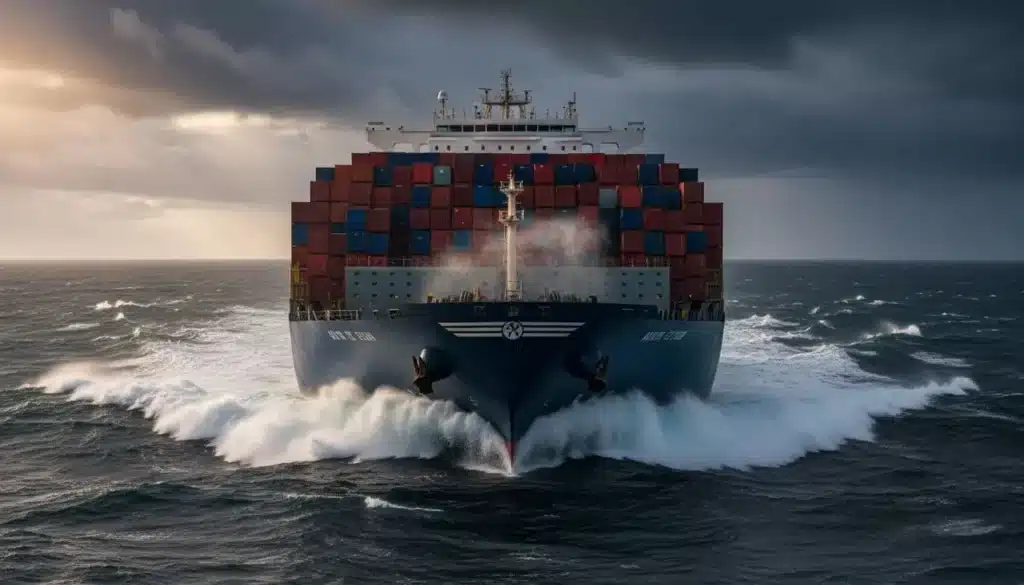
Knowing why delays happen helps you stop them before they start. Here are the top 5 causes of delays on the China-Brazil route and exactly how to fix them.
- Documentation Errors
Brazil Customs is extremely strict. A typo in the NCM Code, a weight discrepancy between PL and BL, or a missing description can trigger the “Red Channel”, causing 1-3 weeks of delay and heavy fines.
Solution: “Pre-Alert” Audit. Never ship until your Brazilian broker has approved the draft BL and Commercial Invoice. We double-check all NCM codes before the vessel departs China.
- Container Rollovers (Overbooking)
During Peak Season (Sept-Jan), carriers overbook vessels. If your rate is too low or you booked late, your container gets “rolled” to the next week’s ship.
Solution: Book Early & Pay for Priority. Book at least 3 weeks in advance. If urgent, ask for “Diamond/Priority Tier” slots (costs ~$200 more but guarantees loading).
- Peak Season
From September to January, ships are overbooked (120% capacity). If your freight rate is too low or you booked late, the carrier will “roll” (bump) your container to next week’s ship.
Solution: Book 3 Weeks Early. Do not wait until goods are ready. Book based on your production schedule. If urgent, pay for “Diamond/Priority Tier” slots to guarantee loading.
- Wood Packaging Issues
Brazil strictly enforces ISPM 15 regulations. If your wooden pallets do not have a clear, visible IPPC fumigation stamp, or if the wood has bark on it, customs will reject the entry.
Solution: Use Plywood or Plastic. We recommend using Plywood pallets (no fumigation needed). If you must use solid wood, ensure the IPPC stamp is visible on two sides of every pallet.
- Strikes
Brazilian customs auditors occasionally launch “Work-to-Rule” strikes (Operação Padrão), inspecting cargo extremely slowly as a negotiation tactic for higher wages. Clearance time jumps from 3 days to 15+ days. Port terminals become clogged.
Solution: Have Plan B. Santos suffers the most during strikes. During sensitive times, routing cargo to private terminals like Itapoá or Navegantes can sometimes bypass the worst bottlenecks.
FAQ(よくある質問)
1. How long does sea freight from China to Brazil actually take door-to-door?
For most routes from East/South China (Shanghai/Ningbo/Shenzhen) to Santos or Paranaguá, you should plan around 40–60 days door-to-door: 5–9 days for pickup/export in China, 30–45 days at sea, and 5–15 days for discharge, customs, and final delivery in Brazil.
2. Why do some shipments take 43 days and others 60–70 days on the same route?
The base ocean time may be similar, but delays add up from transshipment (missing a connection), port congestion at Santos, and Brazilian customs inspections (Red Channel) that can add 7–15+ days, plus inland trucking and truck availability.
3. How much extra time should I add if my cargo goes via transshipment (Singapore/Caribbean/Europe)?
Transshipment via Southeast Asia hubs like Singapore or Port Klang typically adds 5–10 days on top of direct sailings, while Caribbean or Europe/Mediterranean hubs can add 7–14 days, especially for Manaus and North/Northeast ports.
4. How far in advance should I book sea freight from China to Brazil, especially in peak season?
In normal months, booking about 2 weeks before ETD is usually enough; from September to January (peak + pre‑Chinese New Year), you should aim for 4–6 weeks in advance to avoid rollovers and overbooked vessels.
5. Does it matter which China and Brazil ports I choose for transit time?
Yes. Shenzhen/Hong Kong to Santos often achieves 28–33 days port‑to‑port, while North China ports like Tianjin or Qingdao can take 7–10 days longer, and Amazon destinations like Manaus can reach 45–60 days due to river barge legs.
6. What can I do to prevent Brazil customs and documentation issues from delaying my shipment?
Have your Despachante review the draft Commercial Invoice, Packing List, and BL before sailing, ensure NCM codes and weights match, use ISPM‑15 compliant or non‑wood packaging, and avoid last‑minute changes. These steps significantly reduce Red Channel risk and 1–3 week delays.