
Door to Door Shipping from China to Singapore 2025 Guide
著者: Guanwutong / November 18, 2025
Shipping goods from China to Singapore has never been more critical for Southeast Asian businesses. With over 15,000 daily shipments traversing this route, door-to-door logistics has emerged as the preferred solution for 73% of e-commerce and Amazon FBA sellers seeking convenience without compromise.
In today’s competitive e-commerce landscape, customers demand faster delivery, transparent pricing, and peace of mind. Traditional port-to-port shipping often leaves businesses coordinating with multiple carriers, navigating complex Singaporean customs procedures, and managing last-mile logistics alone.
Door-to-door shipping eliminates this friction by placing one trusted partner in control from the factory in China to your doorstep in Singapore.
Whether you are an e-commerce brand, an Amazon FBA seller, or a B2B importer, understanding the mechanics of door-to-door shipping can help you:
- Save 18–22% on total logistics costs by consolidating fragmented services.
- Reduce customs delays by 40% compared to handling documentation yourself.
- Eliminate surprise fees through transparent DDP (Delivered Duty Paid) pricing.
- Improve delivery reliability by 82%, as fewer handoffs mean less risk of damage.
Need exact pricing and timeline? Jump to Free Cost Calculator or Get Quote in 24 Hours
In This Guide, You Will Learn:
- The complete 6-step door-to-door shipping process.
- Real cost breakdowns: DDP vs. DDU comparison.
- Step-by-step customs clearance in Singapore (including GST details).
- How to avoid the 8 most common shipping mistakes.
- How to choose a reliable freight forwarder.
- Specific requirements for Amazon FBA shipping.

1. What is Door to Door Shipping from China to Singapore?
Door-to-door shipping is a comprehensive logistics service where a single provider manages your entire shipment journey. This includes pickup from the origin (factory or warehouse in China), international transportation (sea or air), customs clearance in both countries, and final delivery to your specified address in Singapore.
Unlike traditional port-to-port shipping, where you are responsible for arranging transport to the port in China and picking up goods from the port in Singapore, door-to-door is fully integrated and all-inclusive.
The 4 Core Components
Pickup & Export Preparation:
The logistics provider collects goods from your supplier’s warehouse or factory (e.g., in Shenzhen, Shanghai, or Guangzhou).
Includes proper packaging, pallet preparation, and export documentation (Commercial Invoice, Packing List).
Handling of export customs clearance in China (typically 1–2 days).
International Transportation:
Sea Freight: 15–20 days port-to-port (LCL or FCL).
航空貨物: 3–5 days port-to-port.
Includes insurance protection and real-time tracking.
Import Customs Clearance in Singapore:
Submission of all required documents via the TradeNet system.
Payment of 9% GST and applicable import duties.
Compliance with Singapore regulations and handling of inspections.
Final Delivery & Last-Mile Logistics:
Local trucking from the Singapore port (PSA) or airport (Changi) to your destination.
Flexible delivery options to business addresses, Amazon FBA warehouses, or residential locations.

2. Door-to-Door vs. Port-to-Port Shipping: Key Differences
Choosing the right service level depends on your internal resources and budget. Below is a detailed comparison.
| Aspect | ドアツードアの配送 | Port-to-Port Shipping | Impact on Your Business |
| Responsibility | Provider handles entire journey | You arrange pickup & delivery | Simplicity vs. Complexity |
| Convenience | Maximum (single contact) | Moderate (multiple vendors) | Reduced admin burden |
| コスト | Higher upfront; lower total cost | Lower upfront; hidden fees risk | Budget Predictability |
| トランジットタイム | 8–15 days (Sea) / 5–10 days (Air) | 15–25 days Sea (+ local delays) | Faster total delivery |
| Customs Risk | Managed by expert provider | Your responsibility | Lower delay risk |
| Damage Risk | Lower (fewer handoffs) | Higher (more transfers) | 82% fewer claims |
| トラッキング | Real-time throughout | Limited visibility | Operational control |
| Hidden Fees | Transparent (All-in DDP) | High risk of surprises | Cost Certainty |
| 最適用途 | E-commerce, FBA, High-value | Bulk commodity, Cost-focused | Depends on priorities |
Real Impact Example:
Door-to-Door Cost: $2.50/kg (all-in) = $2,500 for 1,000 kg.
Port-to-Port + Add-ons: $1.80/kg freight + $0.40 port fees + $0.50 delivery + $0.30 insurance = $3,000 + risk of hidden delays.
For any questions, feel free to GWT Shippingまでお問い合わせください。 当社チームが、お客様の具体的なニーズに合わせて、専門的かつ国際基準に準拠したアドバイスをご提供いたします。
3. Understanding DDP vs. DDU Shipping (2025 Updated)
When shipping door-to-door, you will choose between DDP (Delivered Duty Paid) and DDU (Delivered Duty Unpaid). This decision affects who pays the taxes and when.
Quick Comparison Table
| Term | DDP (配達関税支払い) | DDU (Delivered Duty Unpaid) |
| Who Pays Freight? | Seller | Seller |
| Who Pays Duties/GST? | Seller | Buyer |
| Customs Clearance | Seller handles | Buyer handles |
| Typical Upfront Cost | $2.50–$3.50/kg | $1.80–$2.30/kg |
| Buyer’s Cost at Delivery | None ($0) | GST (9%) + Duties (5–15%) |
| Customer Experience | Seamless; no surprises | Risk of surprise fees |
| 最適用途 | E-commerce (B2C), Amazon FBA | Cost-conscious B2B |
Real Customer Impact Example
Scenario: E-commerce Business Importing $20,000 (CIF value) Handbags.
With DDP: Seller pays freight, GST ($1,800 @ 9%), and duties ($3,000 @ 15%). Total cost is roughly $7,300. The buyer receives goods at their Singapore address with no additional payment.
Result: Perfect customer experience; builds loyalty.
With DDU: Seller pays freight ($2,000). The buyer receives a notice at customs to pay $1,800 GST + $3,000 duties.
Result: Buyer balks at surprise costs, potentially returning the shipment or leaving a negative review.

40HQ Packaging Materials DDU Shipping from Shanghai to Laos (Sea + Truck)
Fast and reliable 40HQ DDU delivery from Shanghai to Laos via Thailand, completed early through precise customs data, seamless sea-land multimodal routing, expert transit control and cross-border coordination.
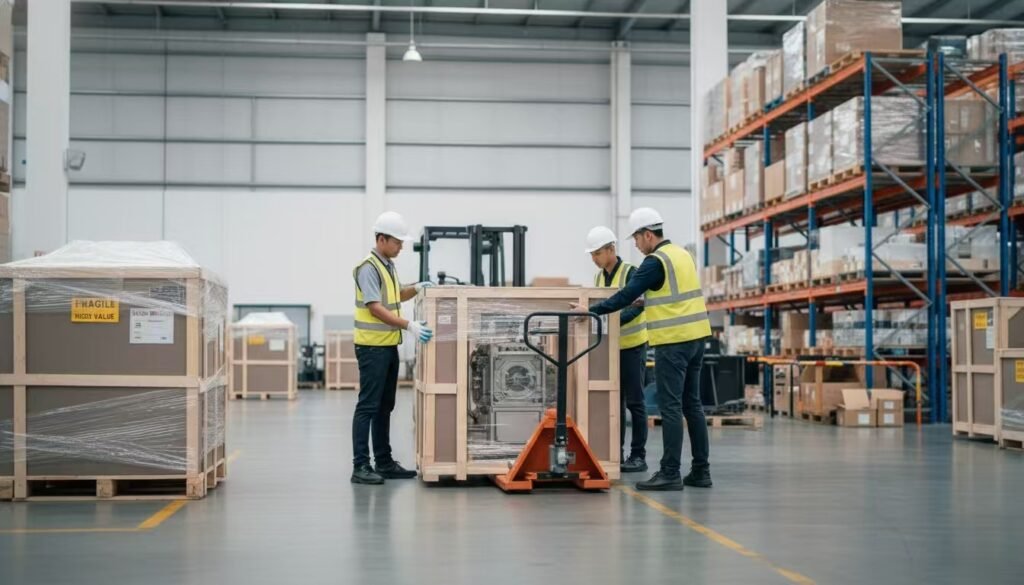
Shenzhen to Singapore DDP Machinery
GWT Shipping transforms a high-risk Shenzhen-to-Singapore DDP trial into a long-term partnership by resolving a rolled container and mid-transit disruption with rapid coordination, compliance control, and outcome-focused visibility.
Complete Guide to DDP Shipping Services: Door-to-Door Delivery Solutions for Global Trade
Using DDP shipping well involves proper implementation steps, cost saving techniques and making certain performance is always checked. Because international trade is constantly being shaped by technology and new laws, DDP shipping will continue to benefit companies by making logistics more effective and trustworthy. If a company thinks about DDP
5. Cost Breakdown: Door-to-Door Shipping Pricing (November 2025)
Pricing varies based on volume and service level. Below are current market averages.
| 費用項目 | 海上貨物(LCL) | Sea Freight (FCL 20ft) | 航空便 |
| Base Freight | $30–$65/CBM | $350–$550 per container | $2.80–$4.60/kg |
| Port Charges (SG) | $50–$100/CBM | $300–$500 per container | Included |
| Customs Broker Fee | $50–$100 | $100–$150 | $100–$150 |
| GST (9%) | Calculated on CIF | Calculated on CIF | Calculated on CIF |
| Import Duties | 0–15% (varies) | 0–15% (varies) | 0–15% (varies) |
| Local Delivery | $50–$150 | $75–$200 | $75–$200 |
| TOTAL (All-In DDP) | $100–$200/CBM | $1,500–$2,500 | $5.00–$10.00/kg |
LCL Example: Shipping 5 CBM of general goods might cost roughly $148 per CBM all-in.
FCL Example: A full 20ft container of electronics might cost $5,066 total (including high-value GST/Duties).
Note: These are estimates. Prices fluctuate weekly. Get a Free, Itemized Quote Here
Recommendation:
- B2C E-Commerce: Always use DDP to protect customer experience.
- Amazon FBA: Must use DDP (Amazon will reject shipments with unpaid duties).
- B2B Bulk Import: Use DDU if the buyer has specific import tax exemptions.
4. Step-by-Step Door-to-Door Shipping Process
Here is the exact workflow you can expect when booking a shipment with GWT Shipping.
Step 1: Quotation & Booking (Timeline: 1 Day)
You provide shipment details (weight, dimensions, contents). We provide an itemized quote covering freight, GST (9%), customs broker fees, and local delivery. You confirm the booking and pay a deposit.
Pro Tip: Always ask for an itemized breakdown to compare apples to apples.
Step 2: Pickup & Export Preparation (Timeline: 2–3 Days)
We arrange pickup from your supplier. Goods are inspected for damage, palletized if necessary, and export documents (Commercial Invoice, Packing List) are prepared.
Step 3: Export Customs Clearance in China (Timeline: 1–2 Days)
Documentation is submitted to Chinese customs. Once verified, goods are released for export.
Documents Required: Commercial Invoice, Packing List, Certificate of Origin.
Step 4: International Transportation (Timeline: 5–20 Days)
Sea Freight: Container departs from Shenzhen, Shanghai, or Guangzhou. Transit time is 5–15 days to Singapore.
航空貨物: Departures from PVG, CAN, or SZX. Transit time is 1–3 days.
Visibility: You receive real-time tracking updates (“Container departed”, “In transit”).
Step 5: Import Customs Clearance in Singapore (Timeline: 1–3 Days)
Upon arrival, we submit import documentation via the TradeNet system. Singapore Customs assesses the 9% GST and any import duties.
Note: DDP shipments fly through this stage as duties are pre-paid. DDU shipments may pause here for payment.
Step 6: Final Delivery (Timeline: 1–2 Days)
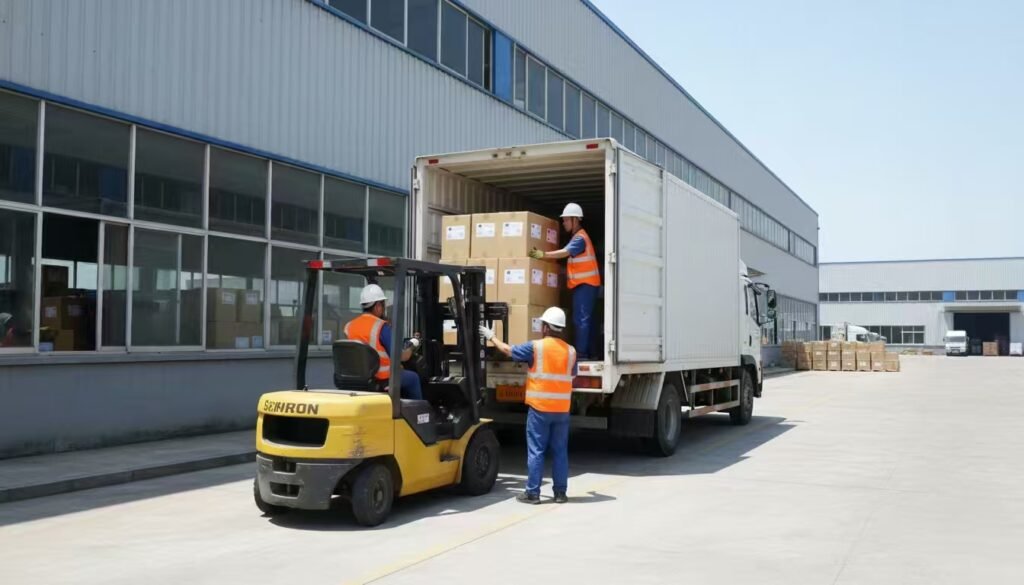
Goods are loaded onto local trucks and routed to your business address, residential address, or Amazon FBA warehouse. Proof of Delivery (POD) is captured.
6. How to Choose a Reliable Freight Forwarder
Selecting the right partner is the difference between a smooth delivery and a logistical nightmare. Use this 10-point checklist.
Experience: Look for 10+ years in business and 1,000+ annual shipments to Singapore.
Certifications: Check for FIATA or IFFCO memberships.
Transparent Pricing: Avoid “we’ll tell you later.” Demand itemized quotes.
Customs Expertise: Do they have in-house brokers who know Singapore GST laws?
Real-Time Tracking: Can you track your cargo 24/7 via an online portal?
Customer Service: Is support available weekends? (Critical for logistics).
Insurance: Do they offer comprehensive coverage?
Amazon FBA Expertise: Do they understand FNSKU labels and appointment slots?
Warehousing: Do they have their own consolidation warehouse in China?
Reviews: Look for verified 4.8+ star ratings.
Red Flags: Pressure to prepay before a quote, vague pricing, no tracking, or “cheapest price guaranteed” (usually implies hidden fees).

7. Common Mistakes to Avoid (8 Critical Errors)
Choosing Based on Price Alone: Often leads to $500+ in hidden delays or damage.
Inaccurate Documentation: Mismatched HS codes can cause 3–7 day customs delays.
Underestimating Volumetric Weight: Can result in 15–20% cost overruns. Always use a [CBM Calculator].
Ignoring Peak Season Surcharges: Rates spike 15–30% in Jan–Feb (CNY) and Sept–Nov. Book early.
Wrong Delivery Address: Especially fatal for Amazon FBA; ensure the address matches the appointment.
Skipping Insurance: For cargo worth >$5,000, insurance is non-negotiable.
Expecting Air Speed via Sea: Understand that sea freight takes time for customs and port handling.
Passive Tracking: Don’t wait for updates. Check the portal daily and notify your receiver.
8. Amazon FBA Shipping from China to Singapore
Shipping to Amazon FBA requires strict adherence to Amazon’s guidelines. A standard courier drop-off will be rejected.
FBA-Specific Process
FNSKU Labeling: Every unit must have a unique scanable barcode.
Pallet Standards: Pallets must meet Amazon SG specs (max 1,200 lbs, specific dimensions).
DDP Requirement: Amazon will not pay duties on your behalf. You must ship DDP.
Appointments: Your forwarder must schedule a delivery slot via Carrier Central 48 hours in advance.
Cost Impact: FBA shipping typically costs $100–$200 more than standard door-to-door due to the specialized labeling, pallet handling, and waiting time at the fulfillment center.

9. Singapore Customs & Compliance
GST & Import Duty Calculation
GST (Goods & Services Tax): 9% (standard rate). Calculated on the CIF Value (Cost of goods + Insurance + Freight).
Formula: (Merchandise Value + Freight + Insurance) x 9%
Import Duties: Vary by HS Code.
Electronics: 0–5%
Textiles: 5–15%
Luxury Goods: 10–20%
Required Documentation
To avoid inspections, ensure you provide:
Commercial Invoice (accurate values).
Packing List (detailed contents).
Bill of Lading / Air Waybill.
Certificate of Origin (if claiming treaty benefits).
Import Permit (handled by us via TradeNet).
結論
Door-to-door shipping from China to Singapore represents a paradigm shift from fragmented, high-risk logistics to integrated, transparent supply chain solutions.
While the upfront cost may appear slightly higher than port-to-port, the 18–22% total cost savings—achieved through consolidation, reduced damage, and eliminated administrative overhead—create substantial ROI. For Amazon FBA sellers, DDP door-to-door is not just a convenience; it is a compliance necessity.
FAQ(よくある質問)
Door-to-door shipping is an all-inclusive service where one logistics provider manages the entire journey of your goods, from pickup at the factory in China to customs clearance and final delivery to your address in Singapore. It eliminates the need for you to hire separate trucking, customs, and freight companies.
Costs vary by volume and method. As of November 2025, Sea Freight (LCL) typically costs $100–$200 per CBM (all-in DDP).
Air Freight ranges from $5.00–$10.00 per kg. Prices include freight, customs clearance, GST, and local delivery.
DDP (Delivered Duty Paid) means the seller pays all costs, including freight, GST, and duties. The buyer pays nothing at delivery.
DDU (Delivered Duty Unpaid) means the buyer must pay GST and duties upon arrival.
Choose DDP for e-commerce and Amazon FBA.
Choose DDU for B2B if the buyer handles their own taxes.
The most common mistakes are: choosing based on price alone (leading to hidden fees), submitting inaccurate documentation (causing customs delays), underestimating volumetric weight, shipping to the wrong address, and failing to insure high-value cargo.
You typically need the Commercial Invoice, Packing List, Bill of Lading (or Air Waybill), and sometimes a Certificate of Origin. Your freight forwarder will use these to apply for the Import Permit via TradeNet.
FBA shipping requires specific compliance: goods must be labeled with FNSKU barcodes, palletized according to Amazon Singapore standards, and shipped DDP (Amazon will not pay duties). The forwarder must also book a delivery appointment 48 hours in advance.
Look for a forwarder with 10+ years of experience, transparent itemized pricing (no hidden fees), in-house customs brokers, and real-time tracking capabilities. Check for verified reviews and ask if they have specific experience with your product type (e.g., electronics, FBA).
DDP (Delivered Duty Paid) means the seller pays all costs, including freight, GST, and duties. The buyer pays nothing at delivery. DDU (Delivered Duty Unpaid) means the buyer must pay GST and duties upon arrival.
Choose DDP for e-commerce and Amazon FBA.
Choose DDU for B2B if the buyer handles their own taxes.
Do you have other questions about your specific cargo for the China-Japan route?

Thank you for reading!
Have questions, corrections, or better ideas? We’d love to hear from you!
We value every piece of feedback and promise to reply within 24 hours. Let's make this guide better together!
Note: Spam comments will not be published.