
「福州 → 東京輸送:SITC vs. COSCO(2025年最新レビュー)」
著者: Guanwutong / November 27, 2025
When planning logistics from Fuzhou to Tokyo, a mere 2,000-kilometer distance often creates a false sense of security regarding transit times. On a map, it looks like a short hop across the East China Sea. However, in operational reality, the difference between a direct connection and a transshipment route can mean the difference between a 3-day delivery and a 10-day delay.
For supply chain managers, the choice typically narrows down to two primary carrier models, represented by SITC and COSCO. While both are reputable carriers and GWT works closely with both (along with EMC, WHL, TSL, and others). They serve fundamentally different logistical strategies on this specific route.
This article provides an objective analysis of these two options, dissecting their operational models, hidden variables, and suitability for different business needs in 2025.

1. The Operational Divide: Direct vs. Transshipment
To understand why transit times vary so drastically on this route, one must look beyond the “Estimated Time of Arrival” (ETA) and examine the vessel’s actual routing.
SITC: The Direct Service Model
SITC Container Lines (part of SITC International Holdings) is widely recognized as the specialist in high-frequency Intra-Asia trade. They are not just another carrier; they are one of the most established carriers in the China–Japan lane, with exceptionally strong coverage and high sailing frequency.
The Mechanism: SITC operates a dense network of smaller, agile vessels dedicated to point-to-point service.
The Route: Most SITC services depart directly from Fuzhou Jiangyin Port and sail straight to Tokyo, Yokohama, or Osaka without intermediate stops.
The Result: A transit time of approximately 3 to 4 days. This is currently the fastest option available on the market, often referred to as the “High-Speed Rail” of the sea.
Reliability: Due to the direct nature of the route and their high frequency, the risk of congestion at transshipment hubs is eliminated, resulting in exceptional schedule integrity.
COSCO: The Hub-and-Spoke Model
As a global shipping giant, COSCO utilizes its massive network to optimize global capacity. While they do offer direct services, on specific short-sea routes like Fuzhou-Tokyo, they may utilize a feeder-plus-mother vessel strategy to balance loads.
The Mechanism: Cargo is often collected via barge or feeder vessel from Fuzhou (Mawei or Jiangyin) and transported to a major consolidation hub like Shanghai or Xiamen.
The Route: Once at the hub, the container is unloaded and re-loaded onto a larger mother vessel bound for Japan.
The Result: A total transit time of 7 to 10 days. While the sea time is short, transshipment handling time contributes to a longer overall duration, which is inherent to hub-and-spoke operations across the industry.
The Economics: This model offers attractive cost efficiency, particularly suitable for shippers with flexible lead times.

2. Beyond the Vessel: Hidden Logistics Factors
Choosing a carrier involves more than just comparing freight rates and days at sea. Several pre-carriage and destination factors also influence the total efficiency of your shipment.
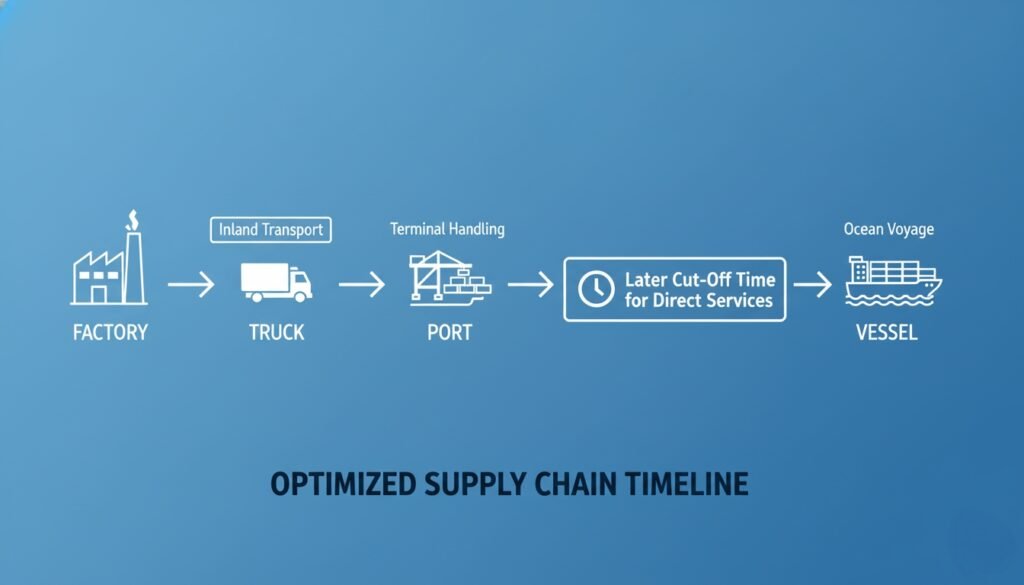
The “Cut-Off” Advantage
For manufacturers working with tight production schedules, the cargo cut-off time (CV/CY Closing) is a critical metric.
Direct Services (SITC): Often allow for a later gate-in time relative to the sailing date. For example, a Friday sailing might accept cargo until Thursday afternoon. This grants factories an extra 24-48 hours of production buffer.
Transshipment Services: Usually require earlier gate-in to account for feeder vessel coordination and consolidation planning at the hub port.
Destination Port Priority
Upon arrival in Japan, port efficiency varies by vessel type. Dedicated Intra-Asia vessels (like those operated by SITC or TSL) often enjoy specific berthing windows at Tokyo terminals, allowing for rapid discharge.
Conversely, larger mother vessels may face longer waiting times at anchor if the port is experiencing congestion, potentially adding unexpected delays to the final delivery.
3. Decision Framework: Which Carrier Fits Your Strategy?
There is no universally “best” carrier; there is only the carrier that aligns with your current business objectives.
Use Case A: Time-Critical Inventory
If you are managing fast-fashion turnover, perishable goods, or Amazon FBA replenishment where stock-outs directly impact search rankings, speed and certainty are your primary currencies.
Recommendation: SITC (or similar premium direct services).
Rationale: The premium on freight (typically $50–$100 higher) is a necessary investment to guarantee speed and minimize the variables associated with transshipment.
Use Case B: Cost-Driven Stock Replenishment
If you are importing raw materials or general merchandise with a healthy inventory buffer (e.g., 3+ weeks of stock), minimizing landed cost is the priority.
Recommendation: COSCO (or similar transshipment services).
Rationale: A 7-10 day transit time is acceptable for planned inventory. The savings on freight rates contribute directly to your profit margin.
どちらのルートが最適か迷っていますか?
お気軽にご相談ください。
私たちは単に料金を案内するのではなく、あなたの貨物に最適な戦略選択 までサポートします。
4. How GWT Shipping Adds Value to Your Choice
Understanding the difference between carriers is the first step; securing the space and managing the execution is the second. At GWT Shipping, we leverage our partnerships with over 20 carriers (including EMC, WHL, TSL, IAL, and more) to act as your logistics architect.
1. Strategic Allocation & Space Protection
In peak seasons, knowing the schedule isn’t enough, you need access. GWT maintains Block Space Agreements (BSA) with key carriers like SITC. This means that when the market is tight, our clients’ urgent cargo receives priority status, avoiding the common issue of “rolled containers.”
2. Dynamic Schedule Monitoring
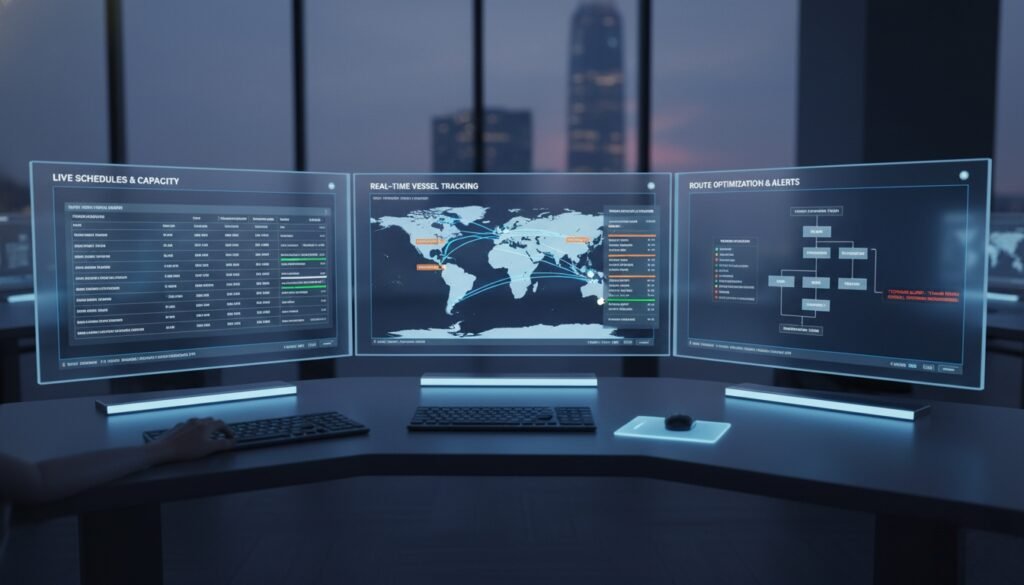
Logistics is unpredictable. Mechanical issues or weather can delay even the best vessels. We monitor live schedules across all carriers in Fuzhou. If your primary choice faces a delay, we proactively identify and switch to the next fastest alternative, often before the general booking window closes.
3. Port-Specific Trucking Coordination
Since SITC favors Jiangyin and other carriers may use Mawei, the trucking logistics differ. We calculate the total cost, including inland trucking, to ensure that saving money on ocean freight doesn’t result in higher trucking fees, providing you with a true “Total Landed Cost” analysis.
結論
Shipping from Fuzhou to Tokyo presents a classic trade-off between speed and cost. The difference between a 3-day direct connection and a 10-day transshipment route can have a ripple effect on your entire supply chain—affecting cash flow, inventory levels, and customer satisfaction.
While SITC offers the unrivaled speed of a direct link, major carriers like COSCO provide the economy of scale. The “right” choice is dynamic; it changes based on your specific cargo readiness date, inventory pressure, and budget constraints.
At GWT Shipping, we don’t just sell you a container slot; we help you make this strategic decision for every shipment. Whether you need the absolute fastest transit or the most economical routing, our team ensures your goods move efficiently and your business keeps growing.
FAQ(よくある質問)
Generally, SITC (direct service) takes about 3-4 days port-to-port. COSCO (if using a transshipment service via Shanghai/Xiamen) typically takes 7-10 days due to the handling time at the transshipment hub.
In most market conditions, yes. Direct, fast services usually command a premium of $50–$100 per container compared to transshipment options. However, during low seasons, the price gap can narrow significantly.
Yes, LCL services are available on fast vessels, but they depend on the consolidator’s schedule. GWT consolidates LCL cargo in our Fuzhou warehouse and prioritizes direct vessels to ensure faster turnaround for smaller shipments.
Jiangyin is a deep-water port and is the main hub for fast, direct vessels like SITC. Mawei is closer to the city center but has depth restrictions, often serving smaller feeder vessels. For speed, Jiangyin is usually the better choice; for local trucking costs (if the factory is nearby), Mawei might be cheaper.
For direct fast vessels, we recommend booking at least 7 days in advance. During peak seasons (like pre-Chinese New Year), booking 14 days in advance is necessary to guarantee space.
Yes. We provide end-to-end solutions. Beyond booking the vessel, we handle the AFR (Advance Filing Rules) submission for Japan Customs and coordinate with our Tokyo agents for clearance and final delivery.
Need a precise schedule comparison for your next shipment?
Contact us with your cargo details, and we will provide a transparent comparison of this week’s fastest and most economical sailing options.

Thank you for reading!
Have questions, corrections, or better ideas? We’d love to hear from you!
We value every piece of feedback and promise to reply within 24 hours. Let's make this guide better together!
Note: Spam comments will not be published.