By GWT Team/ Updated: Feb 23, 2026 / 5 min read
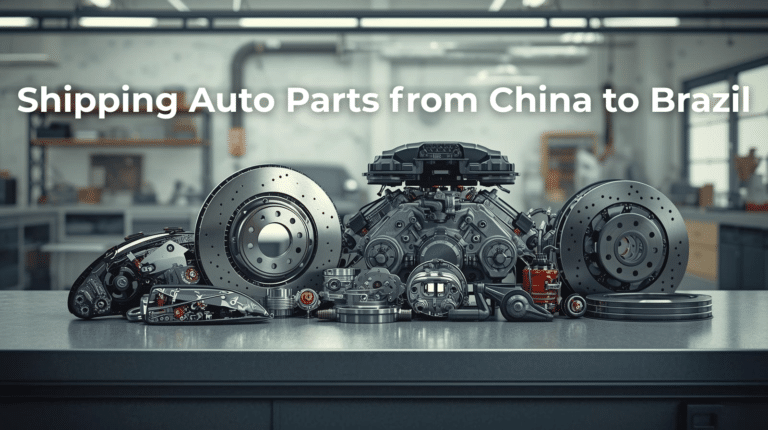
Brazil is one of the largest automotive markets in the world, and China has become the primary supplier of auto parts to Brazilian importers. If you are operating in the aftermarket or OEM supply chain, you are likely sourcing from Chinese manufacturers.
However, shipping brake pads, engine components, lighting systems, or electronic sensors to Brazil is far from simple. High import taxes, complex customs classification (NCM), mandatory RADAR registration, and strict INMETRO certification requirements make compliance the most critical part of your operation.
In this guide, you will learn:
- Typical shipping time by air and sea
- Realistic freight cost and the total landed cost structure
- Key Brazilian customs regulations for auto parts
- How INMETRO certification affects your shipment
- Practical steps to avoid delays, fines, or cargo destruction
This article is designed for importers who want cost clarity and regulatory certainty before placing an order with a Chinese factory.
Shipping Time Auto Parts China Brazil: Air vs. Ocean Freight
When planning your automotive supply chain, you must choose between speed and cost. Here is the reality of shipping time auto parts China Brazil.
Quick conclusion:
- Air freight typically takes 5–10 days door-to-door.
- Ocean freight usually takes 35–45 days port-to-port, but total door-to-door timelines extend to 45–70 days when you include customs clearance.
Air Freight – The Emergency Lifeline
Air freight is expensive, but it is the only option when your supply chain breaks down.
Best for:
- AOG (Aircraft on Ground) level urgency or automotive production line shutdown risks
- High-value electronic components like microchips, sensors, and ECUs
- Small but critical replacement spare parts
Typical transit time: Expect 5–10 days door-to-door from major Chinese hubs to major Brazilian airports such as São Paulo Guarulhos (GRU) or Viracopos (VCP). This timeline may extend during the pre-holiday peak season or if your export documentation is incomplete.
Notes: Clearance speed at the destination airport depends entirely on correct NCM classification and flawless documentation. Sensitive or highly regulated items (like radio-frequency keys) may face additional review by Brazilian authorities, slowing down the release.
Ocean Freight – The Bulk Inventory Solution
Ocean freight is the standard method for keeping your warehouse stocked and maintaining profit margins.
Best for:
- Aftermarket inventory replenishment
- Heavy or bulky items like tires, bumpers, filters, and metal suspension components
- Large-volume, lower-unit-value parts
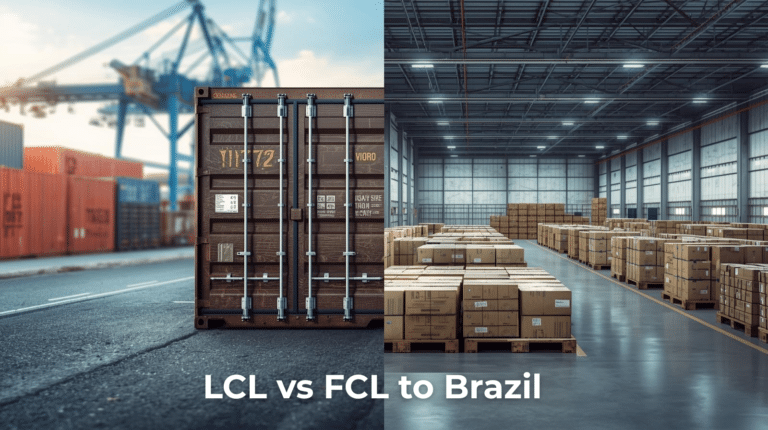
FCL (Full Container Load): This is the best option for stable, predictable supply chains. You rent the entire 20-foot or 40-foot container, giving you the lowest possible per-unit logistics cost and reducing handling damage.
LCL (Less than Container Load): Suitable for smaller shipments where you share container space with other importers. While the ocean freight might look cheap, LCL carries a higher per-unit logistics cost once you factor in the multiple deconsolidation and warehouse charges at the Brazilian port.
Transit time: Vessels leaving major Chinese ports like Shanghai, Ningbo, or Shenzhen take about 35–45 days to reach Brazilian ports like Santos or Paranaguá.
Total door-to-door timeline (realistic planning window):
- 1–2 weeks for export preparation and booking
- 35–45 days for ocean transit
- 1–3 weeks for Brazilian customs clearance
Overall planning window: You need to plan for 45–70 days from the moment the cargo leaves the Chinese factory to the moment it arrives at your Brazilian warehouse.
Auto Parts Freight Cost China Brazil: Breaking Down the Expenses
You cannot calculate your profit margin based only on the ocean freight quote. Understanding the true auto parts freight cost China Brazil means understanding Brazil’s tax system.
Quick conclusion: Freight cost is only a fraction of the expense. Brazilian import taxes can easily increase your total landed cost to 1.5 to 2 times the original CIF (Cost, Insurance, Freight) value of the parts.
Ocean & Air Freight Rate Structure
Ocean Freight (FCL reference structure): Rates for a 20GP or 40HQ container fluctuate heavily throughout the year. The final price you pay depends on the departure port, global fuel surcharges (BAF), and peak season demand (such as the rush before Chinese New Year).
Air Freight: Air cargo is charged by “chargeable weight,” meaning you pay for either the actual gross weight or the volumetric weight, whichever is higher. Pricing is tiered; you get better rates per kilogram as you pass weight thresholds (e.g., 45kg+, 100kg+, 300kg+). Highly sensitive cargo, like lithium batteries or certain chemical fluids, will incur extra handling fees.
Hidden Logistics Costs
Do not ignore the fees that occur once the ship docks in Brazil:
- THC (Terminal Handling Charges) paid to the port
- Documentation and Brokerage fees
- Warehouse storage and demurrage (if clearance is delayed)
- Inspection fees if Receita Federal (Brazilian Customs) flags your shipment for a physical check
These fees accumulate quickly, especially under LCL shipments where destination warehouse fees are charged per cubic meter.
Understanding Landed Cost in Brazil
Brazil applies a complex, layered tax structure on imported auto parts. The main taxes include:
- II (Import Duty): A federal tax.
- IPI (Industrialized Products Tax): A tax on manufactured goods.
- PIS/COFINS: Social contribution taxes.
- ICMS (State VAT): A state-level tax that varies depending on where your company is registered.
Depending on the specific NCM classification of your auto part, the combined tax burden easily reaches 40% to 70% of the CIF value.
Simplified example structure: Taxes in Brazil cascade. You do not just add the percentages together. You start with the CIF value. You apply the II. You then calculate the IPI on that new, higher base. You apply PIS/COFINS. Finally, you calculate the ICMS on a cumulative base that includes the goods, the freight, and all previous taxes.
Consolidation: Sourcing from Multiple Chinese Auto Parts Suppliers
Many Brazilian importers do not buy everything from one factory. A typical order might look like this:
- Window switches from Wenzhou
- Headlamps from Guangzhou
- Tires from Shandong
Instead of shipping three separate, expensive LCL shipments, professional importers use Buyer’s Consolidation. Your freight forwarder collects the goods from all three factories and loads them into a single container at a main Chinese port.
Key Benefits:
- Combine multiple suppliers into one FCL container, driving down your per-unit freight cost.
- Reduce destination charges in Brazil because you file one master customs declaration instead of three.
- Lower your risk of demurrage and expensive LCL warehouse storage fees at the Port of Santos.
Important Risk Control: Consolidation carries one massive risk. Before you load the container, you must confirm:
- All NCM codes for every item.
- Whether any single item requires INMETRO certification.
- Whether any item requires a prior Import License (LI).
If you put one non-compliant box of switches into a container with $50,000 worth of tires and lamps, Brazilian customs will freeze the entire container. One bad SKU delays everything.
Brazil Customs Regulations Auto Parts: The Compliance Minefield
Getting the goods across the ocean is easy. Getting them through Brazilian customs is the actual challenge. Navigating Brazil customs regulations auto parts requires strict attention to detail.
Quick conclusion: Classification and licensing errors are the most common causes of multi-week delays and heavy financial fines.
NCM Classification
The NCM code (Mercosur Common Nomenclature) dictates your tax rate and your regulatory requirements. Auto parts have highly detailed, specific NCM codes.
For example, engine components, brake systems, and body parts all carry vastly different tax rates and rules. If you declare the wrong NCM code to secure a lower tax rate, Brazilian customs will catch it.
An incorrect NCM results in:
- Heavy financial fines
- Recalculated back-taxes
- Severe shipment delays
- Red channel physical inspections
Always confirm the exact NCM code with a licensed Brazilian customs broker before you instruct your Chinese supplier to issue the final commercial invoice.
RADAR Registration & LI (Import License)
You cannot simply buy auto parts and ship them to an address in Brazil.
- Only registered Brazilian legal entities can hold a RADAR registration (the license to use the Siscomex customs system).
- Foreign companies cannot directly clear customs in Brazil. If you do not have RADAR, you must use a specialized trading company to act as your importer of record.
Furthermore, some automotive parts require a Non-Automatic Import License (LI) approval from the government before the shipment even boards the ship in China. Shipping cargo before the LI is approved guarantees your cargo will be held, penalized, or seized upon arrival.
The Dealbreaker: INMETRO Certification Auto Parts Import
This is the single most critical barrier for automotive aftermarket businesses. Understanding INMETRO certification auto parts import rules will save your supply chain.
What Is INMETRO? INMETRO is Brazil’s mandatory national certification system. It ensures that products meet strict safety, quality, and environmental standards.
Common Auto Parts Requiring INMETRO You cannot import safety-critical parts without this certification. Examples include:
- Shock absorbers
- Fuel pumps
- Automotive horns
- Piston rings
- Automotive lamps and bulbs
- Brake pads and linings
Requirements change constantly based on government regulation updates, so you must check the current status of your specific NCM code.
Operational Risk Warning You must solve INMETRO compliance before the shipment leaves China.
- The product itself must have a valid, active certification.
- The physical packaging and the product labels must comply strictly with Portuguese language requirements.
- The physical INMETRO logo mark must meet exact size, proportion, and placement rules.
If your cargo arrives at a Brazilian port without compliant certification or proper labeling:
- It will be blocked from entering the market.
- It may be forcibly returned to China or destroyed at your expense.
- The importer will face heavy penalties.
- Your company’s future import credibility in the Siscomex system will be severely damaged.
Securing INMETRO certification often requires active cooperation between Chinese manufacturing testing labs and Brazilian accredited bodies. This process can take weeks or months. You must plan early.
Packaging Tips for Auto Parts Safety During Transit
Auto parts are diverse. You are shipping everything from heavy, solid metal suspension blocks to fragile glass headlamps and sensitive electronic sensors. Proper packaging prevents damage and speeds up customs inspections.
Rust Prevention
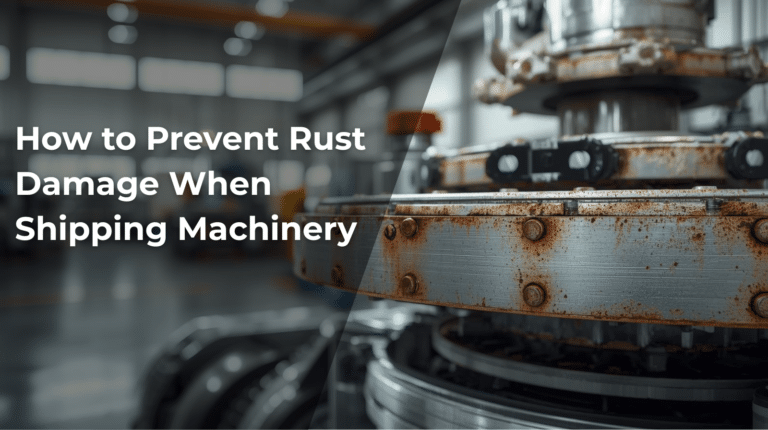
Engine components, brake rotors, and bare metal chassis parts cross highly humid, salty equatorial sea routes. If unprotected, they will arrive rusted.
- Use VCI (Vapor Corrosion Inhibitor) anti-rust bags to seal the metal parts.
- Apply industrial anti-corrosion oil to machined surfaces.
- Hang high-capacity moisture absorbers (desiccants) inside the shipping container.
Shock Protection & Load Security
- Use heavy-duty, reinforced pallets (ISPM-15 certified wood) for heavy metal parts to prevent the load from collapsing.
- Implement rigid layer separation inside cartons to avoid parts crushing each other.
- Use honeycomb cardboard and custom-cut foam protection for fragile items like lamps, mirrors, and glass.
- Pack fragile goods in solid wooden crates rather than standard cardboard.
- Clearly mark the center of gravity on large crates to prevent forklift accidents.
- Apply clear “Fragile” and “Keep Dry” labels.
Proper packaging reduces your physical damage claims and prevents packaging from tearing, which often triggers customs inspectors to take a closer look.
Conclusion:
Shipping auto parts to Brazil requires vastly more expertise than simply booking a freight rate online.
A specialized China-Brazil freight forwarder acts as your logistics and compliance partner. They should:
- Review your entire product list and identify INMETRO or LI requirements months before production finishes.
- Assist your broker with NCM verification to lock in your tax strategy.
- Provide physical label compliance checks at the Chinese warehouse before the container is sealed.
- Estimate your exact taxes and landed costs so you can set your retail pricing strategy accurately.
- Design hybrid logistics solutions (using air freight for urgent safety parts and ocean freight for bulk inventory).
- Coordinate multi-factory consolidation seamlessly to minimize your customs risk.
Choosing the right logistics partner protects your supply chain continuity, keeps you out of trouble with Brazilian customs, and protects your profit margins.
FAQ
Do all auto parts require INMETRO certification?
No. Only specific regulated categories, primarily those related to vehicle safety, emissions, and structural integrity—require mandatory certification. Always verify the requirement by checking the exact NCM code.
How much does it cost to ship urgent auto parts by air to São Paulo?
Air freight cost depends entirely on the chargeable weight and the cargo type. Rates fluctuate weekly. High-value electronics or sensitive items (like airbags containing explosives) will incur additional hazardous materials handling charges. Always request a specific weight-based quotation from your forwarder.
Can I import auto parts into Brazil without RADAR?
No. The importing entity must have an active RADAR registration to operate in Brazil. If your company does not have it, you must legally cooperate with a qualified Brazilian trading company that acts as the importer on your behalf.
What documents are required to import auto parts into Brazil?
The standard required documents include:
Commercial Invoice
Packing List
Bill of Lading (Ocean) or Air Waybill (Air)
The correct NCM classification declaration
Import License (LI), if applicable to the part
INMETRO certificate, if required for that specific component
Incomplete or mismatched documentation is one of the leading causes of clearance delays at Brazilian ports.