
Shipping Cost from China to Singapore (2025 Guide): Sea & Air Rates
By Guanwutong / November 17, 2025
Shipping goods from China to Singapore remains one of Asia’s most active trade routes, with over 10,000+ weekly container movements fueling regional commerce. Yet, whether you are a seasoned importer or launching a new e-commerce brand, you likely struggle with one critical question: How much will it really cost?
As of November 2025, the logistics market has shifted. Sea freight rates have shown modest stabilization after the volatile 2024 season, while air freight pricing remains sensitive to fuel costs and year-end demand.
This guide provides a current, itemized cost breakdown so you can budget accurately and avoid the hidden charges that catch nearly 70% of first-time importers off-guard.

1. Average Shipping Rates from China to Singapore (Updated November 2025)
Shipping rates fluctuate based on container size, cargo type, seasonal demand, and fuel surcharges. Below is a breakdown of current average market rates for different shipping modes to help you benchmark your costs.
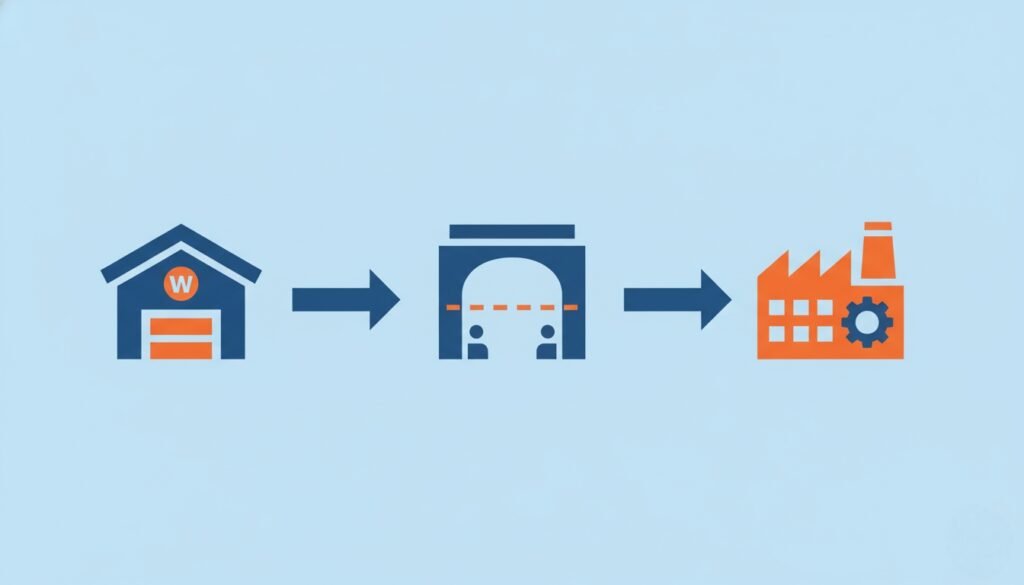
Shipping Rate Comparison Table
| Shipping Mode | Container / Unit | Estimated Cost (USD) | Transit Time | Best For |
| Sea Freight (FCL) | 20ft Container | $350 – $550 | 7 – 10 days | Medium bulk shipments |
| Sea Freight (FCL) | 40ft Container | $650 – $950 | 7 – 10 days | Large B2B shipments |
| Sea Freight (LCL) | Per CBM | $30 – $65 | 10 – 14 days | Small mixed cargo (< 15 CBM) |
| Air Freight | Per kg (Min 45kg) | $2.80 – $4.60 | 1 – 3 days | Urgent, high-value cargo |
| Door-to-Door (DDP) | Per kg (Air) | $3.50 – $7.00 | 2 – 5 days | E-commerce, Samples |
| Door-to-Door (DDP) | Per CBM (Sea) | $40 – $75 | 10 – 14 days | All-inclusive convenience |
Important Notes:
Rates are indicative as of November 2025 and subject to weekly changes based on carrier capacity.
Transit times are port-to-port and do not include customs clearance (typically 1–3 additional days).
Peak Season Alert: Expect rates to increase by 20–30% during Jan–Feb (Chinese New Year) and Oct–Nov (Holiday Season).
Looking for spot rates? Shipping costs change weekly. Contact us for real-time pricing based on today’s market.
2. Factors Affecting Your Shipping Costs
Your final shipping invoice is rarely just the “base rate.” Understanding the cost drivers, from cargo dimensions to seasonal surcharges, is critical for accurate budgeting.
(1) Volumetric Weight vs. Actual Weight
Freight carriers charge based on “Chargeable Weight,” which is the greater of your cargo’s actual weight or its volumetric (dimensional) weight.
The Formula:
Volumetric Weight (kg) = Length (cm) × Width (cm) × Height (cm) / Divisor
Air Freight Divisor: 6,000 (1 CBM = 167 kg)
Express Divisor: 5,000 (1 CBM = 200 kg)
Sea LCL Standard: 1 CBM = 1,000 kg (Min)
Why It Matters: If you ship bulky but light items (like furniture or plush toys), you will likely pay for the space you occupy, not the weight.
Example: A 50kg shipment measuring 1 CBM will be charged as 167 kg for air freight, not 50 kg.
Optimization Tip: Reducing your packaging volume by just 10% can save you 10% on LCL costs. Use Our Free CBM Calculator to check your chargeable weight instantly.
(2) Seasonality & Peak Season Surcharges
Timing is everything. Shipping during peak periods can inflate your costs by 30–60%.
Chinese New Year (Jan–Feb): Factories rush to ship before closing. Rates spike, and space is tight.
Q4 Holiday Season (Sept–Nov): The global retail rush drives up demand.
Surcharges to Watch: Peak Season Surcharge (PSS) can add $300–$600 per container.
Strategy: Plan shipments 6–8 weeks ahead of these periods to lock in lower rates.
(3) FCL vs. LCL: Finding the Break-Even Point
FCL (Full Container Load): Best for volumes over 15 CBM. You pay a flat rate for the box, regardless of how full it is.
LCL (Less than Container Load): Best for volumes under 15 CBM. You share a container and pay per CBM.
The Break-Even Rule: Once your LCL shipment exceeds 15–20 CBM, the total cost (freight + handling fees) often exceeds the cost of a 20ft FCL container. At this point, booking a full container—even if partially empty—is often cheaper and safer.

3. Hidden Fees You Must Know (DDP vs. DAP)
Base freight rates typically represent only 40–60% of your total shipping cost. The rest consists of destination charges and taxes that catch many importers off-guard.
(1) Singapore GST: 7% → 9% (Important Update)
Singapore charges a 9% Goods and Services Tax (GST) on all imported goods.
Calculation: GST = (Cost of Goods + Insurance + Freight + Duties) × 9%.
Exemption: Air/Postal imports under S$400 CIF value may qualify for GST relief.
Action: Always factor this 9% into your landed cost calculation.
(2) Port Handling Charges (PSA/Jurong Port)
If you choose LCL shipping, be aware of destination charges.
Terminal Handling Charge (THC): ~S$18–$36 per CBM.
LCL Service Fees: Can range from S$30–$85 per CBM.
Warning: Some “cheap” freight quotes shift costs to the destination. A $10 freight rate might come with a $100 destination fee. Always ask for an “All-In” quote.
(3) DDP vs. DAP: Who Pays What?
DDP (Delivered Duty Paid): The seller (us) pays everything: freight, GST, duties, and delivery. You pay one final price. Best for beginners.
DAP (Delivered at Place): You pay freight; but YOU handle GST and duties upon arrival. Best for experienced importers with tax accounts.
For any questions, feel free to contact GWT Shipping. Our team will provide professional, standards-compliant advice tailored to your specific needs.
4. How to Reduce Your Shipping Costs by 20–30%
Strategic cost optimization is not a one-time decision. It is an ongoing practice. Here are three proven methods used by successful importers.
Tip 1: Consolidate Shipments
Buying from multiple suppliers? Don’t ship three separate LCL orders.
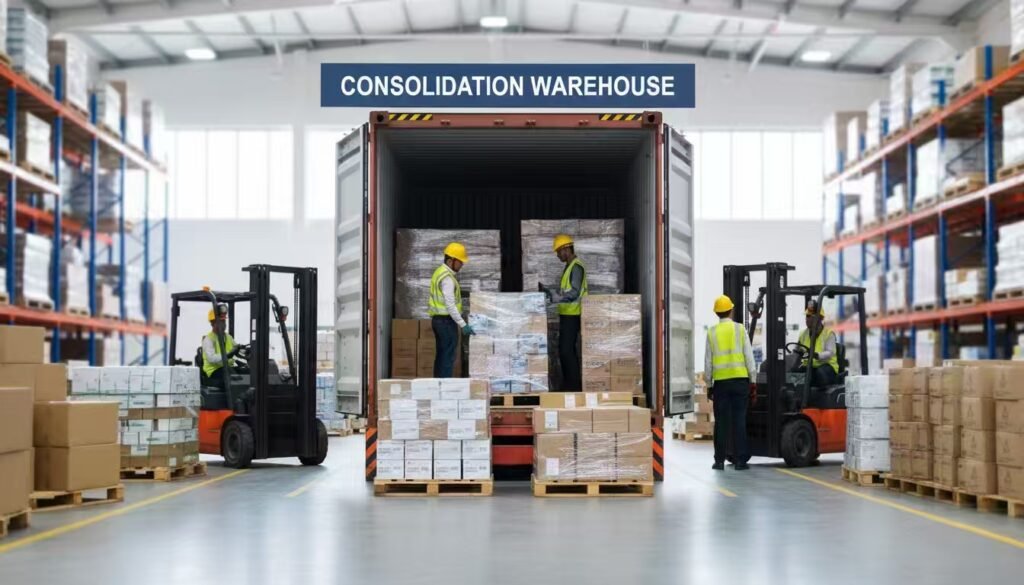
The Fix: Use GWT’s Shenzhen Consolidation Warehouse. We collect goods from Supplier A, B, and C, combine them into one shipment, and ship it as one FCL.
The Saving: You pay destination fees once instead of three times. Savings: up to 50%.
Tip 2: Optimize Packaging
Inefficient packaging increases volumetric weight.
The Fix: Ask suppliers to use “Right-sized” boxes and minimize air space. Or, let us repack your cargo in our warehouse.
The Saving: Reducing volume by 0.5 CBM on an air shipment can save $150+.
Tip 3: Choose the Right Port
China has many ports. Shipping from a port closer to your factory saves trucking costs.
Shenzhen (Shekou/Yantian): Best for electronics/tech (South China). Fastest transit to Singapore (4–5 days).
Shanghai/Ningbo: Best for machinery/textiles (East China).
GWT Advantage: We have networks in all major ports to route your cargo efficiently.
5. Why Choose GWT for Cost-Effective Shipping?
We don’t just move boxes; we optimize your supply chain.
1. Transparent, Itemized Pricing
Every charge is clearly broken down: freight, GST, port charges, surcharges. No hidden fees. No surprises.
2. Shenzhen Warehouse Consolidation
Combine shipments from multiple suppliers into a single load and save up to 50% on shipping costs.
3. Real-Time Tracking
From factory pickup to final delivery, know exactly where your cargo is 24/7 via our online portal.
4. Case Study: How We Saved a Client $15,000
- The Problem: A mid-sized electronics importer faced chronic port congestion delays in Singapore, incurring $3,600/year in demurrage fees.
- The GWT Solution: We switched them from ad-hoc LCL to a Consolidated FCL schedule and pre-cleared customs while the vessel was still at sea.
- The Result: Zero demurrage fees. Reduced freight cost by 20%. Total annual savings: $18,000+.
Conclusion
Shipping from China to Singapore is one of Asia’s most competitive routes, but getting the right price requires more than just comparing base freight rates. As we have seen, the lowest-cost quote often becomes the most expensive option once hidden charges, seasonal surcharges, and inefficient shipping modes are factored in.
To ensure you are not overpaying in 2025, keep these three key takeaways in mind:
Understand Your True Landed Cost: Base freight often represents only 40–60% of your total invoice. Always account for Singapore’s 9% GST, local port charges, and destination handling fees in your initial budget.
Choose Your Shipping Mode Strategically: Don’t default to LCL. For shipments approaching 15 CBM, FCL is often cheaper and safer. Use a CBM calculator to find your specific break-even point.
Plan Ahead for Peak Seasons: The weeks leading up to Chinese New Year and the Q4 Holiday Season can see rate spikes of 20–60%. Consolidating orders and booking 4 weeks in advance is your best defense against these surcharges.
The GWT Advantage: We make transparent, cost-effective shipping simple. From warehouse consolidation in Shenzhen to real-time tracking in Singapore, our mission is to eliminate guesswork.
FAQ
As of November 2025, average indicative rates are:
Sea Freight (FCL 20ft): $350 – $550
Sea Freight (FCL 40ft): $650 – $950
Sea Freight (LCL): $30 – $65 per CBM
Air Freight: $2.80 – $4.60 per kg (minimum 45 kg)
Door-to-Door (DDP): $40 – $75 per CBM (Sea) / $3.50 – $7.00 per kg (Air)
Note: Actual costs vary by port of origin, cargo readiness date, and weekly fuel surcharges.
To find your true landed cost, use this formula:
Total Cost = Base Freight + Singapore GST (9% of CIF) + Port Charges + Terminal Handling (THC) + Surcharges (Fuel/Peak Season) + Customs Documentation.
Example: An LCL shipment with a $500 base freight rate might have a final invoice of $1,200 after adding Port Charges (~$300), GST (~$200), and THC (~$200). Always ask for an “All-In” quote to avoid surprises.
The break-even point is typically between 15–20 CBM.
Choose LCL: If your volume is under 15 CBM. You pay only for the space you use.
Choose FCL: If your volume is over 15 CBM. Even if the container isn’t full, the flat rate of FCL often becomes cheaper than the cumulative per-CBM charges of LCL. FCL is also safer as goods are handled less.
Singapore charges a 9% Goods and Services Tax (GST) on all non-exempt imports. It is calculated on the CIF value (Cost of Goods + Insurance + Freight) plus any import duties.
Important Exemption: Air and postal imports with a CIF value under S$400 are generally eligible for GST relief.
Beyond the base rate, the most common “surprise” fees include:
Destination Port Charges: Can range from $200–$600 for LCL shipments.
Demurrage/Detention: Fees charged ($50+/day) if you take too long to pick up your container.
Peak Season Surcharge (PSS): Additional fees during CNY or Q4, often $300–$600 per container.
Customs Inspection Fees: If your cargo is flagged for X-ray or physical inspection.
DDP (Delivered Duty Paid): The seller/forwarder pays everything (Freight + GST + Duties). The price you see is the final price.
Best for: New importers who want zero hassle.
DAP (Delivered at Place): You pay the freight, but you are responsible for paying GST and duties to Singapore Customs upon arrival.
Best for: Experienced businesses with their own tax accounts who want to manage cash flow.
We recommend three strategies:
Consolidate: Use GWT’s warehouse to combine small orders from multiple suppliers into one FCL shipment (Savings: up to 50% vs multiple LCLs).
Optimize Packaging: Reduce air space in boxes to lower volumetric weight (Savings: 10-15%).
Plan Ahead: Book 4-6 weeks before Chinese New Year to lock in lower rates and avoid PSS (Savings: 20-30%).
GWT provides end-to-end tracking. Once booked, you receive a tracking number for our online portal. You will see milestones including Factory Pickup, Port Loading, Vessel Departure, Arrival in Singapore, Customs Clearance Status, and Final Delivery. This visibility helps you plan inventory and avoid demurrage fees.
Ready to Ship Your Cargo from China to Singapore?

Thank you for reading!
Have questions, corrections, or better ideas? We’d love to hear from you!
We value every piece of feedback and promise to reply within 24 hours. Let's make this guide better together!
Note: Spam comments will not be published.