
Shenzhen Guanwutong International Freight Forwarding Co., Ltd.
As your most trusted freight expert with over 20 years of experience, GWT Logistics connects you directly to all major Indonesian ports including Jakarta, Surabaya, Semarang, and Belawan.
We provide a seamless, one-stop solution with first-hand rates from 20+ top carriers, expertly managing complex customs rules and Form E requirements so you can focus on growing your business.
Key Features:
- Direct Transit: Reliable shipping to Jakarta/Surabaya avoiding risky transshipments.
- Form E Expert: Guaranteed compliance with strict Certificate of Origin & “Non-Manipulation” rules.
- Specialized LCL: Regular consolidation with precise manifest declarations for smooth clearance.
- Worry-Free DDP: Complete Door-to-Door service including tax handling and import permit assistance.
- Core Partners: EMC, COSCO, OOCL, SITC, WHL, YML
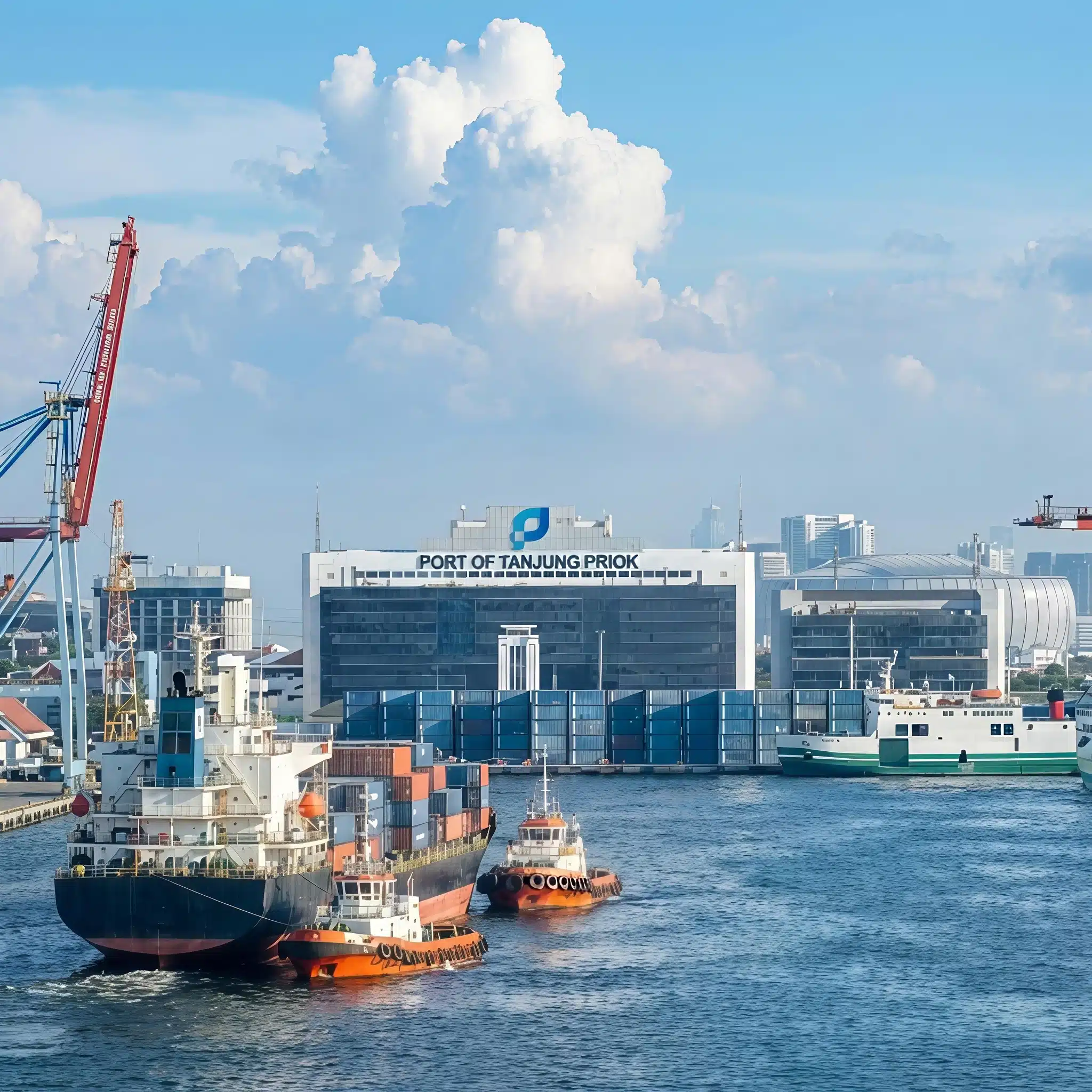
What can we do when shipping from China to Indonesia?
Sea freight FCL from China to Indonesia
Shipping to major Indonesian ports: Jakarta, Surabaya, Semarang, and Belawan.
Direct Sailing Options: We prioritize direct vessels to ensure valid Form E tax exemptions (avoiding transshipment risks).
First-hand rates from carriers (SITC, EMC, COSCO, WHL) with stable space even during peak seasons.
Container options: 20GP (25-28CBM), 40GP (55-58CBM), and 40HQ (66-68CBM).
Sea freight LCL from China to Indonesia
Indonesia Special Line: Dedicated consolidation services ensuring cost efficiency for smaller shipments.
Strict Manifest Compliance: We ensure precise cargo descriptions (avoiding vague terms like “machine” or “goods”) to prevent customs rejection.
Reliable consolidation with secure warehousing in Shenzhen and Hong Kong.
Competitive freight rates based on cubic meters with loading supervision.
Leveraging Shenzhen and Hong Kong airports for flexible routing options.
Capable of handling General Cargo, High-value electronics, and urgent project cargo.
Perfect for time-sensitive goods requiring immediate delivery to Jakarta or Bali.
Flexible scheduling via our “Indonesia Air Line” to meet urgent supply chain demands.
Express delivery service from China to Indonesia
Best choice for small cargo under 2CBM or 200kg.
HK Transshipment Expertise: We handle “Non-Manipulation Certificates” for goods routing via HK to protect your tariff benefits.
Fastest speed for samples, documents, or high-value small parcels.
Door-to-door delivery with tracking visibility.
Door to Door Shipping from China to Indonesia
Complete logistics from your Chinese supplier directly to your warehouse in Indonesia.
Marking & Labeling: We ensure all packages carry correct “Made in China” marks or “N/M” to satisfy Indonesian standards.
Services include Pickup, Packing, Loading Supervision, and Cargo Insurance.
Simple, transparent, and worry-free shipping experience.
DDP Shipping from China to Indonesia
Provide one-stop service: Customs clearance, Form E processing, and Tax payments included.
Risk Management: We advise on correct valuation (avoiding undervaluation) and Third-Party Invoicing rules.
Eliminate customs risks by handling “Red Channel” inspections and vague description issues.
Tailored solutions for B2B importers to achieve true WIN-WIN business.
Table of Content
In 2026, shipping from China to Indonesia is no longer a routine logistics decision. It is a risk-managed operation shaped by tighter controls, higher compliance thresholds, and shrinking room for error.
Since August 2025, new import controls under Permendag 23/2025 have shifted critical approvals to before shipment, not just at customs clearance. A wrong HS code, missing approval, or mismatched API license can now stop cargo before it ever leaves China.
This playbook cuts through the noise by focusing on the three decisions that matter most:
- The Risk: How to avoid Red Lane delays and inspection traps.
- The Cost: What you will really pay across Air, Sea, and DDP.
- The Method: How to decide exactly how to ship based on your license status.
With the implementation of Indonesia’s 2026 import regulations, customs clearance procedures have tightened, and the “Red Lane” high-risk period has shifted.
This guide is detailed (around 5,000 words). To save time, jump directly to the section that fits your situation:
- Indonesian Factories / With API-P License
“I want to reduce costs and improve efficiency. I need guidance on using Regulation 16 to import bulk raw materials.”
[Sections 1 & 2: How to Leverage Policy Benefits to Reduce Costs by 15%] - E-commerce Sellers / Urgent Restocking
“I only care about speed! I have to avoid airport red-light periods, and I absolutely can’t get stuck with a container during peak season.”
[Section 3: Air & Sea Peak Season Schedule and Risk Mitigation] - New Traders / No Indonesian Company
“This is my first time doing this. I don’t have a company or an API license in Indonesia, and I’m most afraid my shipment will get held up. I just want it done without headaches.”
[Section 4: DDP Dual Clearance Solution] (Zero barriers, hassle-free)
1. How to Avoid Costly Delays & Seizures Under New Regulations?
In 2026, Indonesia’s import rules changed materially.
Pre-approvals, HS code classification, Halal enforcement, and deregulation policies now directly affect whether your cargo can be shipped, cleared, and sold.
This section summarizes the key regulatory changes you must understand before shipping to Indonesia in 2026.
Key Takways:
- In 2026, PI and LS permits must be finalized before departure to prevent automatic cargo seizure or return.
- API-P license holders save 15% on costs by utilizing “Post-Border” checks and LS exemptions for raw materials.
- From October 18, 2026, food and beverage imports without valid Halal certification will not be cleared by Indonesian customs.
- New HS Code classifications (PMK 62/2025) are active; using outdated data triggers administrative fines up to 500%.
- Red Lane inspections are triggered by data gaps, specifically missing licenses, vague specifications, or under-valuation.
1.1 Which goods are prohibited?
Operational Checklist for 2026
Indonesia’s import regulations have undergone significant changes under Trade Minister Regulation No. 23/2025 and No. 47/2025. To avoid return shipments or seizure in 2026, it is essential to follow the policies and operational checklist below.
Core Policy Changes
- Mandatory pre-approval (Pasal 3, 4, 5): Previously, PI (Import Permit) and LS (Survey Report) could be processed after arrival. Now, approval must be completed before the cargo leaves the port of origin.
- Consequences of shipping without documents: Cargo without an LS report at departure will face customs clearance failure, return, or seizure.
- Stricter steel access (Permendag 47/2025): Steel and related products now require a technical recommendation from the Ministry of Industry (Kemenperin) in addition to the PI.
Key Regulated Categories for 2026
- Consumer goods (8 categories): Food & beverages, pharmaceuticals, health supplements, cosmetics & household hygiene, toys, bags & luggage, alcoholic beverages, footwear, bicycles.
- Steel and industrial products: Steel, alloy steel, and all derivatives.
Operational Checklist for 2026
If your goods fall into any of the categories above, the standard “book and ship” process is no longer valid. You must strictly adhere to the following 5-step compliance protocol to ensure a Green Lane clearance
| Step | Action | Risk |
|---|---|---|
1. Pre-approval |
Review HS Codes at least 30 days in advance to check whether goods fall under the 8+1 regulated categories. |
Minor HS Code deviations can invalidate existing PI. |
2. Permit application |
Obtain PI allocation via INATRADE system before production or booking, through the Indonesian importer. |
Shipping without a PI is prohibited; approval timelines may vary, so allow sufficient lead time. (Pasal 3/4) |
3. Pre-shipment inspection |
Schedule a designated Surveyor for on-site verification and LS report before loading. |
Shipping before inspection will void legal entitlement of the cargo. (Pasal 5) |
4. Route verification |
Confirm that the destination port is an authorized entry point for the product category (e.g., Tanjung Priok, Tanjung Perak). |
Incorrect port selection will prevent customs declaration. (Pasal 6) |
5. Reporting |
Submit an import realization report in the system after clearance. |
Failure to report will affect PI allocation for the following year. (Pasal 14/33) |
References
To review the full policy details for decision-making, download the official PDFs below:
- [Download] Trade Minister Regulation No. 23/2025: Consumer Goods Import Guide
- [Download] Trade Minister Regulation No. 47/2025: Steel Products Access Rules
(Quick reference: key clauses in Pasal 3, 4, 5, 6, 14, 33)
GWT Tip: In 2026, the import permit is critical. It is effectively the lifeline of your cargo.
When planning orders, follow the principle: “No PI, no booking, no loading.”
If you need to verify whether your product’s HS Code requires PI/LS approval or has port restrictions, provide the product details for a compliance check.
1.2 Which Policy Benefits Are Available?
Under Ministry of Trade Regulation 16/2025, Indonesia has introduced deregulation measures to support domestic industries. For compliant industrial raw materials, these changes can reduce total logistics costs by up to 15% in 2026.
(1) Key Policy Benefits
- Regulatory Shift (Article 65): Controls for specific industrial materials have moved from “Border” to “Post-Border.” Verification occurs after the goods leave the port, bypassing immediate customs hold.
- LS Exemption (Article 92): The mandatory Surveyor Report (LS) or pre-shipment inspection is waived for raw materials listed in the regulation annex.
- Direct Benefits:
- Cost Savings: Eliminates surveyor fees ranging from $300 to $800 per container.
- Time Savings: Direct loading without inspection waiting periods saves 7–14 days, reducing clearance time from weeks to days.
(2) Who Qualifies for These Benefits in 2026?
These deregulation benefits (LS Exemption & Post-Border checks) are exclusive to manufacturers.
Requirement: Importers must hold an API-P license and use the goods solely for their own production (Resale is prohibited).
Eligible Raw Materials:
- Plastic Raw Materials: Industrial plastic pellets and granules.
- Industrial Chemicals: Specific chemicals required for production processes.
- Forestry Products: Significant exemptions from previous PI/LS restrictions.
- Electronic Components: Parts for high-tech manufacturing.
- Hardware & Tools: Industrial maintenance tools and spare parts.
- Valves & Fittings: Components for industrial fluid control.
- Tires: Specific tires for industrial or special vehicle use.
- Textile Raw Materials: Industrial-grade fibers and fabrics.
- Steel Products: Specific steel types for precision industrial use.
- Footwear/Bag Components: Semi-finished goods for processing.
(3) Steps for API-P License Holders
| Step | Action | Reason |
|---|---|---|
1. Qualification |
Confirm the buyer holds an API-P license |
Only API-P licensed factories importing for self-use qualify for the LS exemption. (Pasal 3) |
2. HS Code Verification |
Match cargo HS Codes with Regulation 16 annex |
Ensures items are converted from Border to Post-Border, eliminating LS requirements. |
3. Shipping Acceleration |
Skip pre-shipment inspection |
Exempt categories can be loaded without waiting for LS reports, reducing storage fees. (Pasal 92) |
4. Fast Clearance |
Apply for Post-Border automatic release |
Cargo is cleared immediately upon arrival, allowing raw materials to reach production lines within 3 days. |
5. Compliance Reporting |
Submit monthly realization reports |
Legal compliance is required to retain PI allocations; failing to report may lock future quotas. (Pasal 33) |
1.3 Indonesia Halal Certification Requirements (2026)
From October 18, 2026, all imported food and beverage products must have valid Halal certification. Without it, customs will deny entry, and products will be removed from the market.
Current Status (January 2026): Certification is recommended. Inspections by customs and BPJPH (Halal Authority) are increasing, and compliance across the industry is around 60%.
Mandatory Enforcement (October 18, 2026): Full compliance is required. Products without certification will face written warnings, fines, or removal from sale, with losses that cannot be recovered.
(1) Which products require certification?
- Mandatory: Food, beverages, additives, raw materials, meat products, and cosmetics containing animal derivatives.
- Exempt: Electronics, machinery, and textiles.
- Special cases: Fresh fruits, grains, and fresh milk (exempt from certification but must be labeled “Non-Halal” if containing non-halal ingredients).
(2) What actions are required at each stage?
| Stage | Action Required | Reason |
|---|---|---|
Procurement negotiation |
Request supplier’s original Halal certificate |
Must confirm the certificate is recognized by BPJPH. Without it, the product will be prohibited after October 2026. |
Contract signing |
Register certificate with BPJPH |
Registration takes 2–3 days; original certificate validation takes 5–7 days. Start early to avoid October peak delays. |
Pre-Shipment |
Check Labeling |
Certification number must be printed on packaging. Without it, customs may hold the shipment. |
Booking & customs declaration |
Upload certificate to the system |
After October 2026, customs will validate against BPJPH data. Missing certificate will block PIB entry. |
End sales |
Ensure certified products are on shelves |
BPJPH and authorities may conduct inspections. Selling uncertified products may result in fines and product destruction. |
(3) Cost and timing
Halal compliance is a fixed logistics cost in 2026:
- Compliance fee: Approx. $450 per shipment ($300 for foreign certificate + $150 for Indonesian registration).
- Cost impact: For 100 kg of cargo, landed cost increases by $4.5/kg.
- Lead time: Add 10 working days across the supply chain for certification processing.
(4) Key Considerations
- Avoid Oct Delays: Do not wait until October. Certification bodies will be overloaded, costs may triple, and delays can cause high demurrage fees.
- No “In-Process” Exceptions: After October 18, 2026, Customs requires a final certificate; application receipts are not accepted for clearance.
- Non-Halal Labeling: Products containing pork or non-halal ingredients must be clearly labeled “Non-Halal” to be legally sold.
1.4 HS Code Changes
Indonesia’s Ministry of Finance issued PMK 62/2025, revising the classification of numerous product categories.
This detail is often overlooked but can significantly impact costs, or even prevent shipments from clearing customs successfully.
(1) How the New Rules Hit Your Wallet
| Product Category | Previous Classification | New Regulation (PMK 62/2025) | Commercial Impact |
|---|---|---|---|
LED Lighting |
HS 94.05 (Duty: 5%) |
HS 85.39 (Duty: 10%) |
Import costs increase by 5% immediately; may lead to unplanned losses if not accounted for. |
Wooden Furniture |
HS 94.02 (Duty: 0%) |
HS 94.03 (Duty: 5%) |
Duty exemption removed; new tariff rates apply. |
Plastic Containers |
General Classification |
Specific Sub-categories |
Requires precise declaration; vague descriptions trigger immediate customs audits. |
Project Cargo Tip: Are you sourcing for a hotel or villa project? The new duty rates significantly impact hospitality logistics. Check our specific guide for Shipping Furniture from China to Bali (2026) to see how to calculate landed costs for bulk furniture orders.
(2) Operational Risks of Non-Compliance (2026)
Incorrect HS Code declaration carries three primary risks for import operations in 2026:
- Administrative Fines (Notul): If the HS code is declared incorrectly and results in underpaid import duty, customs may impose an administrative fine of 100%–500% of the duty shortfall.
- Clearance Delays & Demurrage: Document mismatches may block PIB submission, leaving cargo stuck at the port with daily demurrage and storage fees.
Importer Risk Profile (Red Lane / Jalur Merah): Repeated HS code or classification errors negatively affect the importer’s compliance record. Future shipments are more likely to face Red Lane inspections and delays, meaning mandatory physical inspections, longer clearance times, and higher overall costs.
(3) How to Reduce Compliance Risk (Do not ship until you have verified these three items)
To mitigate risks associated with PMK 62/2025, we recommend the following pre-shipment protocols:
- Step 1: Purge Old Data (Stop Copy-Pasting) Historical data is no longer a reliable reference. Importers should re-validate product master data against the current PMK 62/2025 tariff book rather than relying on previous invoices.
- Step 2: Document Consistency Check Compliance requires strict alignment. The HS Code must be consistent across the Import Permit (PI), Surveyor Report (LS), and Commercial Invoice. Discrepancies between these documents will lead to system rejection.
- Step 3: Precision Naming Description matters. If your PI certificate says “LED Lamp 10W”, your Invoice must say “LED Lamp 10W”. Do not simplify it to “Lighting” or “Parts”.
(4) What to do if you are unsure?
Is your product affected by PMK 62/2025?
If the classification of your specific commodities under PMK 62/2025 is unclear, or if you require verification of duty rates, our technical team is available to assist.
We provide pre-shipment review services to verify HS codes, check PI/LS applicability, and estimate landed costs based on the latest regulations.
With 15+ years of experience in Indonesian logistics, we help importers navigate complex regulations and avoid costly surprises.
1.5 Red Lane Risk Factors
The “Red Lane” (physical inspection channel) is rarely random.
Operational data indicates that most inspections are triggered by specific compliance discrepancies within the documentation.
(1) What Triggers a Red Lane Inspection? (Beyond HS Code errors, these are the most common operational triggers)
During the Red Lane period, traditionally concentrated between December and March, and notably starting earlier since late 2025, customs enforcement intensified.
The following five issues are the most frequent causes of Red Lane routing:
- Missing Licensing (API/LS): Customs assesses not only the cargo but also the importer’s regulatory eligibility. Without a valid API or the required LS for the relevant goods, the import declaration often cannot be processed and is typically routed to the Red Lane.
- Incomplete Electronic Specifications: Appliances, consumer electronics, and powered equipment commonly involve SNI compliance and price verification. Omitting model numbers or technical specifications is often flagged as an attempt to conceal value, triggering valuation audits.
- Halal Non-Compliance: Regulations for food and health products have shifted to mandatory enforcement. Shipments lacking required Halal certification or Indonesian labeling face rejection, re-export, or destruction.
- Under-Declared Cargo Value: Customs systems cross-reference declared values against internal price databases. If the declared price falls outside the accepted range, the shipment may be flagged even if the transaction price is genuine, resulting in additional duty and penalties.
(2) Why avoiding the Red Lane is critical for supply chain stability?
In Indonesia, clearance reliability directly affects whether a shipment remains profitable. Once a shipment enters the Red Lane, the impact goes well beyond processing time:
- Unpredictable Lead Times: Inspections typically add 7–14 days to the clearance cycle, disrupting inventory planning.
- Escalating Port Charges: Extended dwell time at the port results in progressive storage and demurrage fees, which can eventually exceed the profit margin of the shipment.
- Cargo Integrity Risks: Repeated handling during unboxing and inspection increases the risk of product damage or loss.
For this reason, clearance certainty often outweighs marginal freight cost differences in the Indonesian market.
(3) How to Secure Green Lane Clearance in 2026?
- Data Transparency: Provide complete technical datasheets and authentic proof of value (e.g., bank transfer slips) to support your declaration.
- Pre-Order Verification: Ensure all non-tariff requirements (SNI, Halal, LS) are secured before production begins, not just before shipping.
- Maintain Importer Rating: Consistency is key. A history of clean, accurate declarations improves your company’s risk profile, reducing the likelihood of future inspections.
The Red Lane is not designed to block compliant trade. It primarily filters out incomplete preparation and non-compliant practices, while well-prepared importers move forward with fewer disruptions.
In a complex regulatory environment, cost control starts with risk control.
Navigating the Red Lane requires more than just luck; it requires a strategic approach to PI and LS documentation. For a detailed breakdown of the specific customs triggers and how the DDP method can bypass them, read our in-depth analysis: How to Avoid Red Line in Indonesia: 3 Critical Triggers & The DDP Solution.
2. How Much Does It Cost to Ship from China to Indonesia in 2026?
In 2026, China–Indonesia shipping costs are no longer defined by the freight rate alone.
The same shipment can cost USD 227 or USD 550 depending on method, volume, and hidden charges.
This section shows real China–Indonesia shipping rates and which costs actually hit your P&L.
Key Takways:
For sea shipments, base freight typically accounts for less than 30% of the Total Landed Cost in 2026.
Sea FCL is the lowest-cost option, with 20ft container rates starting from $470.
DDP is the only fixed-price solution for importers without an API license.
Documentation or clearance issues can trigger storage and demurrage fees of up to $150 per day.
2.1 Average Shipping Costs Overview
| Service Mode | Indicative Rates | Transit Time | Operational Considerations |
|---|---|---|---|
Air Freight |
USD 2.50 – 7.50 / kg |
1–3 Days | Ideal for high-value/urgent cargo. Typical market reference:
Strict compliance required. |
Sea LCL |
USD 35 – 80 / CBM |
12–18 Days | Cost-efficient for small volumes (<15 CBM). |
Sea FCL 20’ |
USD 470 – 1,050 / CNTR |
7–15 Days | Best Value. Rates fluctuate by carrier.
(Base Ocean Freight only. Local surcharges apply.) |
Sea FCL 40’ |
USD 840 – 1,800 / CNTR |
7–15 Days | High Efficiency. 40HC rates are currently very competitive (starting ~$840). Note: Outports (e.g., Medan/Semarang) incur higher local charges than Jakarta. |
DDP Door-to-Door |
USD 140 – 260 / CBM |
12–18 Days | All-in solution covering duty and clearance. Best for importers without licenses (API). (Subject to Min. Charge, typically 1 CBM) |
Market Note: Compared to late 2025 volatility, Q1 2026 rates show a net 5–10% seasonal increase. The market shows divergence: Jakarta rates are low ($470+), while Outport rates have surged. Prices are subject to weekly adjustments based on fuel (BAF) and currency fluctuations.
Disclaimer: Rates are indicative estimates. Final pricing depends on specific cargo details and capacity. We recommend locking in rates 14–30 days prior to departure.
2.2 Real Cost Analysis: What Actually Hits Your P&L
To protect your profit margin, you must calculate the Total Landed Cost, not just the freight rate.
Scenario: Shipment of 50kg of Electronics from Shenzhen (Yantian/Dachan Bay) to Jakarta (15% Duty Rate).
| Cost Factor (USD) | Air Freight | Sea LCL | FCL 20ft (Prorated) | DDP (All-In) |
|---|---|---|---|---|
Pure Freight Charge |
$250 ($5/kg) |
$45 (Min) |
$27 |
Included |
Customs Duty (15%) |
$35 |
$35 |
$35 |
Included |
LS / Verification |
$100 |
$100 |
$100 |
Included |
Handling & Port Fees |
$20 |
$40 |
$15 |
Included |
Delay Cost (Opportunity) |
$20 (2 Days) |
$80 (14 Days) |
$50 (7 Days) |
$0 |
TOTAL LANDED COST |
$425 |
$300 |
$227 |
$450 – $550 |
Note: The DDP cost ($450) reflects the standard Minimum Charge for small shipments. While the per-unit cost is higher, it guarantees a fixed price with zero clearance liability.
The Reality Behind the Numbers (Q1 2026):
- The Air Freight Reality: Base air freight is high (~$250), and total landed cost hits ~$425 after duties and fees. While fast, it is the most expensive option per unit. In 2026, electronics at Jakarta Airport will also face frequent spot checks, often incurring unbudgeted storage fees.
- The LCL Consolidation Factor: LCL is cheaper (~$300) but comes with a 14-day delay. The ~$80 “Delay Cost” represents the capital tied up in inventory during this dead window.
- FCL Efficiency: Theoretical Lowest Cost ($2.27/unit). This efficiency is only achievable if you have enough volume to fill the container. Otherwise, you are paying for empty air.
- DDP Considerations: DDP rates (~$450–$550) are higher than standard LCL. You pay more upfront to guarantee a fixed price, reducing the risk of “Notul” fines and regulatory delays. We take the clearance risk, not you.
Small Parcel vs. Bulk Cargo: Not sure if you should use a courier like J&T or a professional freight forwarder? For shipments under 100kg, the choice impacts both cost and customs liability. Compare the pros and cons in our guide: J&T vs. Freight Forwarder: Indonesia Import Guide.
GWT Insight: Never select a method based on the lowest freight rate alone. Minimize your Total Landed Cost by accounting for duties, verification fees, and the hidden cost of time.
Are you struggling to decide which shipping method fits your current inventory cycle? GWT can provide a customized shipping solution based on your specific needs.
2.3 Surcharges and Hidden Costs
Beyond the base freight rate, the following operational costs should be budgeted for:
| Charge Item | Estimated Rate / Unit | GWT Notes |
|---|---|---|
Bunker Adjustment Factor (BAF) | Sea: $50–150/TEU or $2–5/CBM Air: Typically Included |
Fluctuates with global fuel prices. Always confirm rate validity at the time of booking to avoid last-minute adjustments. |
Port Handling Charges |
$20–40 per shipment |
Standard terminal and warehouse handling fees at the destination port. Minor variations may occur depending on the specific port. |
Storage & Demurrage | LCL: ~$5–10/CBM per day FCL: ~$75–150/CTR per day | Critical Risk: Fees accumulate daily if cargo is held for inspection or documentation issues. Budgeting in advance is advised for high-risk cargo. |
LS Verification Fee |
$100–300 (Product dependent) | Indonesia Specific: Pre-shipment inspection. Usually included in DDP “All-In” rates, but payable to surveyors in General Trade. |
Documentation Fees |
$25–50 per set | Covers the preparation and pre-check of Form E (CO), Commercial Invoice, and Packing List. |
Inland Delivery |
$30–100 (Location dependent) | Final mile delivery. Rates are stable within Jakarta but increase incrementally for regions outside of Java. |
Cargo Insurance |
0.5% – 1% of Commercial Value |
Optional but highly recommended for high-value machinery or electronics to cover potential loss or damage. |
3. How Long Does It Take to Ship from China to Indonesia?
Your cargo is late not because the ship is slow, but because it gets stuck.
In 2026, inspections, warehouse congestion, and peak seasons delay more shipments than distance itself.
This section breaks down transit time by mode and calendar, shows you which periods to avoid, and how to keep your delivery on schedule.
Key Takways:
- Sea FCL is the most stable option in 2026 (7–15 days).
- Chinese New Year and December are the highest-risk periods.
- Most delays come from documentation, not transport.
- GWT saves 3–5 days via private hubs and 4-hour HK trucking.
3.1 Transit Time Comparison by Mode
The following transit times are based on standard routes from major South China ports (Yantian / Dachan Bay, Shenzhen) to Jakarta (Tanjung Priok), Indonesia.
All estimates assume complete documentation, regular sailings, and no extreme weather conditions.
| Mode | Est. Transit (Days) | Fastest Scenario | Worst Scenario | Avg. Inspection Delay | Recommended For |
|---|---|---|---|---|---|
Air Freight |
1 – 3 |
1 (Direct flight) |
7 – 10 (Inspection) |
3 – 5 Days |
High-value parts, urgent replenishment, pharma samples. |
Sea LCL |
12 – 18 |
10 (Smooth flow) |
25 – 30 (Whse. delay) |
1 – 3 Days |
Small-volume shipments (2–14 CBM), low-value parts |
Sea FCL |
7 – 15 |
7 (Green light) |
15 – 20 (Doc check) |
2 – 5 Days |
Bulk raw materials, industrial equipment, stable supply flows |
DDP |
8 – 18 |
8 (Door-to-Door) |
18 (Buffer incld.) |
0 (Managed) |
Importers without licenses, textiles, cosmetics, regulated goods. |
Published transit times only work as a reference.
Actual delivery speed depends on where your cargo starts, where it ends, and how it clears customs.
Origin Port Adjustments (China):
- Shenzhen (Base): Standard baseline.
- Shanghai / Ningbo: Add +2–4 days (depending on routing and port congestion).
- North China (Tianjin/Qingdao): Add +4–7 days.
Destination Adjustments (Indonesia):
- Jakarta: Standard baseline.
- Surabaya: Add +2–5 days.
- Outports (Medan/Semarang): Add +5–10 days depending on transshipment.
Practical Considerations:
- Speed vs. Risk: Air freight is fast, but under tighter regulatory enforcement in 2026, high-value electronics are more likely to be flagged for airport inspections. In some cases, actual delivery may be slower than ocean freight.
- Cost Efficiency: For shipments exceeding 15 CBM, FCL is recommended. The per-unit landed cost for FCL is generally lower than LCL or Air Freight.
Compliance Strategy: For goods lacking specific Import Licenses (API/NIB) or SNI certifications, DDP service transfers the clearance liability to the carrier, mitigating regulatory risks.
You May Also Like:
China to Indonesia Shipping Risks 2026: Avoid Delays
Avoid China to Indonesia shipping risks. Learn to bypass the Customs Red Lane, navigate Database Harga traps, and stop peak season container rollovers.
3.2 2026 Logistics Calendar: Peak Seasons & Risk Profile
Based on data from China (SZX/PVG/NGB) to Jakarta.
Note: For deliveries to Surabaya, Semarang, or outer islands, add 3–5 days for domestic transfer during peak periods.
| Period | Season Type | Market Conditions | Rate Trend | Recommended Action |
|---|---|---|---|---|
Jan – Early Feb |
Pre–Chinese New Year Rush |
Factories rush shipments before holidays. Severe port congestion and truck shortages. |
🔴 Very High | Book 3–4 weeks in advance. Avoid shipping during the final week before the holiday. |
Mid – Late Feb |
Chinese New Year Holiday |
Production halts in China. Indonesian customs remain operational. Risk of blank sailings. |
🟢 Low |
Ideal for non-urgent stock or document pre-checks. |
March |
Pre-Ramadan / Pre-Lebaran |
Peak Congestion. Import surge before Ramadan. Destination trucking capacity may drop by 50%. |
🟠 Med-High |
In 2026, CNY and Ramadan are close. Clearance should be completed before mid-March to avoid delays. |
April – Aug |
Standard Season |
Balanced supply and demand. Best operational efficiency. |
🟢 Stable |
Ideal period for bulk shipments and cost optimization. |
Mid-Sept – Early Oct |
Pre-Golden Week |
Factories ship ahead of China’s national holiday.
Short-term congestion and general rate increases are possible. |
🟠 Med-High |
Book space at least two weeks in advance and allow a schedule buffer. |
Oct – Nov |
E-commerce Rush |
Preparation for 11.11 and 12.12 (Harbolnas). High demand for LCL and Air. |
🟠 Rising |
Prioritize “Express” sea or Air options for strict deadlines. |
Dec – Jan |
Red Lane Season |
High risk. Overlap of holiday cargo and year-end customs audits. Inspection rates rise. |
🔴 High Risk |
Prioritize compliance. Use DDP for sensitive categories. Allow 7–14 days buffer for clearance. |
Note: The DDP cost ($450) reflects the standard Minimum Charge for small shipments. While the per-unit cost is higher, it guarantees a fixed price with zero clearance liability.
The Reality Behind the Numbers (Q1 2026):
- The Air Freight Reality: Base air freight is high (~$250), and total landed cost hits ~$425 after duties and fees. While fast, it is the most expensive option per unit. In 2026, electronics at Jakarta Airport will also face frequent spot checks, often incurring unbudgeted storage fees.
- The LCL Consolidation Factor: LCL is cheaper (~$300) but comes with a 14-day delay. The ~$80 “Delay Cost” represents the capital tied up in inventory during this dead window.
- FCL Efficiency: Theoretical Lowest Cost ($2.27/unit). This efficiency is only achievable if you have enough volume to fill the container. Otherwise, you are paying for empty air.
- DDP Considerations: DDP rates (~$450–$550) are higher than standard LCL. You pay more upfront to guarantee a fixed price, reducing the risk of “Notul” fines and regulatory delays. We take the clearance risk, not you.
Impact by Transport Mode:
| Mode | Peak Season Sensitivity | Primary Risk Factor |
|---|---|---|
Air Freight |
🔴 High | Space constraints due to e-commerce volume; increased airport inspection frequency. |
Sea LCL |
🔴 Critical |
Deconsolidation delays. Warehouse congestion can extend stripping times from 3 days to over 10 days. |
Sea FCL |
🟠 Medium |
Equipment shortage at origin or roll-overs due to overbooking. |
DDP |
🟢 Low |
Risk transfer. Providers typically utilize secured space agreements and pre-clearance capabilities. |
Shipping Periods Best Avoided:
- Last 7 Days Pre-CNY: Trucking costs spike and roll-over risk is highest.
- First 10–15 Days of Ramadan: Clearance efficiency drops sharply, increasing storage risk.
- Mid-Dec to Early Jan: Period with the highest frequency of customs audits and “Red Light” status. Ensure documentation is flawless.
3.3 What Can Impact Shipping Speed from China to Indonesia?
Several factors can affect how fast your cargo moves from China to Indonesia.
Understanding these factors in advance helps reduce delays and plan more accurately.
- Weather Conditions: Severe weather can disrupt both air and sea freight schedules, causing unexpected delays. Monitoring weather conditions and allowing buffer time can help reduce the impact.
- Port Congestion: Congestion at major ports may slow down unloading, customs processing, and delivery. Choosing efficient ports or avoiding peak shipping seasons can improve transit time.
- Customs Clearance Delays: Incomplete or inaccurate documentation is a common cause of customs delays. Ensuring all shipping documents are accurate and compliant is essential.
- Logistics Chain Efficiency: The experience and coordination ability of your logistics provider directly affect delivery speed. Working with a reliable freight forwarder helps streamline handling and communication.
While transit times can never be guaranteed, proper planning and the right logistics partner can significantly reduce delays.
3.4 How GWT Helps Reduce Transit Time
- Direct China–Hong Kong Trucking Operations
We operate our own cross-border trucking fleet with Guangdong–Hong Kong licensed trucks and trailers (3T / 5T / 10T), without relying on third-party dispatch.
Utilizing pre-declaration systems at Huanggang and Wenjindu ports, cargo loaded in Shenzhen typically reaches Hong Kong International Airport within 4 hours, ensuring standardized transfer timelines.
- Hong Kong Routing & Special Cargo
Leveraging Hong Kong’s free port status, we accept cargo restricted at mainland airports, including oversized freight and batteries (PI965/966).
Our Block Space Agreements (BSA) with major airlines help maintain space stability during peak seasons such as 11.11 and Christmas.
- Daily Dispatch from Shenzhen and Guangzhou Warehouses
We operate 2,000 sqm consolidation hubs in Shenzhen and Guangzhou with a fixed 22:00 departure schedule.
Supported by stable self-generated volume, shipments are processed immediately upon arrival, eliminating the typical 3–5 day wait times associated with third-party cargo consolidation.
- End-to-End Control
From domestic collection to Jakarta distribution, the entire process is managed by our in-house team.
We provide verification records at key nodes (inbound, loading, sealing) and utilize our own delivery resources in Jakarta, minimizing intermediaries to enhance operational stability.
4. Which Shipping Method Is Best from China to Indonesia?
In 2026, shipping from China to Indonesia is less about price and more about choosing the right method to avoid delays, inspections, and cost overruns.
This section compares air, sea, and DDP options so you can choose based on speed, risk, and control.
Key Takways:
- Air freight via Hong Kong is mandatory for batteries and sensitive cargo to avoid detention.
- Sea FCL + Form E is the most profitable route, offering 0% duty and the lowest unit cost.
- DDP is the only safe solution for unlicensed buyers or high-risk regulated goods.
- Dec–March is “Red Lane” season; prioritize compliance over low freight rates during this period.
Air freight is the standard solution for urgent inventory replenishment and high-value cargo. By minimizing transit time, it accelerates inventory turnover and allows supply chains to adapt quickly to market volatility.
Understanding current market dynamics is essential for effective cost control.
| Aspect | Details & Benchmarks |
|---|---|
Indicative Rates | +45 KG: $3.80 – $4.50 (Sample/Urgent) +100 KG: $3.20 – $3.80 (Standard Replenishment) +500 KG: $2.90 – $3.40 (Bulk Electronics) Note: Rates apply to Airport-to-Airport service only. |
Transit Time | Direct (SZX/CAN): 1 Day (General Cargo) Transshipment (HKG): 2 – 3 Days (Batteries/Complex Cargo) Door-to-Door: Add 3 – 5 days for customs clearance. |
Best Suited For | High-value precision instruments, PCBs, laboratory equipment (>$5k value), and production line emergency parts. Hong Kong routing is required for batteries or magnetic goods. |
Pros | Speed: Short flight times enable potential “Next Day” arrival. Cash Flow: Reduces inventory holding cycles significantly. Safety: Minimal handling reduces damage risk for fragile items. |
Cons | Cost: Significantly higher premium compared to ocean freight. Scrutiny: Strict security protocols; surcharges apply to sensitive cargo. Inspection Risk: High declared values increase the likelihood of inspection. |
Market Update: Pre-CNY Capacity Alert
With the Lunar New Year (CNY) production rush, air capacity is tightening.
Current rates reflect peak season surcharges.
While rates for +100kg shipments remain stable around $3.20/kg, securing cargo space is currently the priority over price negotiation.
GWT Insights:
We advise booking space at Shenzhen (SZX) or Hong Kong (HKG) 5 days in advance to guarantee departure.
For sensitive cargo such as batteries or liquids, utilizing the Hong Kong route is necessary to avoid security rejection at mainland airports.
Key Air Routes from China to Indonesia
Selecting the correct origin airport is critical for compliance and schedule adherence.
We categorize routes based on cargo attributes:
| Route | Code | Transit | Recommended For | Risk Note |
|---|---|---|---|---|
South China Direct |
SZX / CAN → CGK |
1 Day |
General cargo, Documents. | Lithium batteries and liquids are prohibited. High rejection rate for anomalies. |
Hong Kong Special |
HKG → CGK |
2 – 3 Days |
Batteries, Oversized, E-commerce. | Cross-Border requires additional time for mainland-to-HK trucking. Book early during peak season. |
East China Direct |
PVG → CGK |
3 – 4 Days |
Machinery parts, Textiles. | Strict document review. Documentation must be 100% accurate. |
Singapore Transfer |
SZX → SIN → CGK |
3 – 7 Days |
Budget cargo, Batam shipments. |
Lower cost, but higher risk of delay or cargo breakdown during transshipment in SIN. |
GWT Insight: The Hong Kong Advantage
Why route via Hong Kong when the factory is in Shenzhen? Compliance.
Mainland airports enforce strict prohibitions on hazardous materials; even small button batteries can cause shipment detention.
We utilize a compliant SZX-HKG Link, transferring cargo via cross-border trucks to Hong Kong.
While this adds geographical distance, it ensures the cargo is accepted for flight. In logistics, this regulatory certainty prevents indefinite delays.
GWT Air Freight Solutions: Balancing Speed, Cost, and Compliance
Air freight does not always mean higher cost for faster delivery.
A professional air solution focuses on optimizing transit time, cost, and compliance risk.
GWT goes beyond basic space booking by addressing supply chain efficiency at the source.
Coordinated Use of SZX / CAN / HKG
We allocate the most suitable departure airport based on cargo characteristics and delivery objectives rather than relying on a single airport.
- Shenzhen / Guangzhou (SZX / CAN): Ideal for general cargo and cost-sensitive shipments. We utilize direct flights from mainland hubs to control costs while meeting delivery deadlines.
- Hong Kong (HKG): Best for oversized, urgent, or regulated cargo (e.g., magnetic items, precision equipment). We leverage Hong Kong’s free port status and specialized handling capabilities for maximum compliance and capacity assurance.
Dedicated Air Express Solutions
Air freight is not a routine choice, but a critical contingency tool.
When faced with factory delays, missed ocean cut-offs, urgent market replenishment, or production line shortages, we can:
- Convert planned sea or land shipments to direct or priority air services.
- Restore supply continuity within the shortest feasible timeframe and limit operational disruption.
4-Hour Shenzhen–Hong Kong Multimodal Transfer
GWT operates a dedicated fleet of cross-border trucks, ensuring a seamless connection between Shenzhen and Hong Kong International Airport.
Cargo consolidated in Shenzhen is transferred via priority clearance channels to Hong Kong airport cargo terminals.
The entire process is managed by GWT’s in-house team.
This means:
- Delivery in Shenzhen with access to Hong Kong outbound air networks.
- Clear accountability and full shipment visibility, reducing the risk of offloading or handling disputes.
- An additional distance delivers higher operational certainty.
In air freight, predictability is often the fastest outcome.
Expertise in High-Value and Sensitive Cargo
GWT operates a dedicated fleet of cross-border trucks, ensuring a seamless connection between Shenzhen and Hong Kong International Airport.
Cargo consolidated in Shenzhen is transferred via priority clearance channels to Hong Kong airport cargo terminals.
The entire process is managed by GWT’s in-house team.
This means:
- Delivery in Shenzhen with access to Hong Kong outbound air networks.
- Clear accountability and full shipment visibility, reducing the risk of offloading or handling disputes.
- An additional distance delivers higher operational certainty.
In air freight, predictability is often the fastest outcome.
4.2 Sea Freight from China to Indonesia 2026
Ocean freight handles over 90% of the trade volume between China and Indonesia.
It is the most cost-effective option for bulk cargo and planned replenishment.
The main challenge lies not in transit, but in customs clearance and red lane uncertainty.
Note: The data below reflects market conditions for Q1 2026 (Pre-Chinese New Year) and serves as a reference.
| Aspect | Details & Benchmarks |
|---|---|
Cost Benchmarks (Port-to-Port) | LCL: $20 – $50 USD / CBM FCL (20GP): $800 – $1,200 USD (Varies by origin) FCL (40HQ): $1,500 – $2,500 USD (Includes seasonal premiums) DDP (All-in): 2,000 – 3,500 RMB / CBM |
Transit Time (Port-to-Port) | South China (SZX/CAN): 6 – 9 Days (Fastest) East China (SHA/NGB): 10 – 15 Days Transshipment (via SG): 15 – 25 Days (Economical but slower) |
Core Advantages | Cost Efficiency: Rates are approx. 10% of air freight. Duty Benefits: 0% import tariff with Form E Certificate. Capacity: Ideal for heavy machinery and bulk raw materials. |
Operational Trade-offs | Inspection Risk: “Red Line” inspections peak from Dec to March. Congestion: Jakarta (Priok) gate-in delays of 3–5 days during peak season. |
Pre–Chinese New Year Advisory
January is traditionally the peak shipping period.
Carriers have implemented general rate increases, and equipment shortages are common at Ningbo and Shanghai.
Action Required: Book 10–14 days in advance.
Deadline: Shipments for Ramadan (March) must depart this month.
Key Sea Routes from China to Indonesia
Unlike air freight, port selection in sea freight directly impacts inland costs and transit time.
Choosing the correct routing is critical for operational efficiency.
| Route Strategy | Origin Port | Transit Time | Recommended For | Operational Note |
|---|---|---|---|---|
South China Express |
Shenzhen (SZX) / Nansha |
6 – 8 Days |
Electronics, E-commerce, Urgent Replenishment | High Demand: Strict closing times apply. Late gate-in risks rolling to the next vessel. |
East China Industrial |
Shanghai / Ningbo |
10 – 14 Days |
Machinery, Textiles, Bulk Chemicals | Congestion Risk: Peak season gate-in queues at Ningbo often exceed 24 hours. |
Direct to Outports |
Main Ports → Surabaya (SUB) / Semarang (SRG) |
Main Port + 5 Days |
Cargo destined for East or Central Java | Cost Saver: Ship directly to secondary ports. Trucking from Jakarta incurs high costs. |
DDP Service |
GWT Warehouse |
12 – 18 Days |
Buyers without import licenses, Miscellaneous cargo | Inclusive: Covers freight, clearance, and delivery. Verify compliance standards. |
Notes on LCL Charges
Hidden charges in LCL shipments are common. We are committed to eliminating hidden costs in LCL (Less than Container Load) shipping.
| The Market Issue | Our Standard (All-in Pricing) |
|---|---|
Hidden Fees: Some providers quote “$0 freight” or negative rates to secure bookings. | Upfront Clarity: We provide a full breakdown of all costs before shipment. |
The Result: Consignees are forced to pay excessive Destination Terminal Handling Charges (CISF) upon arrival. | The Result: whether FOB or CIF, you know the total landed cost before the cargo leaves China. |
Why Choose GWT for China–Indonesia Ocean Shipping?
GWT provides origin-based sea freight services supported by VAT-qualified operations, direct carrier cooperation, and supply chain finance capability.
Our focus is on secured space, cargo integrity, and efficient clearance.
With long-term operational experience on China–Indonesia routes, particularly via Jakarta, GWT has established stable delivery performance across the following areas.
Direct Carrier Contracts with Peak-Season Space Protection
On China–Indonesia routes, schedule reliability is often more critical than spot pricing.
GWT does not prioritize low rates at the expense of shipment stability.
Before each booking, we:
- Review recent sailing performance and actual schedule data
- Assess carrier delay frequency and port omission risk
- Prioritize carriers with consistent schedules and established cooperation
Through long-term contracts with carriers, containers receive loading priority even during pre-CNY or Ramadan peak periods.
We avoid placing cargo on oversold sailings to minimize roll-over risk.
Best For: Continuous factory replenishment and time-sensitive project cargo.
Pre-Shipment Process Control
Shipping delays often originate onshore before the vessel departs.
For both LCL and FCL shipments, GWT coordinates the process starting from the cargo preparation stage.
Our coordination includes:
- Milestone planning: Backward scheduling of warehouse delivery, booking, and customs documentation based on cargo readiness.
- Proactive correction: Pre-check of customs and shipping documents, especially for exporters unfamiliar with trade procedures.
This approach helps avoid re-filings caused by missing or incorrect documentation.
Best For: First-time exporters to Indonesia and multi-supplier consolidations.
Practical Solutions for Common Operational Risks
The most common issues encountered in past cases are rolled containers, cargo damage, and documentation errors.
GWT addresses these risks through the following measures:
- Cargo Safety: We provide packaging and loading recommendations for furniture, machinery, and precision equipment to minimize damage risks during transit.
- Document Compliance: We perform dual verification of the Bill of Lading and customs data. This ensures consistency and prevents costly amendments or release delays at the destination port.
Delivery is considered complete only when cargo can be collected and used without obstruction.
Indonesia Trade Lane Expertise
Indonesia-bound shipments require high document accuracy and clear responsibility allocation.
Small discrepancies can escalate into clearance or delivery issues at destination.
GWT is familiar with operations at Tanjung Priok Port and identifies common risk points before shipment, including:
- Responsibility boundaries under CIF, DDU, and DDP terms
- Operational handovers between shippers, traders, and final consignees
- Consistency between cargo details and shipping documents
All critical items are confirmed prior to departure, not handled reactively after arrival.
Why Clients Switch to GWT (and Stay)
Many long-term clients, including Indonesian trading companies and Chinese manufacturers, initially approached GWT after experiencing unstable schedules, repeated roll-overs, or document errors elsewhere.
They stayed not just because we fixed the immediate problem, but because of what happened next. Through every shipment, GWT proved its value through comprehensive, detail-oriented planning and honest communication.
Whether it was solving a sudden customs block or securing space during peak season, our proactive “pre-shipment” control and dedicated service turned skeptical first-time buyers into loyal partners.
We don’t just move cargo; we solve the complexity that others ignore.
If you are reviewing sea freight options to Indonesia, seeking clarity on schedules, documentation, or operational risks, or unfamiliar with the process,contact the GWT team.
We provide comprehensive solutions tailored to your specific logistics requirements.
4.3 DDP Shipping from China to Indonesia
Indonesia’s import regulations involving API qualifications, SNI certifications, and quota restrictions are complex. However, managing these requirements does not have to be your burden.
GWT’s DDP service is designed for clients seeking a streamlined, end-to-end solution.
Once you confirm the cargo and delivery address, we manage the entire process. This includes customs clearance, duty payment, compliance checks, and final delivery.
Where Does the Cost Go?
| Component | Standard Ocean Freight | GWT DDP Service | GWT Value |
|---|---|---|---|
Ocean Freight | ✅ Forwarder managed | ✅ Forwarder managed | Space Protection: We leverage carrier partnerships (e.g., OOCL) to secure space during peak seasons. |
Import License | ❎ Consignee requires API/NIB | ✅ Included | Seamless Entry: We utilize our authorized entity for clearance, allowing import without your own local license. |
Duty & VAT | ❎ Paid after assessment, rate varies | ✅ Included (Fixed price) | Financial Efficiency: We handle immediate tax payments to prevent payment-related port delays. |
Special Certs | ❎ Handled by the consignee | ✅ Included/Assisted | Compliance Support: We assist with regulatory requirements for complex categories like machinery or food products. |
Demurrage Risk | ❎ Client covers delays | ✅ Included | Cost Protection: We cover extra storage or container rental fees incurred during customs inspections. |
Is DDP Right for You?
We recommend considering the DDP solution if your business fits the following profiles:
- No Import License or Experience: You or your buyer do not hold an API/NIB import license or are unfamiliar with local clearance rules.
- Regulated or Complex Cargo: Your goods (e.g., textiles, cosmetics, machinery) require strict regulatory adherence. We provide pre-shipment reviews to minimize inspection risks.
- High-Value Goods: For electronics or precision equipment, the cost of a port delay often exceeds the price difference of DDP service.
- Need for Cost Certainty: You want to confirm total logistics cost before shipment, without variable charges.
- Simplified Tax Handling: You prefer a single payment covering freight and taxes, without post-arrival invoicing.
When to Choose General Trade (DAP/CIF)?
GWT prioritizes cost-effective solutions. In the following cases, DAP or CIF may be more cost-effective:
- Established Enterprises: Your company has a local Indonesian branch with a valid API-U license and an in-house customs team.
- High-Volume Raw Materials: You ship large, recurring volumes of industrial materials (e.g., plastic granules) where clearance risk is minimal.
- Low-Margin Goods: If profit margins are thin (e.g., below 5%), the premium for DDP services may not be economically viable.
Comparison Summary
| Your Profile | Your Priority | Recommended Service | Operational Expectation |
|---|---|---|---|
Unlicensed buyers, SMEs, e-commerce sellers | Minimal involvement | DDP (Delivered Duty Paid) | Full Service: GWT handles all clearance and taxes. Simple, courier-like experience. |
Large factories, multinational traders with API | Cost optimization | DAP/CIF (General Trade) | Collaborative: Consignee handles clearance and tax. Requires internal logistics capability. |
Not Sure Which Option Fits?
Import policies in Indonesia vary significantly depending on the HS Code of your product.
Some shipments require DDP for compliance, while others are more cost-effective via general trade.
Please provide your product name or an image.
Our consultants will assess your specific needs and recommend the most appropriate shipping method within 24 hours.
5. 2026 Logistics Outlook: Why the Right Forwarder Protects Your Margins
Previously, Indonesian customs clearance allowed for some operational flexibility. From 2026 onward, that flexibility is rapidly diminishing.
Import supervision has shifted from manual review to system-based data verification.
Import permits (PI), Surveyor Reports (LS), HS Codes, and declared values are now digitally cross-referenced.
In this environment, a freight forwarder’s role goes beyond transportation.
Based on GWT’s long-term experience with complex China–Indonesia shipments, we have identified four trends already being validated by the market.
Issues No Longer Arise at the Port, but Before Shipment
By 2026, Indonesian Customs inspection logic is driven by automated data comparison.
Any inconsistency between the bill of lading, customs declaration, and actual cargo is flagged by the system. In many cases we handle, the cargo itself is compliant.
The issue lies in risks embedded during earlier preparation stages.
Common triggers include:
- HS Code Mismatches: Failure to align with updated regulations (e.g., PMK 62/2025).
- Documentation Errors: Discrepancies between the Import Permit (PI) and commercial invoices.
- Missing Certifications: Lack of required LS reports or Halal certification for food products.
Once identified, these cases rarely allow simple correction.
They typically escalate to inspection, additional duties, or return procedures.
In 2026, effective clearance is not about fixing problems at the port. It is about eliminating errors before the cargo leaves the origin.
Schedule Stability is More Critical than Low Freight Rates
Selecting a logistics provider based solely on the lowest freight rate presents significant risks in the current climate.
Customs systems assess cumulative records, not individual shipments.
Frequent rollovers, delays, or transshipment issues can negatively impact an importer’s compliance profile. Once flagged, subsequent shipments face higher scrutiny or “Red Lane” inspections.
For this reason, GWT prioritizes long-term cooperation with Tier-1 carriers to ensure schedule reliability.
The focus is on shipment reliability, not short-term price differences.
In 2026, a stable transport channel directly supports clearance efficiency.
Pre-Loading Management
Many logistics issues occur during the container loading and preparation stage, not during ocean transit. Inadequate packaging, improper securing, or non-compliant materials can lead to damage or inspection upon arrival.
GWT’s scope of service extends beyond booking and shipment execution.
For machinery, components, or cargo requiring structural integrity, we engage early on packing and loading methods.
Our objective is that cargo should be ready for use upon arrival, without additional operational issues.
Competition in 2026 Is About Supply Chain Capability, Not Transport Alone
As API requirements tighten and DDP services become more prevalent, basic transport services no longer suffice.
In practice, clearance capability, tax compliance, and fund flow management are closely linked.
As a fully compliant VAT-registered entity, GWT integrates transport, clearance, and supporting financial processes.
This allows us to support more complex trade structures with practical, executable solutions.
Logistics in 2026 is no longer a single function, but part of a coordinated supply chain framework.
What Type of Forwarder Should You Choose in 2026?
The priority for 2026 is the secure and stable delivery of goods, rather than simply finding the cheapest upfront quote.
Selecting a freight forwarder is essentially choosing a long-term operational channel.
What businesses require is not just a service executor, but a partner who understands regulations, manages risk, and supports continuity under tightening controls.
FAQ
Air is technically faster for the flight itself (1–3 days), but that’s not the whole story.
If your documentation isn’t perfect, customs inspections (Red Lane) can add 7–10 days of delay, making the total time comparable to standard sea freight (LCL), but at a much higher cost.
Our Advice: Use air freight only for true emergencies or high-value, low-volume goods. For everything else, a well-planned sea shipment is far more cost-effective. If you do choose air, let us pre-check your HS codes to prevent those costly customs delays.
Yes, absolutely. This is exactly what our DDP (Delivered Duty Paid) service is for.
In a standard shipment, the consignee (you) must have an API license to clear customs. With DDP, GWT acts as the importer of record using our own licenses.
We handle the entire clearance process and pay the duties for you.
You simply receive the goods at your door, just like a local delivery. It’s the standard solution for most SMEs and e-commerce sellers.
First, don’t panic. This happens, and we handle it daily.
The delay depends on the cause: a simple document check might take 2-3 days, while a physical inspection can take 5-7 days.
The Cost: The main cost is storage/demurrage fees at the port.
How GWT Helps: If you ship DDP with us, we absorb these risks.
We handle the clarification with customs and cover standard inspection costs.
If you are shipping under your own license (General Trade), our team will guide you on exactly which documents to provide to speed up the release.
For Food, Beverages, and Cosmetics, the short answer is yes, you should start planning now.
While full mandatory enforcement hits in October 2026, customs is already checking more strictly. Shipping non-certified goods carries a growing risk of rejection.
Recommendation: If you are a long-term seller, ask your factory to apply for certification now. It takes months to process. For current shipments, check with us first. We can advise if your specific category is currently being targeted for inspections.
It comes down to volume.
- Under 15 CBM: LCL (Less than Container Load) or DDP is usually cheaper. You pay only for the space you use.
- Over 15 CBM: FCL (Full Container Load) becomes more economical. Plus, FCL is safer (less handling) and faster (no waiting for other people’s cargo to be loaded/unloaded).
GWT Tip: If you have around 10-12 CBM, ask us for a comparison. Sometimes booking a “half-empty” 20ft container is actually cheaper and safer than paying LCL rates for that volume.
In logistics, “you get what you pay for” is very true. Yes, rates fluctuate weekly.
However, fighting for the absolute lowest rock-bottom price often means your cargo gets rolled (bumped) to a later ship, or loaded into a container that sits in the sun for weeks.
Our Approach: We quote competitive market rates, but we prioritize space protection.
We ensure your cargo actually gets on the ship we promised. Saving $50 on freight isn’t worth losing a client because your stock arrived two weeks late.
If your margins are this tight, standard shipping costs can easily eat your profit. You need a structural change, not just a cheaper courier.
- Increase Volume: Move from Air/LCL to FCL. The per-unit cost drops dramatically.
- Optimize Packaging: We often see clients shipping “air.” Redesigning your boxes to fit more units per CBM can cut your shipping cost per item by 20-30%.
- Review HS Codes: Sometimes a generic HS code attracts a higher duty rate. Our compliance team can check if a more specific, legitimate code exists with a lower duty rate.
Think of it in terms of responsibility:
- FOB (Free on Board): You take over responsibility once goods are on the ship in China. You pay for freight, insurance, and handle import clearance. (Best for large importers with their own logistics team).
- CIF (Cost, Insurance, Freight): The supplier pays to get it to the Indonesian port, but you are responsible for clearing customs and paying taxes. (Risky if you don’t have a strong customs broker).
- DDP (Door to Door): We handle everything from the factory in China to your door in Indonesia. Price includes freight, customs, and taxes. (Best for peace of mind and fixed costs).
Look for specialization. A “global” forwarder who ships everywhere may lacks the specific knowledge for Indonesia’s complex “Red Lane” customs.
Ask them: “What happens if my goods get stuck in customs?”
A bad forwarder says: “That’s your problem, good luck.”
A trustworthy partner (like GWT) says: “Here is our standard recovery process, and here is how we prevent it before shipping.” We focus specifically on the China-Indonesia route for this exact reason.
The magic number is usually around 15 CBM.
Once your shipment exceeds 15 cubic meters, the cost of LCL (per CBM) usually starts to equal the cost of a flat-rate 20ft container.
At that point, switching to FCL gives you a private container, faster processing at the port, and significantly lower risk of damage since your goods aren’t mixed with heavy cargo from other shippers.
Ready to Streamline Your Logistics from China to Indonesia?
Don’t let shipping complexities slow down your business. Whether you need urgent Air Freight for high-value electronics or cost-effective Sea Freight for bulk furniture, GWT is your trusted partner.