By GWT Team / Updated: Feb 19, 2026 / 6 min read
Shipping steel coils, pipes, or structural beams to Brazil is vastly different from shipping consumer goods. You are not just booking a container and hoping for the best.
Steel is a high-density commodity. The real challenge is managing the weight, not the volume. When you ship steel, you hit weight limits fast. This triggers sudden freight rate spikes, problems with port handling, and strict inland road weight restrictions in Brazil. Add in Brazil’s complex customs rules and anti-dumping taxes, and a poorly planned shipment can easily turn into a massive loss.
This guide cuts through the noise. Here is what you will learn:
- How to handle the “weight vs. volume” problem and choose between 20GP, 40HQ, or breakbulk vessels.
- A breakdown of your real costs, including hidden overweight surcharges and mandatory cargo securing fees.
- Realistic transit times, port choices, and how to avoid being blindsided by Brazilian taxes and anti-dumping duties.
- Why you must use a specialized heavy freight forwarder instead of a standard e-commerce shipping company.
Heavy Cargo Shipping Steel to Brazil: The Weight vs. Volume Dilemma
Why Steel Cargo Is Weight-Driven, Not Volume-Driven
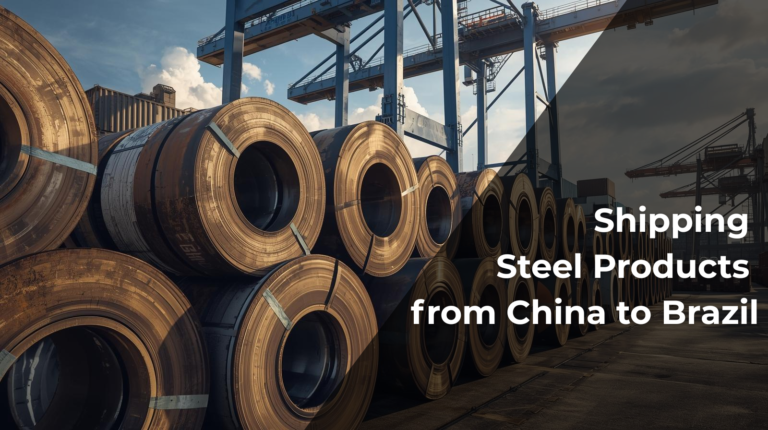
Steel products—whether they are coils, plates, rebar, or beams, are extremely dense.
If you load a 20-foot container (20GP) with plastic furniture, you will fill up all the physical space (the volume) long before the container gets heavy. But if you load that same 20GP with steel coils, you might only fill 10% to 30% of the space inside, yet you will hit the maximum weight limit.
When planning your shipment, you face two separate weight limits:
- The Container’s Design Limit: The maximum payload the physical steel box can safely hold without breaking.
- The Operational Limit: This is the real bottleneck. Shipping lines, port cranes, and Brazilian highway regulations have strict weight limits. These are usually much lower than what the container can technically hold. You are limited by what the infrastructure can legally and safely lift and move.
20GP vs 40HQ for Steel Products
For steel, you will almost always use a 20GP container.
A 20GP has a high structural weight capacity but a small footprint. It is built for dense, heavy cargo. A 40-foot container (40HQ) gives you double the space, but it does not give you double the weight capacity. In fact, a 40HQ often costs significantly more to ship, but you can only put slightly more weight in it than a 20GP. It also puts intense stress on cranes and trucks because the weight is spread over a longer chassis.
Here is a quick comparison:
| Feature | 20GP Container (Heavy Cargo) | 40HQ Container (Heavy Cargo) |
| Core Advantage | Limited volume, but excellent design payload for dense cargo. | Massive volume, but actual allowed cargo weight is restricted. |
| Freight Cost | Generally lower per container on this route. | Higher cost, often with heavy cargo penalties. |
| Best Used For | Steel coils, steel plates, rebar, dense billets. | Light steel structures, bulky fabrications, or volume-priority goods. |
Industry Standard Practice: For steel shipments to Brazil, experienced exporters usually keep the gross weight of a single container around 24 to 26 tons. This is a suggested safe zone, but you must always verify the exact limit with your specific shipping line and check current Brazilian highway weight regulations.
When to Switch from Containers to Breakbulk
Sometimes, your steel simply will not fit in a box. You need to look at breakbulk shipping (shipping cargo loose in the hold of a ship) when:
- You are moving extra-long, extra-wide, or extra-high steel structures.
- A single piece of equipment is too heavy for a standard container or requires special heavy-lift cranes.
Breakbulk vessels are highly adaptable to odd sizes and massive weights. However, the booking cycle is much longer, and the ships do not sail as frequently as container ships. This method is best for large-scale, one-off engineering projects. You need a forwarder to run the math on the total project timeline and cost; do not just compare the freight rate per ton.
Steel Freight Cost China Brazil & Overweight Container Charges
Base Ocean Freight for Heavy Steel Containers
Your base ocean freight is the flat rate you pay for the container (FCL). It does not include overweight fees, destination port charges, or taxes.
The price for a 20GP heavy container fluctuates based on the season, whether the route is direct, and the specific ports involved. For the China-to-Brazil route, 20GP steel containers are highly sensitive to carrier policies. Ships have a maximum total weight limit. If a carrier takes too many heavy steel containers, the ship hits its weight limit while the deck is still half-empty. Therefore, carriers limit how many heavy containers they accept, which drives the base price up compared to light cargo.
Overweight Surcharge (OWS) Brackets
The Overweight Surcharge (OWS) is the true profit killer in steel shipping.
Shipping lines charge extra when your container passes specific weight thresholds. These fees are tiered. For example, a carrier’s policy might look roughly like this:
- 0–18 tons: Base freight rate (No OWS).
- 18–22 tons: Tier 1 OWS (Moderate extra fee).
- 22+ tons: Tier 2 OWS (High extra fee).
The jump in price between these tiers can be massive. Sometimes, trying to squeeze an extra two tons of steel into a container pushes you into the highest OWS bracket, making those two tons incredibly expensive to ship. The exact weight brackets and fees change depending on the carrier and the route. You must have your forwarder check the current OWS policy before you decide how many tons to pack per box.
Lashing, Dunnage, and Handling Costs
Steel destroys containers if it is not secured. A loose steel coil rolling inside a container will crush the floorboards, punch through the steel walls, and cause fatal accidents on the road.
You must pay for professional cargo securing. This includes:
- Lashing: Heavy-duty steel wire rope, tensioners, and specialized straps to tie the cargo down.
- Dunnage: Custom-cut wooden blocks, wedges, and beams nailed to the floor to stop coils and pipes from sliding.
- Special Handling: Heavy forklift or crane fees at the loading warehouse.
Expect this to be a noticeable percentage of your total shipping budget. It is arguably the most frequently ignored cost during the quoting phase, but it is absolutely mandatory.
Steel Products Transit Time China Brazil: Port Selection and Timelines
Typical Transit Time: 30–45 Days
Ocean freight is slow. From major Chinese export hubs like Shanghai, Tianjin, or Qingdao, a direct vessel to Brazil takes roughly 30 to 45 days.
However, if your cargo requires transshipment at another port, or if you hit peak season congestion, the transit time can easily stretch to 45 or 50 days. Because steel takes a long, trans-oceanic route, you need to build a time buffer into your project schedule.
Choosing the Right Discharge Port in Brazil
Your choice of destination port impacts your clearance speed and inland trucking costs.
- Port of Vitória: This port is highly experienced in handling steel, iron ore, and heavy machinery. It has the right infrastructure for heavy loads and is strategically located for large steel projects, especially those supplying the southeastern industrial zones.
- Port of Santos: This is the busiest port in Brazil. It handles massive volumes of container traffic, meaning you have more sailing schedules and carrier options from China. It is the default choice for standard containerized steel like coils, pipes, and profiles.
- Port of Paranaguá: Often used as an alternative or supplementary port to Santos. It is highly effective for project logistics serving specific southern regions of Brazil.
Inland Trucking Delays and Weight Constraints
Getting the container off the ship is only half the battle. Moving a 26-ton container by truck across Brazil is difficult.
Brazil enforces strict highway weight limits and axle regulations. Finding trucking companies that have the correct heavy-duty chassis, legal permits, and experienced drivers for heavy steel takes time. Expect delays. Always factor extra transit days into your timeline for the final inland delivery, especially if the construction site or factory is far from the coast.
Navigating Brazilian Customs: Anti-Dumping & High Taxes
Getting the NCM Classification Right
In Brazil, the NCM code (similar to the international HS Code) dictates everything. It determines your import tax rates, flags any anti-dumping duties, and outlines exactly what import licenses you need.
For steel, NCM classifications are brutally specific. A welded steel pipe has a different code than a seamless steel pipe. An alloy steel coil has a different code than a non-alloy coil. Cold-rolled is taxed differently than hot-rolled.
If you or your customs broker declare the wrong NCM code, the Brazilian customs authority (Receita Federal) will catch it. You will face heavy fines, you will have to pay the back taxes, and your cargo will be stuck at the port racking up storage fees. Have your forwarder and a local Brazilian broker verify the exact NCM code for every item before the ship leaves China.
Understanding Brazil’s Layered Import Taxes
Brazil does not have a single import tax. It has a layered tax system that cascades. The main taxes include:
- II (Import Duty)
- IPI (Industrial Product Tax)
- PIS/COFINS (Social Contribution Taxes)
- ICMS (State Value-Added Tax)
These taxes are applied on top of each other. For example, you take the CIF value of the goods (Cost + Insurance + Freight) and calculate the II. Then, you add the II amount to the CIF value, and that new, larger number becomes the base to calculate the IPI. This continues down the chain. The final ICMS tax is calculated on a base that includes the product cost, the freight, and all the previous taxes. It is a “tax on a tax.”
Anti-Dumping Duties (AD) on Chinese Steel
This is the biggest risk when exporting steel to Brazil.
To protect its domestic steel industry, the Brazilian government heavily penalizes certain imported steel products. Brazil currently applies massive Anti-Dumping (AD) duties on various Chinese steel items, including specific types of cold-rolled coils, heavy plates, and seamless pipes.
Do not rely on data from two years ago; the policies change. Before you sign a contract, you must have your forwarder or Brazilian broker check the current AD policy for your specific NCM code. Ignoring anti-dumping duties can result in a tax bill that is higher than the value of the steel itself, instantly bankrupting the project.
Cargo Securing: Preventing Damage to the Container and the Steel
Physical Securing for Steel Coils, Pipes, and Beams
As mentioned earlier, steel moves. A 10-ton steel coil is basically a wrecking ball. If the ship hits rough seas and the coil rolls, it will destroy the container and everything around it.
You must physically lock the cargo in place.
- Use heavy-duty steel wire ropes, turnbuckles, and industrial strapping.
- Nail thick wooden wedges and beams directly into the container floor tightly against the steel to stop forward, backward, and side-to-side movement.
- For very large or awkward pieces, you may need custom-built C-frames or steel saddles to distribute the weight evenly.
This requires a professional loading crew who knows the exact safety standards demanded by the shipping lines and port authorities.
Corrosion Protection on a 30–45 Day Ocean Voyage
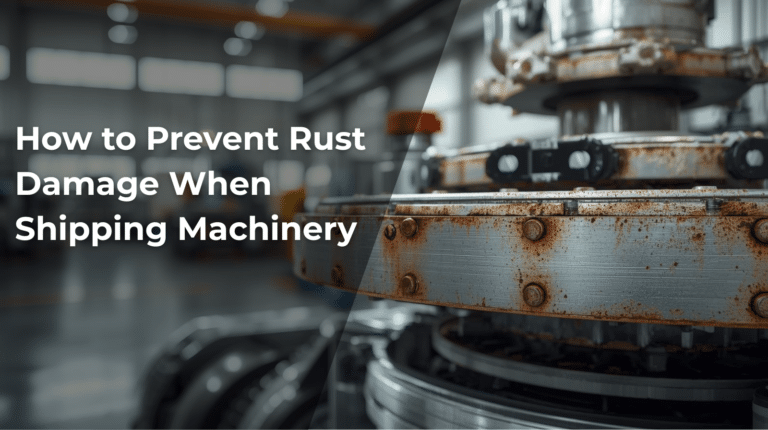
Steel rusts, and the ocean is full of saltwater and humidity. During the 45-day trip, your container will cross the equator, baking in the sun and cooling at night, creating condensation (container rain) inside the box.
If you are shipping high-grade steel, cold-rolled sheets, or galvanized products, surface rust will destroy the product’s value.
- The factory must apply an even layer of anti-rust oil.
- Wrap the steel in VCI (Vapor Corrosion Inhibitor) paper or film.
- Hang high-capacity industrial desiccants inside the container to absorb the ambient moisture.
If you skip these steps, your steel will arrive brown and pitted.
Why You Need a Specialized Heavy Freight Forwarder
Do not use a freight forwarder who specializes in e-commerce parcels or standard light consumer goods. They do not understand Heavy Weight Allocations, OWS tiers, or the realities of Brazilian tax law. They will give you a cheap initial quote, and you will pay the price later in penalties and delays.
A specialized heavy freight forwarder delivers actual value:
- They have access to Heavy Weight Allocations from carriers, meaning they can actually get your heavy container on the ship.
- They run the math comparing 20GP, 40HQ, and breakbulk to find the cheapest overall method.
- They know Brazilian NCM codes and anti-dumping policies, alerting you to high-risk items before you buy.
- They manage the physical lashing, dunnage, and anti-rust packaging, drastically lowering your risk of damage and insurance claims.
Shipping steel to Brazil is a project defined by high weight, high taxes, and high compliance risk. A specialized forwarder is the only way to control your total costs and keep the project moving.
FAQ
What is the maximum weight of steel I can put in a 20-foot container to Brazil?
While a 20GP container has a high theoretical design limit, you are restricted by carrier policies and Brazilian road limits. In practice, the industry norm is to keep the gross weight of a single container between 24 and 26 tons. Always verify current limits with your carrier.
What is an OWS (Overweight Surcharge)?
OWS is an extra fee charged by the shipping line when your container’s weight passes specific thresholds. It is tiered (e.g., one price for up to 18 tons, a higher price for 18-22 tons). It is one of the biggest hidden costs in heavy cargo shipping.
Is a breakbulk ship cheaper than shipping in containers?
Not necessarily. For extremely heavy, oversized, or massive bulk projects, breakbulk offers a better per-ton cost. However, you must factor in slower sailing schedules, longer transit times, and different port handling fees. A forwarder needs to calculate the total scenario to give you a real answer.
Can I ship mixed steel products (coils, pipes, profiles) in one container to Brazil?
Physically, yes. However, customs clearance becomes complicated. Different steel products have different NCM codes and different tax rates. Your packing list must be incredibly detailed. It is often safer to separate products into different containers by NCM code to avoid clearance delays and customs inspections.
Do I need cargo insurance for steel shipments to Brazil?
Absolutely. Steel is highly valuable and dense. Given the 45-day ocean transit, the complex lashing requirements, and the risk of rust, deformation, or loading accidents, cargo insurance is mandatory to protect your investment.